Residents call for audit of red-light camera program, say citations are unenforceable
March 26, 2026 | Rio Rancho, Sandoval County, New Mexico
This article was created by AI summarizing key points discussed. AI makes mistakes, so for full details and context, please refer to the video of the full meeting. Please report any errors so we can fix them. Report an error »
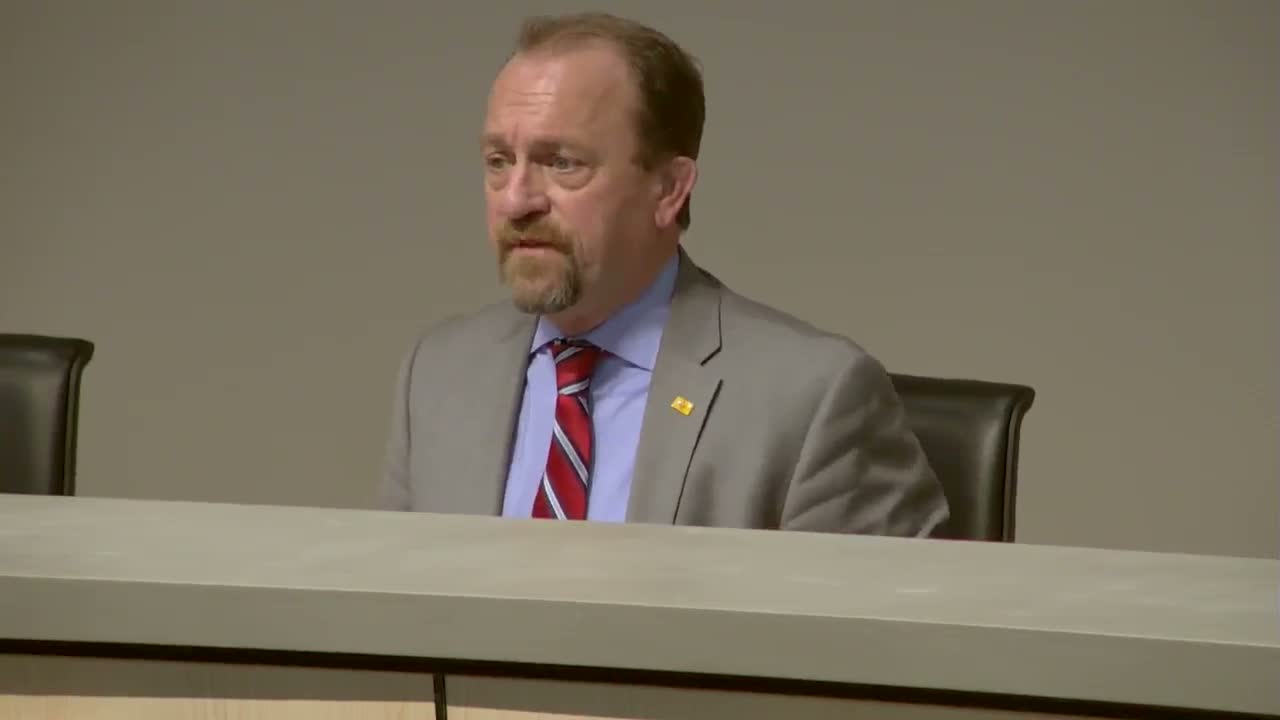
Residents and a local mental health practitioner urged the Rio Rancho governing body to audit the city's red-light camera program and assess whether the program is producing net benefits.
"They're legally unenforceable," said Matt Lawson, a District 1 resident, arguing that camera-issued citations do not trigger the same court processes as officer-issued tickets. Lawson told the council he had provided documentation to the city attorney previously and said many recipients pay because they believe the notices are lawful. "So out of fear, they pay," he said.
Doctor Sandra Herrera Spinelli, who identified herself as a mental health practitioner and a District 4 resident, asked the council for an audit and a cost-benefit analysis and said the city already has the capacity to run a quality-of-life survey. "I'm requesting an audit as well as a cost benefit analysis," she told the governing body, and asked for a corrective action plan to address what she described as a failure to provide advance signs warning drivers about mobile cameras.
Both speakers framed their requests as data-driven: Lawson cited a 2012 class-action settlement in Albuquerque that he said limited post-notice enforcement actions, and Spinelli asked the council to compare revenues from the STOP program with mobility and mental-health indicators the city already collects. The meeting record shows no immediate directive to launch an audit; after public comment the council moved on to its consent calendar.
The council did not take formal action on the audit or the corrective-action requests during this session. City staff did not present follow-up materials on the STOP program during the meeting; any next steps would have to be requested or scheduled by the governing body or staff.
"They're legally unenforceable," said Matt Lawson, a District 1 resident, arguing that camera-issued citations do not trigger the same court processes as officer-issued tickets. Lawson told the council he had provided documentation to the city attorney previously and said many recipients pay because they believe the notices are lawful. "So out of fear, they pay," he said.
Doctor Sandra Herrera Spinelli, who identified herself as a mental health practitioner and a District 4 resident, asked the council for an audit and a cost-benefit analysis and said the city already has the capacity to run a quality-of-life survey. "I'm requesting an audit as well as a cost benefit analysis," she told the governing body, and asked for a corrective action plan to address what she described as a failure to provide advance signs warning drivers about mobile cameras.
Both speakers framed their requests as data-driven: Lawson cited a 2012 class-action settlement in Albuquerque that he said limited post-notice enforcement actions, and Spinelli asked the council to compare revenues from the STOP program with mobility and mental-health indicators the city already collects. The meeting record shows no immediate directive to launch an audit; after public comment the council moved on to its consent calendar.
The council did not take formal action on the audit or the corrective-action requests during this session. City staff did not present follow-up materials on the STOP program during the meeting; any next steps would have to be requested or scheduled by the governing body or staff.
Don't Miss a Word: See the Full Meeting!
Go beyond summaries. Unlock every video, transcript, and key insight with a Founder Membership.
✓
Get instant access to full meeting videos
✓
Search and clip any phrase from complete transcripts
✓
Receive AI-powered summaries & custom alerts
✓
Enjoy lifetime, unrestricted access to government data
30-day money-back guarantee
