Medi‑Cal spending set to rise even as caseload trims, DHCS tells budget subcommittee
March 26, 2026 | California State Senate, Senate, Legislative, California
This article was created by AI summarizing key points discussed. AI makes mistakes, so for full details and context, please refer to the video of the full meeting. Please report any errors so we can fix them. Report an error »
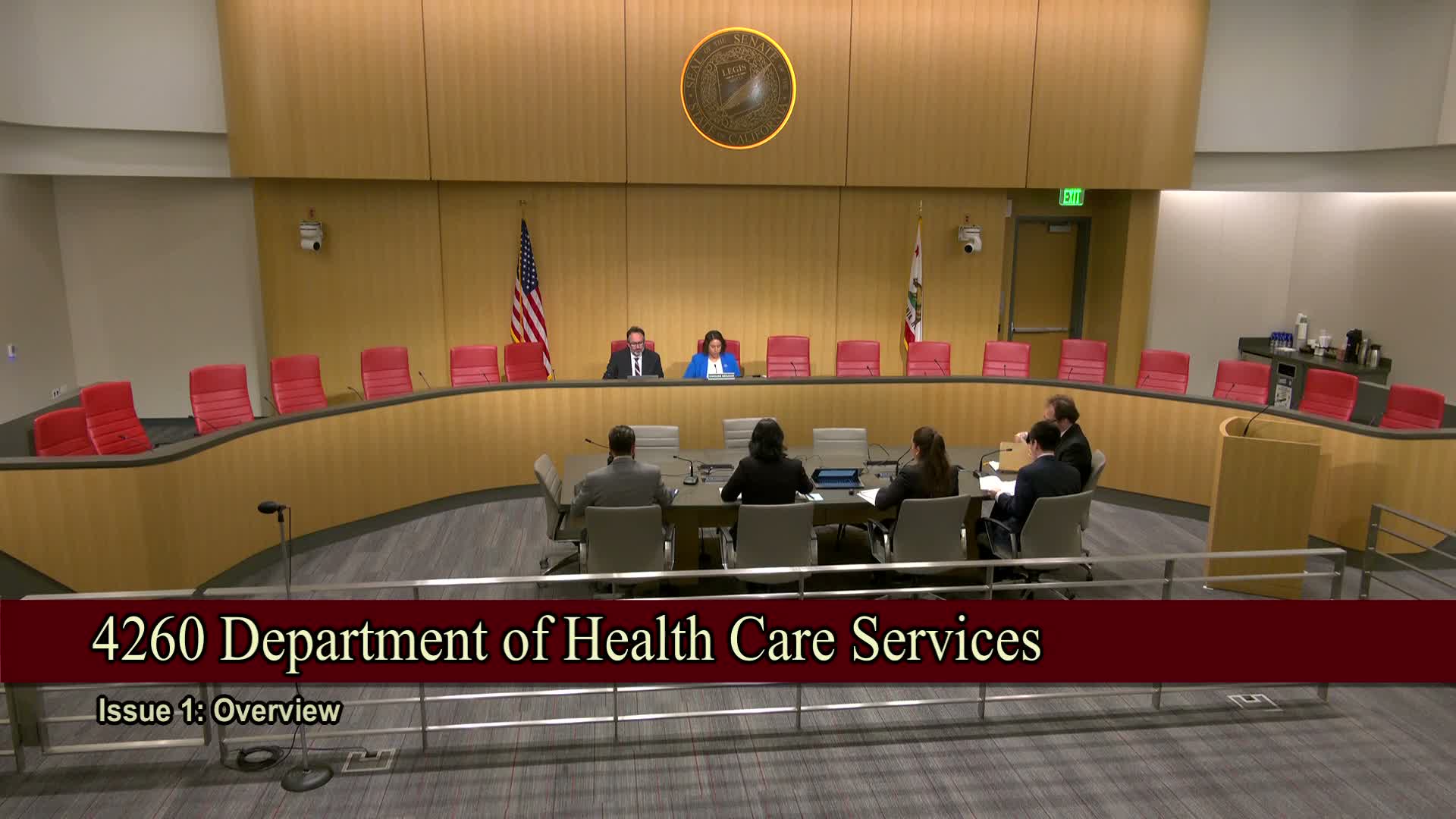
Michelle Boss, director of the Department of Health Care Services, told the Senate Budget Subcommittee No. 3 that the governor's budget proposes $229.1 billion in total funds and 404,745 positions for the department, with about $1.3 billion in state operations and roughly $227 billion for local assistance. "The governor's budget proposes 229,100,000,000.0 total funds and 400 4,745 positions to support the department's programs in the budget year," Boss said during the committee's opening presentation.
Boss said DHCS estimates current‑year Medi‑Cal enrollment at about 14.5 million individuals and expects that to fall to roughly 14.0 million in the budget year as routine redeterminations resume and certain eligibility flexibilities tied to the public health emergency end. "This reflects the reduction reflects the, continued medical redeterminations, under the no longer having the, public health emergency, flexibilities," Boss said.
Lawmakers pressed DHCS about why spending would rise while caseloads shrink. Jason Constantor Oselio of the Legislative Analyst's Office told the panel the increase is largely due to higher per‑member costs, managed care base rate growth, pharmacy claim inflation and Medicare cost pressures rather than enrollment. "The legislature took many of these budget solutions to help, sort of control, spending growth in Medi‑Cal and also address sort of the state's fiscal challenging fiscal situation," Constantor Oselio said.
DHCS walked the committee through the November 2025 Medi‑Cal estimate, which projects about $196.7 billion total funds in the current year (with $46.4 billion general fund) and $222.4 billion total funds in the budget year (about $48.8 billion general fund). The department identified significant drivers including managed care tax changes, managed care base rate growth and pharmacy and inpatient cost trends.
Committee members also questioned DHCS on several program‑level estimates: the family health programs (California Children's Services and the Genetically Handicapped Persons Program) are projected to grow because of rising per‑case pharmacy and therapy costs; DHCS cited an average annual cost per case of about $350,000 for GHPP. Boss said some programs show slight caseload declines but rising total‑costs because of escalating cost per case.
The subcommittee held items open for further analysis and follow‑up, including DHCS commitments to provide more detail on county CCS funding alignment and specific methodologies used in the estimates. The department also said it will complete required federal submissions for certain rate changes and stakeholder comments in advance of formal CMS reviews.
Boss said DHCS estimates current‑year Medi‑Cal enrollment at about 14.5 million individuals and expects that to fall to roughly 14.0 million in the budget year as routine redeterminations resume and certain eligibility flexibilities tied to the public health emergency end. "This reflects the reduction reflects the, continued medical redeterminations, under the no longer having the, public health emergency, flexibilities," Boss said.
Lawmakers pressed DHCS about why spending would rise while caseloads shrink. Jason Constantor Oselio of the Legislative Analyst's Office told the panel the increase is largely due to higher per‑member costs, managed care base rate growth, pharmacy claim inflation and Medicare cost pressures rather than enrollment. "The legislature took many of these budget solutions to help, sort of control, spending growth in Medi‑Cal and also address sort of the state's fiscal challenging fiscal situation," Constantor Oselio said.
DHCS walked the committee through the November 2025 Medi‑Cal estimate, which projects about $196.7 billion total funds in the current year (with $46.4 billion general fund) and $222.4 billion total funds in the budget year (about $48.8 billion general fund). The department identified significant drivers including managed care tax changes, managed care base rate growth and pharmacy and inpatient cost trends.
Committee members also questioned DHCS on several program‑level estimates: the family health programs (California Children's Services and the Genetically Handicapped Persons Program) are projected to grow because of rising per‑case pharmacy and therapy costs; DHCS cited an average annual cost per case of about $350,000 for GHPP. Boss said some programs show slight caseload declines but rising total‑costs because of escalating cost per case.
The subcommittee held items open for further analysis and follow‑up, including DHCS commitments to provide more detail on county CCS funding alignment and specific methodologies used in the estimates. The department also said it will complete required federal submissions for certain rate changes and stakeholder comments in advance of formal CMS reviews.
Don't Miss a Word: See the Full Meeting!
Go beyond summaries. Unlock every video, transcript, and key insight with a Founder Membership.
✓
Get instant access to full meeting videos
✓
Search and clip any phrase from complete transcripts
✓
Receive AI-powered summaries & custom alerts
✓
Enjoy lifetime, unrestricted access to government data
30-day money-back guarantee
