HR 1 and Proposition 35 squeeze provider taxes; state weighs Prop 35 amendments or ballot change
March 26, 2026 | California State Senate, Senate, Legislative, California
This article was created by AI summarizing key points discussed. AI makes mistakes, so for full details and context, please refer to the video of the full meeting. Please report any errors so we can fix them. Report an error »
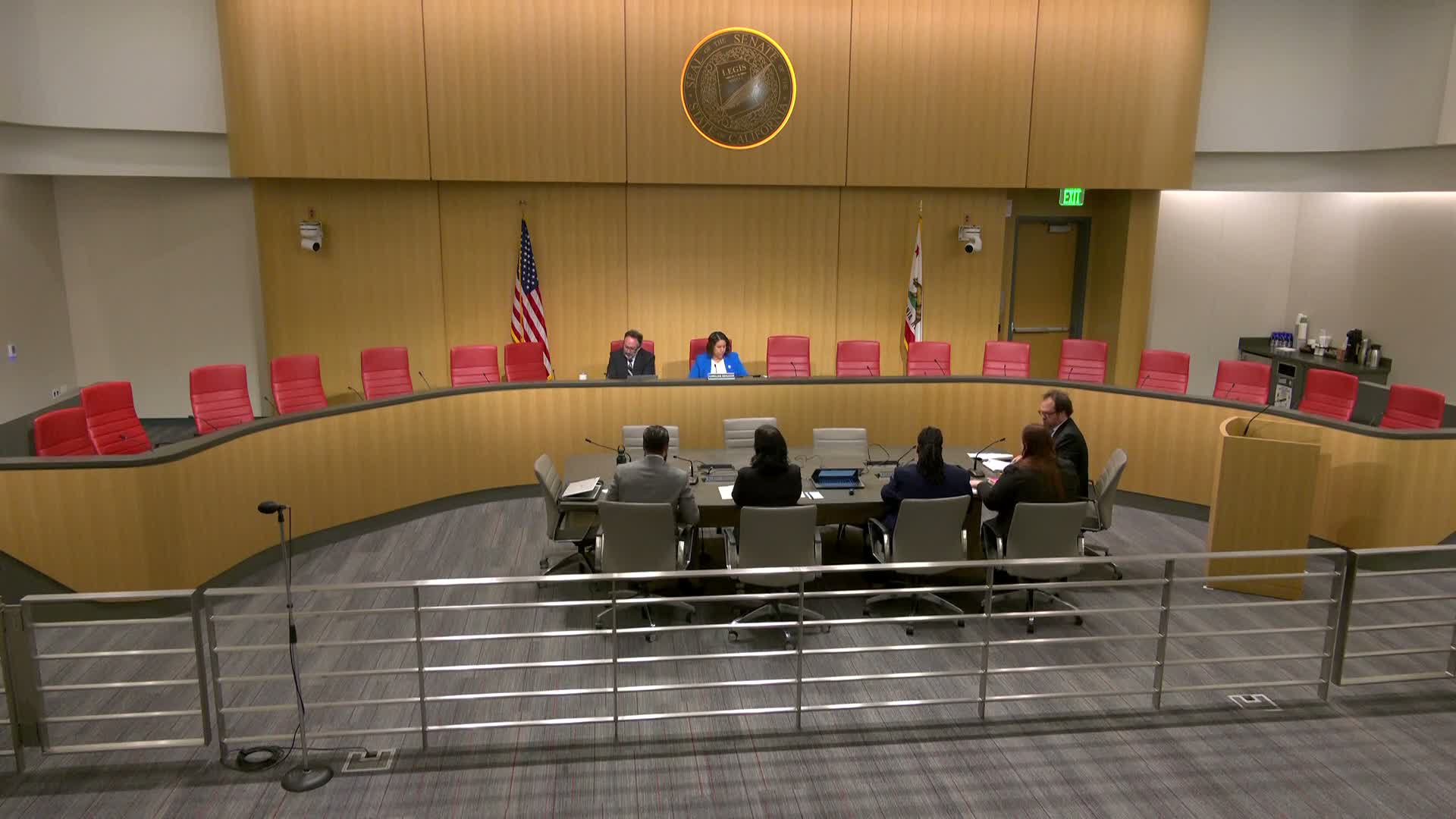
Tyler Sadrick, state Medicaid director, briefed the subcommittee on the complex interaction between federal HR 1 law and California's health provider tax structure, including the MCO tax and the hospital quality assurance fee (HQAF). DHCS told the committee HR 1 tightens federal standards for health care‑related taxes (broad‑based and uniform or generally redistributive), phases down maximum tax sizes to 3.5% of net patient revenue over four years and generally prohibits new or expanded taxes after the law's enactment.
"HR 1, in effect, prohibits new or increased health care related taxes after the enactment of the law with very narrow exceptions," Sadrick said. He added that California's existing MCO tax "is not broad based or uniform and it's not generally redistributive, under the new criteria." DHCS said the state's currently approved MCO tax produces an approximate net benefit to providers of about $7 billion per year but a redesigned version that both meets HR 1 and Prop 35 constraints would produce far smaller net benefits — on the order of millions, not billions, under current law.
The committee discussed options: take Prop 35 amendments through the Legislature (requiring a three‑fourths vote in each house and alignment with the measure's intent), return the question to voters, or pursue alternative tax models. Jason from the Legislative Analyst's Office emphasized the trade‑offs: higher taxes can generate federal funds but may shift private sector costs to providers and consumers. "Do states continue to pursue a tax or fee... or does the state ratchet down the size of taxes and fees, thereby avoiding that cost to the private sector, but also reducing funding to Medi‑Cal?" he asked.
DHCS also described specific fee amounts in Proposition 35 domains (for example, $2.0 billion for general support of the medical program, $691 million for primary care, $575 million for specialty care) and noted the HQAF submission for 2025 had to be revised to 2024 levels based on CMS technical feedback. Sadrick said the administration is evaluating a range of redesign options in light of HR 1 and Prop 35 legal constraints.
The subcommittee asked the administration to return with options analysis, projected revenue under alternative tax designs, and the legal pathways for amending Prop 35 or placing a measure before voters.
"HR 1, in effect, prohibits new or increased health care related taxes after the enactment of the law with very narrow exceptions," Sadrick said. He added that California's existing MCO tax "is not broad based or uniform and it's not generally redistributive, under the new criteria." DHCS said the state's currently approved MCO tax produces an approximate net benefit to providers of about $7 billion per year but a redesigned version that both meets HR 1 and Prop 35 constraints would produce far smaller net benefits — on the order of millions, not billions, under current law.
The committee discussed options: take Prop 35 amendments through the Legislature (requiring a three‑fourths vote in each house and alignment with the measure's intent), return the question to voters, or pursue alternative tax models. Jason from the Legislative Analyst's Office emphasized the trade‑offs: higher taxes can generate federal funds but may shift private sector costs to providers and consumers. "Do states continue to pursue a tax or fee... or does the state ratchet down the size of taxes and fees, thereby avoiding that cost to the private sector, but also reducing funding to Medi‑Cal?" he asked.
DHCS also described specific fee amounts in Proposition 35 domains (for example, $2.0 billion for general support of the medical program, $691 million for primary care, $575 million for specialty care) and noted the HQAF submission for 2025 had to be revised to 2024 levels based on CMS technical feedback. Sadrick said the administration is evaluating a range of redesign options in light of HR 1 and Prop 35 legal constraints.
The subcommittee asked the administration to return with options analysis, projected revenue under alternative tax designs, and the legal pathways for amending Prop 35 or placing a measure before voters.
View the Full Meeting & All Its Details
This article offers just a summary. Unlock complete video, transcripts, and insights as a Founder Member.
✓
Watch full, unedited meeting videos
✓
Search every word spoken in unlimited transcripts
✓
AI summaries & real-time alerts (all government levels)
✓
Permanent access to expanding government content
30-day money-back guarantee
