Wylie commission backs work to create downtown historic guidebook; staff to seek legal review
March 26, 2026 | Wylie, Collin County, Texas
This article was created by AI summarizing key points discussed. AI makes mistakes, so for full details and context, please refer to the video of the full meeting. Please report any errors so we can fix them. Report an error »
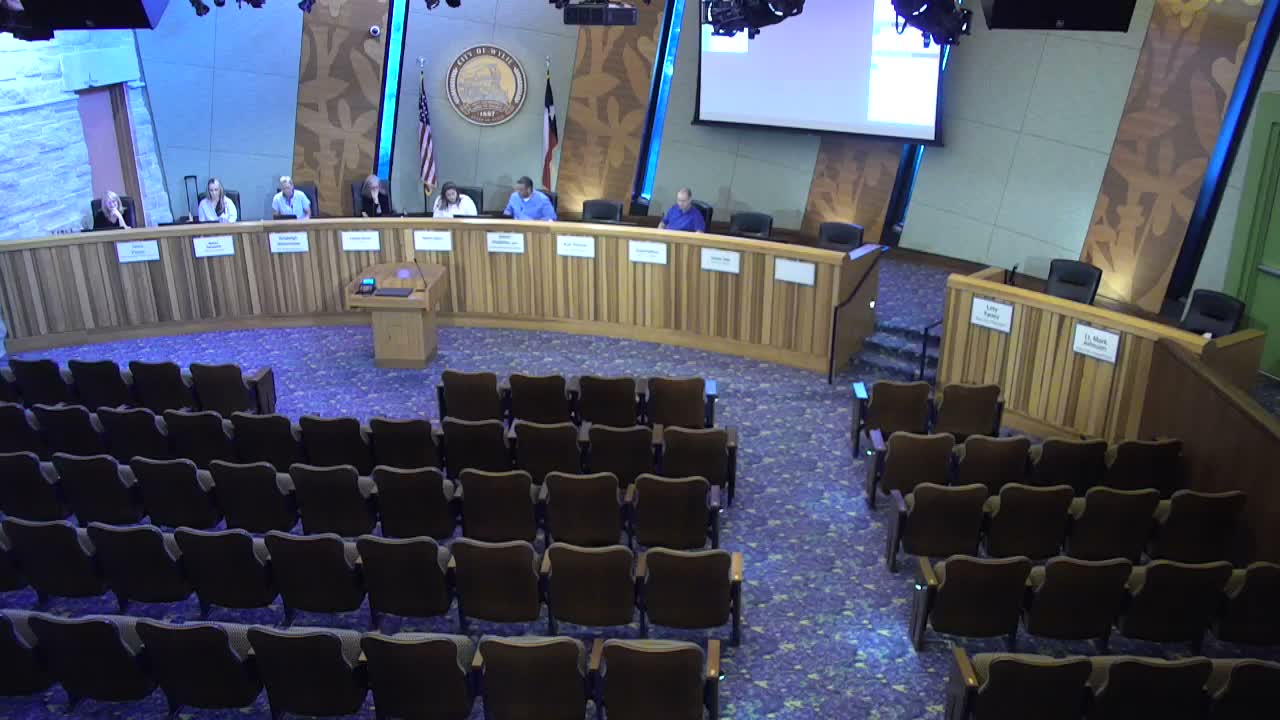
Associate Planner Cameron Stokes told the Wylie Historic Review Commission that staff will begin drafting a downtown historic district guidebook and seek legal guidance on whether the book can be used administratively or must be incorporated into the zoning ordinance.
"So as stated, we're here to discuss the potential downtown historic district guidebook," Stokes said, introducing sample guidebooks the commission could adapt. Stokes said staff has two practical options: have the ordinance refer to the guidebook so staff can make administrative updates, or embed the guidebook in the ordinance or as an appendix, which would require formal ordinance amendments for any change.
Commissioners focused on two practical questions: scope and enforceability. Stokes warned of legal limits under Texas law, saying the city may not be able to dictate building materials for new construction unless a building is designated historic. "If we want it to be enforceable, we're gonna have to rewrite parts of the zoning ordinance," Stokes said. He asked the commission whether they preferred a lightweight, administratively updated document or a version that would carry the force of ordinance text.
Several commissioners emphasized homeowner clarity and local relevance. "The whole point to this was when the person standing right there says I'm doing a craftsman, I wanna make sure they're doing a craftsman because I'm telling you what a craftsman is," a committee member said, arguing that written guidance helps avoid misinterpretations. Another member noted homeowners' cost pressures on historic materials and the need to allow modern materials where appropriate for energy efficiency.
Stokes said staff will prioritize the most-used styles in Wylie (craftsman, colonial and similar local examples), reach out to Anaheim and Austin for files and examples, and check copyright and reuse issues before finalizing illustrations. "The very first thing I'm gonna do is call Anaheim and go, 'can I get the actual file that you did this in?'" Stokes said. He also said he will consult the city attorney and schedule a work session with counsel and council, asking commissioners to attend.
Staff flagged capacity constraints: the planning department currently has two staffers, which Stokes said will affect the timeline for producing multiple style guides. Commissioners generally agreed to proceed administratively if legally feasible, then present the approach to council for direction.
Votes at a glance:
- Motion to approve the September 25 meeting minutes as edited: moved by Committee member 6, seconded by Committee member 4; passed 5–0.
- Motion to adjourn: moved by Committee member 4, seconded by Committee member 6; passed.
Next steps: staff will research legal authority with the city attorney, request sample files from other cities, draft prioritized style sections for local buildings, and schedule a work session with counsel and council to determine the preferred legal approach and scope.
"So as stated, we're here to discuss the potential downtown historic district guidebook," Stokes said, introducing sample guidebooks the commission could adapt. Stokes said staff has two practical options: have the ordinance refer to the guidebook so staff can make administrative updates, or embed the guidebook in the ordinance or as an appendix, which would require formal ordinance amendments for any change.
Commissioners focused on two practical questions: scope and enforceability. Stokes warned of legal limits under Texas law, saying the city may not be able to dictate building materials for new construction unless a building is designated historic. "If we want it to be enforceable, we're gonna have to rewrite parts of the zoning ordinance," Stokes said. He asked the commission whether they preferred a lightweight, administratively updated document or a version that would carry the force of ordinance text.
Several commissioners emphasized homeowner clarity and local relevance. "The whole point to this was when the person standing right there says I'm doing a craftsman, I wanna make sure they're doing a craftsman because I'm telling you what a craftsman is," a committee member said, arguing that written guidance helps avoid misinterpretations. Another member noted homeowners' cost pressures on historic materials and the need to allow modern materials where appropriate for energy efficiency.
Stokes said staff will prioritize the most-used styles in Wylie (craftsman, colonial and similar local examples), reach out to Anaheim and Austin for files and examples, and check copyright and reuse issues before finalizing illustrations. "The very first thing I'm gonna do is call Anaheim and go, 'can I get the actual file that you did this in?'" Stokes said. He also said he will consult the city attorney and schedule a work session with counsel and council, asking commissioners to attend.
Staff flagged capacity constraints: the planning department currently has two staffers, which Stokes said will affect the timeline for producing multiple style guides. Commissioners generally agreed to proceed administratively if legally feasible, then present the approach to council for direction.
Votes at a glance:
- Motion to approve the September 25 meeting minutes as edited: moved by Committee member 6, seconded by Committee member 4; passed 5–0.
- Motion to adjourn: moved by Committee member 4, seconded by Committee member 6; passed.
Next steps: staff will research legal authority with the city attorney, request sample files from other cities, draft prioritized style sections for local buildings, and schedule a work session with counsel and council to determine the preferred legal approach and scope.
Don't Miss a Word: See the Full Meeting!
Go beyond summaries. Unlock every video, transcript, and key insight with a Founder Membership.
✓
Get instant access to full meeting videos
✓
Search and clip any phrase from complete transcripts
✓
Receive AI-powered summaries & custom alerts
✓
Enjoy lifetime, unrestricted access to government data
30-day money-back guarantee
