Committee advances bill to limit local bans on private wells, sets half‑acre compromise
March 26, 2026 | 2026 Legislative Meetings, South Carolina
This article was created by AI summarizing key points discussed. AI makes mistakes, so for full details and context, please refer to the video of the full meeting. Please report any errors so we can fix them. Report an error »
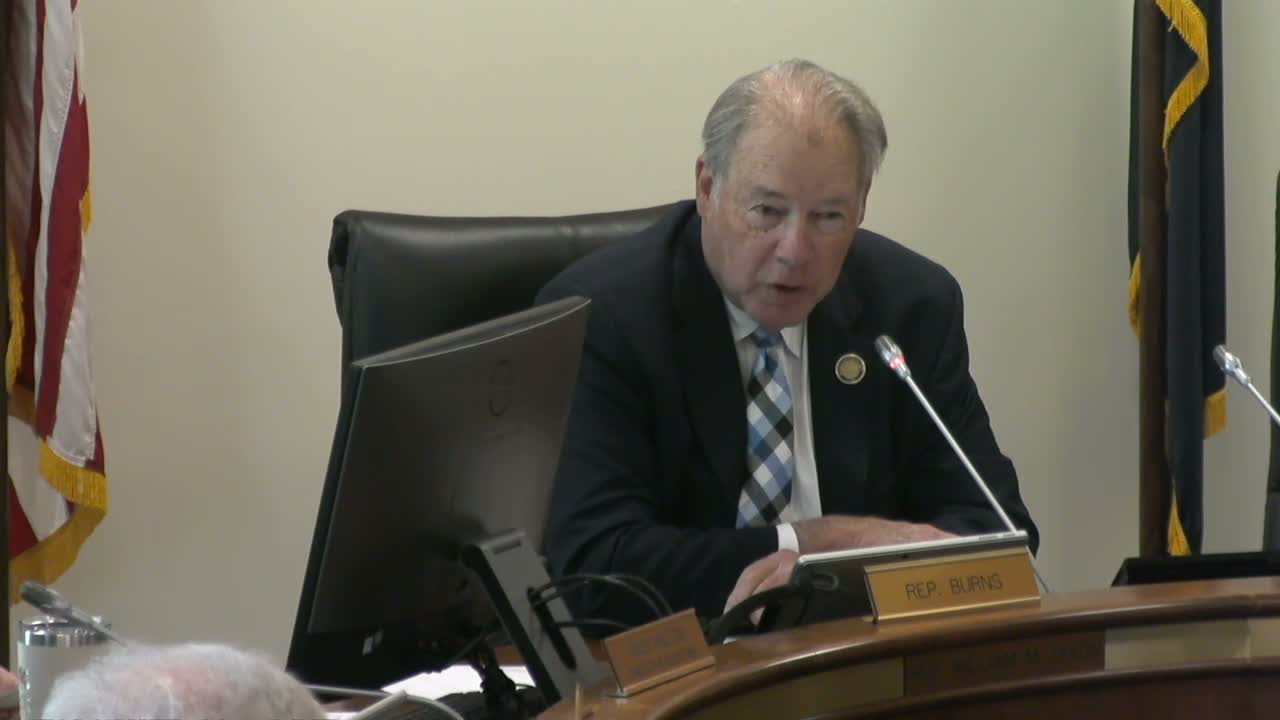
The Environmental Affairs Committee advanced an amendment to House Bill 5,111 that would prevent political subdivisions from enforcing ordinances that prohibit or ‘‘unreasonably restrict’’ private water wells on agricultural or single‑family residential properties of one‑half acre or more.
Representative Forrest, the bill sponsor, told the committee the measure ‘‘started off as a bill just to allow people to drill wells on their private property’’ and said it had evolved into a property‑rights proposal meant to protect owners from being forced to tie onto municipal or special‑district water systems. He described the amendment as a compromise crafted through prior meetings and stakeholder input.
Representative Gibson, who described water‑quality problems in parts of Abbeville and downstream towns, argued residents should not be compelled to use municipal water that he called ‘‘absolutely nasty.’’ Gibson expressed concern that many lots in his district may be too small to accommodate a private well and asked whether neighbors could share wells; the chair and sponsor said the amendment is limited to single‑family dwellings and agricultural uses and that shared‑well arrangements are not addressed by the text as written.
Jay Swange, president of the Groundwater Association, testified in support, calling the amendment ‘‘a good compromise’’ and offering to answer technical questions. Swange explained that drilling on less than a half acre is ‘‘logistically tough’’ because of equipment setbacks from property lines, sewer lines and septic tanks, and said backflow prevention is required only when a private well is also connected to a municipal system to prevent cross‑contamination.
Committee members questioned why the amendment included a registry for private wells when state permitting already exists; witnesses and the chair said much of that information is already recorded at the state level and committee staff will clarify the provision for full committee consideration.
A committee member moved to consider the amendment; Riley called the roll and recorded aye votes from Representatives Bauer, Kramer, Harris and Burns, with Representative Morgan absent. The motion to advance the amendment passed and the bill will proceed to full committee, where members said they will revisit the lot‑size threshold and clarify the registry language.
Next steps: the measure will be debated in full committee, where lawmakers signaled they will re‑examine the one‑half acre cutoff and any language about registries and shared wells.
Representative Forrest, the bill sponsor, told the committee the measure ‘‘started off as a bill just to allow people to drill wells on their private property’’ and said it had evolved into a property‑rights proposal meant to protect owners from being forced to tie onto municipal or special‑district water systems. He described the amendment as a compromise crafted through prior meetings and stakeholder input.
Representative Gibson, who described water‑quality problems in parts of Abbeville and downstream towns, argued residents should not be compelled to use municipal water that he called ‘‘absolutely nasty.’’ Gibson expressed concern that many lots in his district may be too small to accommodate a private well and asked whether neighbors could share wells; the chair and sponsor said the amendment is limited to single‑family dwellings and agricultural uses and that shared‑well arrangements are not addressed by the text as written.
Jay Swange, president of the Groundwater Association, testified in support, calling the amendment ‘‘a good compromise’’ and offering to answer technical questions. Swange explained that drilling on less than a half acre is ‘‘logistically tough’’ because of equipment setbacks from property lines, sewer lines and septic tanks, and said backflow prevention is required only when a private well is also connected to a municipal system to prevent cross‑contamination.
Committee members questioned why the amendment included a registry for private wells when state permitting already exists; witnesses and the chair said much of that information is already recorded at the state level and committee staff will clarify the provision for full committee consideration.
A committee member moved to consider the amendment; Riley called the roll and recorded aye votes from Representatives Bauer, Kramer, Harris and Burns, with Representative Morgan absent. The motion to advance the amendment passed and the bill will proceed to full committee, where members said they will revisit the lot‑size threshold and clarify the registry language.
Next steps: the measure will be debated in full committee, where lawmakers signaled they will re‑examine the one‑half acre cutoff and any language about registries and shared wells.
Don't Miss a Word: See the Full Meeting!
Go beyond summaries. Unlock every video, transcript, and key insight with a Founder Membership.
✓
Get instant access to full meeting videos
✓
Search and clip any phrase from complete transcripts
✓
Receive AI-powered summaries & custom alerts
✓
Enjoy lifetime, unrestricted access to government data
30-day money-back guarantee
