Committee moves hospital price-transparency bill with consumer protections, drops penalties
March 19, 2026 | House Public Hearing, House of Representatives, Legislative , Hawaii
This article was created by AI summarizing key points discussed. AI makes mistakes, so for full details and context, please refer to the video of the full meeting. Please report any errors so we can fix them. Report an error »
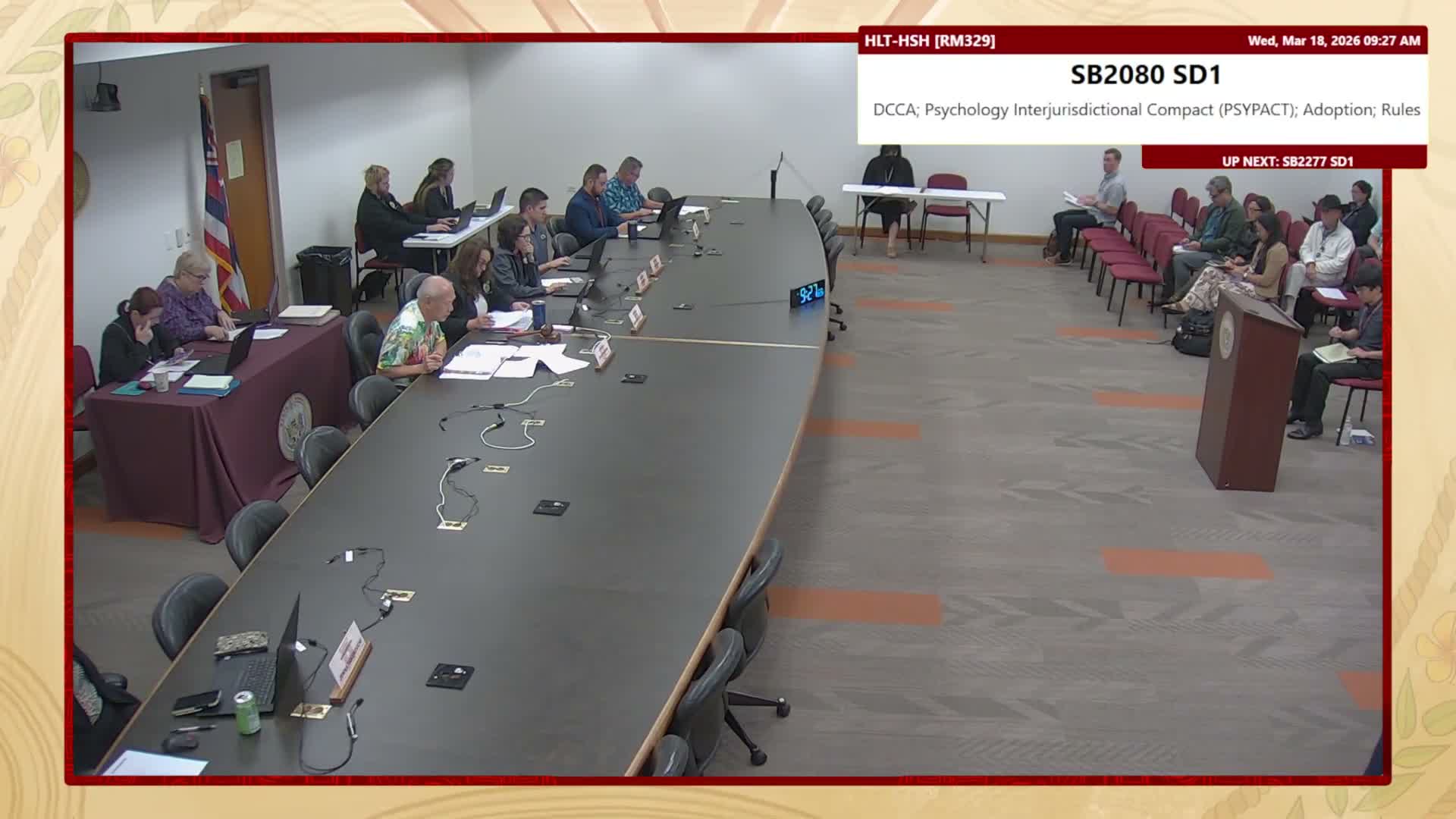
SB2277, aimed at hospital price transparency, produced a lively exchange between hospital representatives and consumer advocates.
Hilton Raeford, president and CEO of the Healthcare Association of Hawaii, testified in opposition, saying federal CMS rules already require disclosure and that adding state enforcement and classifying violations as unfair or deceptive trade practices would expose hospitals to significant legal liability and duplicative compliance costs. "Layering additional state requirements on top of federal mandates would increase administrative burden and compliance costs for hospitals without improving the information currently available to patients," he said.
Steve Fenberg, representing a consumer-interest perspective, argued SB2277 would not create new federal-style requirements but would codify federal obligations into state law and narrow enforcement language to avoid fiscal or administrative overreach. Fenberg proposed amending the bill to remove state enforcement language and instead require hospitals to attest they comply with federal requirements and to give patients the ability to raise compliance in court when sued over surprise bills.
The committee adopted a middle path: deleting new penalty sections and keeping patient-rights provisions. The chair asked SHIPDA to administer attestation and to post complaints of noncompliance; the committee retained a patient right that if a hospital sues a patient for payment or sends them to collections, a court can consider whether the hospital complied with federal transparency requirements.
What happens next: SB2277 moves forward as a house draft with amendments to limit state enforcement but preserve patient protections and require attestations of federal compliance. Supporters said the changes balance consumer protections with avoiding duplicative penalties.
Sources: Testimony by Hilton Raeford (Healthcare Association of Hawaii), Steve Fenberg, Robert Pickering.
Hilton Raeford, president and CEO of the Healthcare Association of Hawaii, testified in opposition, saying federal CMS rules already require disclosure and that adding state enforcement and classifying violations as unfair or deceptive trade practices would expose hospitals to significant legal liability and duplicative compliance costs. "Layering additional state requirements on top of federal mandates would increase administrative burden and compliance costs for hospitals without improving the information currently available to patients," he said.
Steve Fenberg, representing a consumer-interest perspective, argued SB2277 would not create new federal-style requirements but would codify federal obligations into state law and narrow enforcement language to avoid fiscal or administrative overreach. Fenberg proposed amending the bill to remove state enforcement language and instead require hospitals to attest they comply with federal requirements and to give patients the ability to raise compliance in court when sued over surprise bills.
The committee adopted a middle path: deleting new penalty sections and keeping patient-rights provisions. The chair asked SHIPDA to administer attestation and to post complaints of noncompliance; the committee retained a patient right that if a hospital sues a patient for payment or sends them to collections, a court can consider whether the hospital complied with federal transparency requirements.
What happens next: SB2277 moves forward as a house draft with amendments to limit state enforcement but preserve patient protections and require attestations of federal compliance. Supporters said the changes balance consumer protections with avoiding duplicative penalties.
Sources: Testimony by Hilton Raeford (Healthcare Association of Hawaii), Steve Fenberg, Robert Pickering.
View the Full Meeting & All Its Details
This article offers just a summary. Unlock complete video, transcripts, and insights as a Founder Member.
✓
Watch full, unedited meeting videos
✓
Search every word spoken in unlimited transcripts
✓
AI summaries & real-time alerts (all government levels)
✓
Permanent access to expanding government content
30-day money-back guarantee
