Senate clears long list of bills on third reading; recorded reservations and objections noted
March 07, 2026 | Senate, Legislative , Hawaii
This article was created by AI summarizing key points discussed. AI makes mistakes, so for full details and context, please refer to the video of the full meeting. Please report any errors so we can fix them. Report an error »
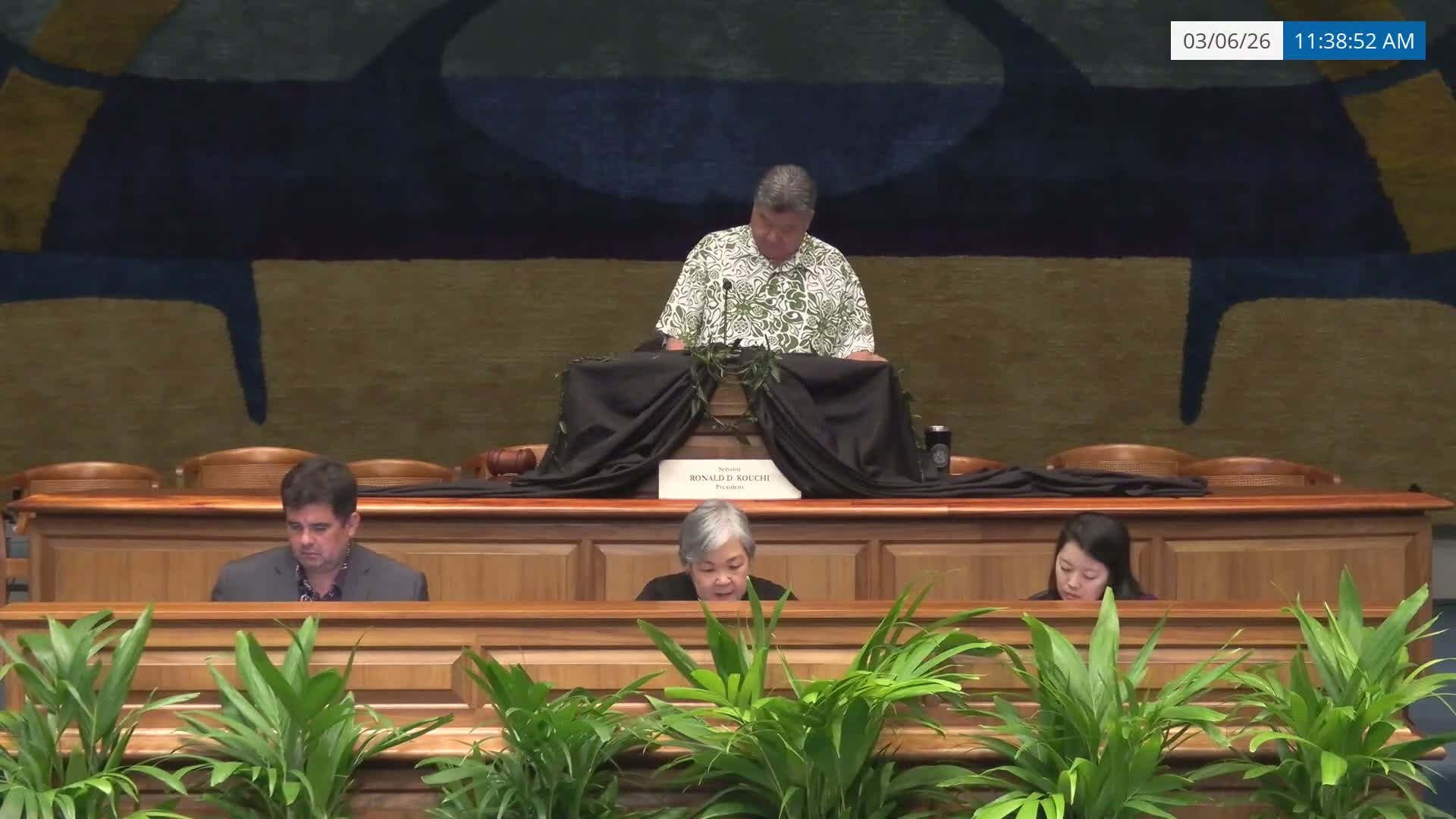
During a session of the Senate, members moved through pages of the order of the day and approved numerous measures on third reading, recording ayes and nos on several bills and entering reservations where requested.
Clerk announcements listed sets of measures by standing committee report and bill number across multiple pages of the order of the day; the presiding officer sought objections and reservations before deeming the items adopted. The clerk recorded the results on the record, for example reporting 24 ayes on many pages and specific tallies such as 23 ayes and 1 no for certain measures and 21 ayes, 3 nos on others. The chamber also took routine actions: House bills numbered 5 through 129 were transmitted for first reading and referral after Senator Wakai moved that they pass first reading by title and be referred to committee; the motion was seconded and carried.
Notable floor entries: several senators formally recorded reservations or no votes on particular bills (the clerk repeatedly noted which senators asked to have reservations or no votes entered). One senator raised a substantive concern about automated speed-camera enforcement, arguing the program’s high volume of violations and resulting fines create a perverse incentive and estimating annual revenues in the hundreds of millions. "At that rate, we're looking at bringing in a $144,000,000 per year," the senator said, warning that reliance on ticket revenue could shift the program from safety toward a revenue stream.
Most measures on the agenda passed on consent or recorded votes without extended debate. Where senators entered reservations or no votes, those entries were placed on the record by the clerk; the chair declared the listed senate bills to have passed third reading as the counts were read.
What’s next: the Senate processed waivers of referral for certain bills and gave one‑day notice where required. Miscellaneous business and referrals were handled in accordance with the supplemental orders of the day, and several measures were given one‑day notice for third reading on subsequent session days.
Clerk announcements listed sets of measures by standing committee report and bill number across multiple pages of the order of the day; the presiding officer sought objections and reservations before deeming the items adopted. The clerk recorded the results on the record, for example reporting 24 ayes on many pages and specific tallies such as 23 ayes and 1 no for certain measures and 21 ayes, 3 nos on others. The chamber also took routine actions: House bills numbered 5 through 129 were transmitted for first reading and referral after Senator Wakai moved that they pass first reading by title and be referred to committee; the motion was seconded and carried.
Notable floor entries: several senators formally recorded reservations or no votes on particular bills (the clerk repeatedly noted which senators asked to have reservations or no votes entered). One senator raised a substantive concern about automated speed-camera enforcement, arguing the program’s high volume of violations and resulting fines create a perverse incentive and estimating annual revenues in the hundreds of millions. "At that rate, we're looking at bringing in a $144,000,000 per year," the senator said, warning that reliance on ticket revenue could shift the program from safety toward a revenue stream.
Most measures on the agenda passed on consent or recorded votes without extended debate. Where senators entered reservations or no votes, those entries were placed on the record by the clerk; the chair declared the listed senate bills to have passed third reading as the counts were read.
What’s next: the Senate processed waivers of referral for certain bills and gave one‑day notice where required. Miscellaneous business and referrals were handled in accordance with the supplemental orders of the day, and several measures were given one‑day notice for third reading on subsequent session days.
View the Full Meeting & All Its Details
This article offers just a summary. Unlock complete video, transcripts, and insights as a Founder Member.
✓
Watch full, unedited meeting videos
✓
Search every word spoken in unlimited transcripts
✓
AI summaries & real-time alerts (all government levels)
✓
Permanent access to expanding government content
30-day money-back guarantee
