Tulalip council member tells Senate working group tribal gaming transformed services but requires regulatory safeguards
March 13, 2026 | Senate, Legislative , Hawaii
This article was created by AI summarizing key points discussed. AI makes mistakes, so for full details and context, please refer to the video of the full meeting. Please report any errors so we can fix them. Report an error »
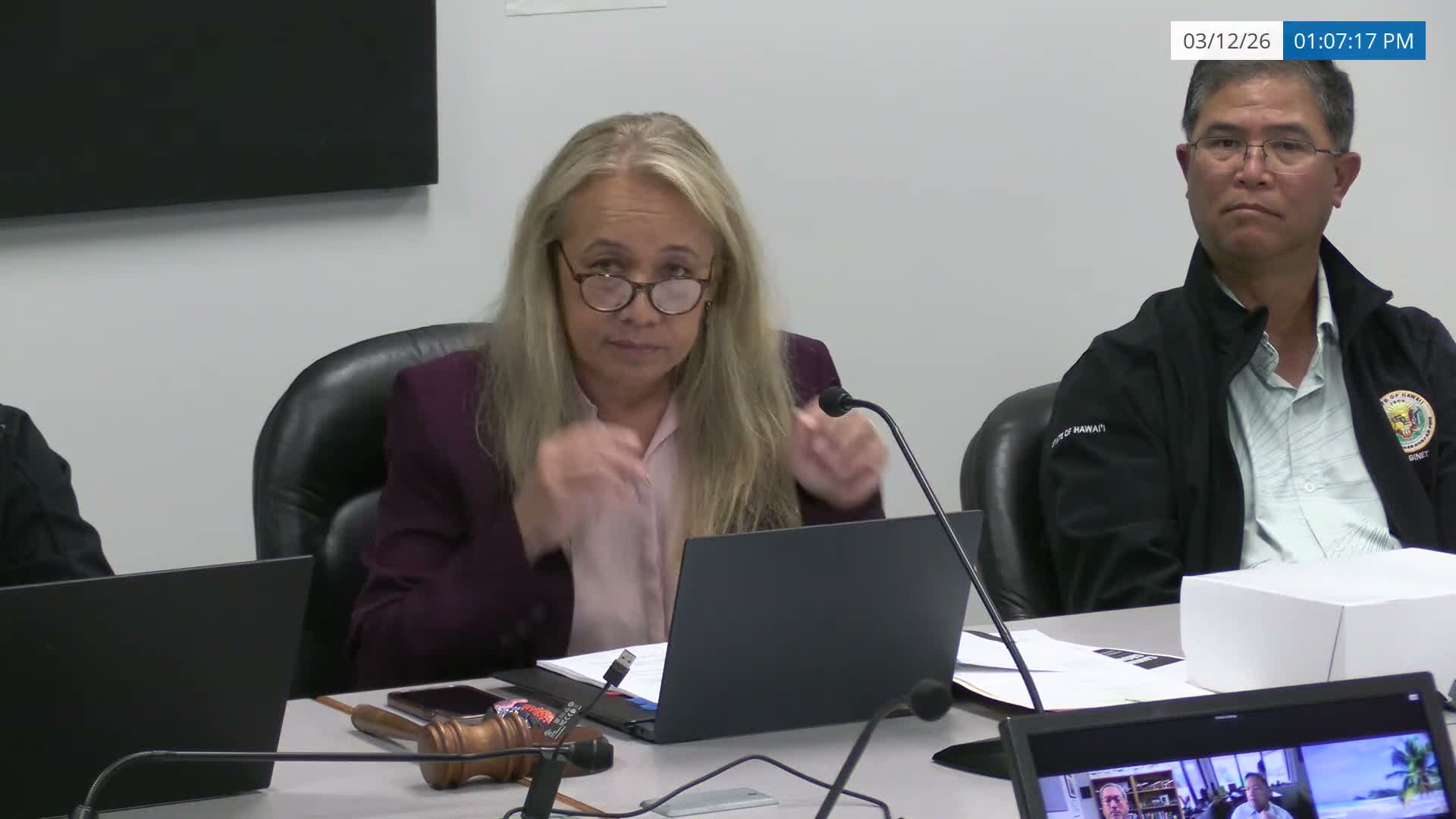
Ryan Miller, a Tulalip Tribes council member, told the Senate Economic Development and Tourism Committee's Tourism & Gaming Working Group on March 12 that gaming revenue reshaped his community's economy and public services while also creating regulatory and social challenges that require active mitigation.
"We were at one point 70% unemployed," Miller said in the informational briefing, describing Tulalip's start with bingo in 1983 and its first casino under compact in 1992. "Gaming operations employ over 2,300 people right now, and we also have about 1,000 people employed at our government." He credited gaming with funding health care, education assistance, monthly general-welfare payments to tribal members, youth activity stipends of $4,000 per year, and private-school assistance of $10,000 per year.
Miller framed tribal experience as a set of lessons for Hawaii'but not a direct template. He said the tribe deliberately retained operational control rather than outsource to external developers, and prioritized cultural integration across its resort and hotel operations. "If you do it right in the beginning, there's no need to have many different layers of regulation that in the end hamstring you," Miller said, referencing the federal-state-tribal regulatory structure tribes face under the Indian Gaming Regulatory Act (IGRA).
The working group pressed Miller on negative social effects and public-safety impacts. A staff member asked about unintended consequences; Miller said problem gambling, alcoholism and drug addiction were concerns but that revenue allowed the tribe to create services. He noted that compacts with states often include specific set-asides to fund problem-gambling programs and that tribes have negotiated intergovernmental arrangements for court and police services.
Miller also described community-spillover benefits for adjacent jurisdictions and infrastructure projects funded by tribal dollars, including a $35,000,000 tribal-funded redesign of a freeway overpass and investments in water pipelines and other public works. He said tribes in Washington used compact-based community-impact funds ("millions of dollars a year") and interlocal agreements to address impacts on neighboring jurisdictions.
Senator De Quait and several working-group members thanked Miller and asked the Tulalip delegation to provide written details on compacts, set-asides for problem-gambling programs, and any specific schedules or rates referenced during the briefing. The committee did not take votes; members requested follow-up information and signaled continuing study.
The working group will collect follow-up questions and has scheduled additional meetings as it develops a report for the legislature.
"We were at one point 70% unemployed," Miller said in the informational briefing, describing Tulalip's start with bingo in 1983 and its first casino under compact in 1992. "Gaming operations employ over 2,300 people right now, and we also have about 1,000 people employed at our government." He credited gaming with funding health care, education assistance, monthly general-welfare payments to tribal members, youth activity stipends of $4,000 per year, and private-school assistance of $10,000 per year.
Miller framed tribal experience as a set of lessons for Hawaii'but not a direct template. He said the tribe deliberately retained operational control rather than outsource to external developers, and prioritized cultural integration across its resort and hotel operations. "If you do it right in the beginning, there's no need to have many different layers of regulation that in the end hamstring you," Miller said, referencing the federal-state-tribal regulatory structure tribes face under the Indian Gaming Regulatory Act (IGRA).
The working group pressed Miller on negative social effects and public-safety impacts. A staff member asked about unintended consequences; Miller said problem gambling, alcoholism and drug addiction were concerns but that revenue allowed the tribe to create services. He noted that compacts with states often include specific set-asides to fund problem-gambling programs and that tribes have negotiated intergovernmental arrangements for court and police services.
Miller also described community-spillover benefits for adjacent jurisdictions and infrastructure projects funded by tribal dollars, including a $35,000,000 tribal-funded redesign of a freeway overpass and investments in water pipelines and other public works. He said tribes in Washington used compact-based community-impact funds ("millions of dollars a year") and interlocal agreements to address impacts on neighboring jurisdictions.
Senator De Quait and several working-group members thanked Miller and asked the Tulalip delegation to provide written details on compacts, set-asides for problem-gambling programs, and any specific schedules or rates referenced during the briefing. The committee did not take votes; members requested follow-up information and signaled continuing study.
The working group will collect follow-up questions and has scheduled additional meetings as it develops a report for the legislature.
Don't Miss a Word: See the Full Meeting!
Go beyond summaries. Unlock every video, transcript, and key insight with a Founder Membership.
✓
Get instant access to full meeting videos
✓
Search and clip any phrase from complete transcripts
✓
Receive AI-powered summaries & custom alerts
✓
Enjoy lifetime, unrestricted access to government data
30-day money-back guarantee
