Billings council hears phase-by-phase review of airport governance, consultant sets May report date
March 16, 2026 | Billings, Yellowstone, Montana
This article was created by AI summarizing key points discussed. AI makes mistakes, so for full details and context, please refer to the video of the full meeting. Please report any errors so we can fix them. Report an error »
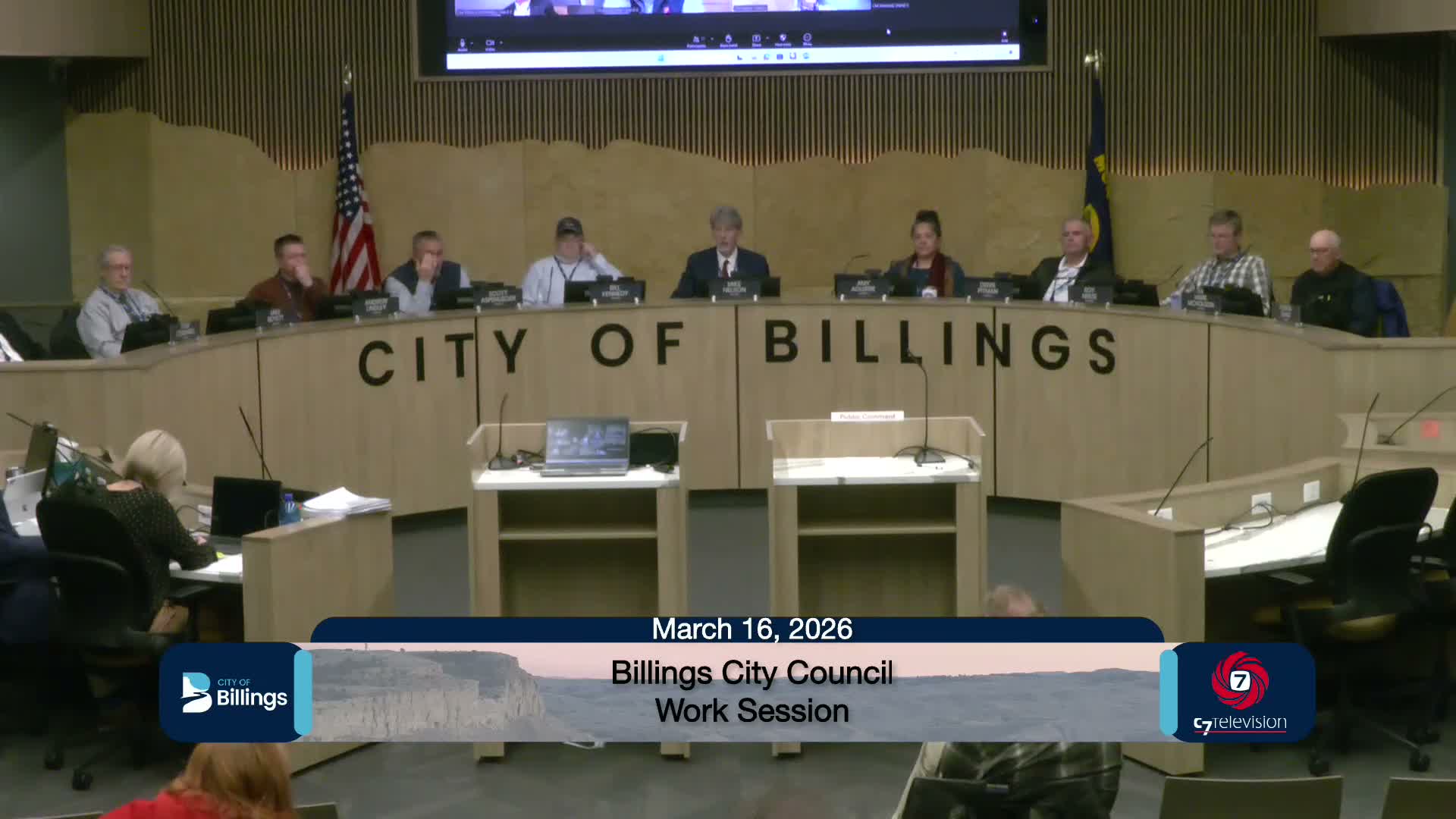
A consultant presented the Airport Governance Project to the Billings City Council on March 16, describing a three-phase review that will evaluate whether the city should convert the airports current municipal sponsorship into an airport authority.
The firm said Phase 1, now underway, focuses on data review and stakeholder interviews and will produce governance recommendations to the council by May. Phase 2 would, if the council chooses a governance change, develop the transition plan and prepare an FAA operating-certificate application; the consultant estimated a 12-month transition period if the council approves moving to an authority. Phase 3 would offer post-transition support to the new governing body.
John Brewer, president and CEO of the Billings Chamber of Commerce, told the council that most comparable commercial-service airports in Montana operate as authorities and urged the council to weigh industry best practices in its decision. The consultant said the stakeholder input initiative has included interviews with airport and transit board members, airport employees and tenants, Visit Billings and business groups and that individual meetings with council members would be used to gather perspectives and reported back as aggregated trends rather than individual positions.
Council members pressed the consultant on several practical issues: whether individual meetings with council members would create prohibited "chain meetings" under Montana law; how ownership and federal grant assurances affect any transfer of property; whether a new authority could levy taxes; and how employee benefits and union status would be handled during a transition. The consultant said state law frames authority formation and that, if tax authority were to be included it would require a separate vote of the electorate; the firm also said that best practice often involves a fee-simple transfer or quitclaim deed of airport property to the authority while noting federal grant assurances may limit uses of property acquired with federal funds.
Council members and the airport director asked for more detailed financial transition-cost estimates and a clearer accounting of whether an authority would increase operational agility or regional cooperation. Several members said the question may be one of preferencewhether the council believes a separate authority would deliver more timely decisions and capital flexibility. The council did not take action on governance today; the consultant will return with financial and legal analyses and the committees recommendations in coming months.
The council will consider the consultants May report before deciding whether to initiate the Phase 2 transition work and to engage the FAA in any required sponsorship-change process.
The firm said Phase 1, now underway, focuses on data review and stakeholder interviews and will produce governance recommendations to the council by May. Phase 2 would, if the council chooses a governance change, develop the transition plan and prepare an FAA operating-certificate application; the consultant estimated a 12-month transition period if the council approves moving to an authority. Phase 3 would offer post-transition support to the new governing body.
John Brewer, president and CEO of the Billings Chamber of Commerce, told the council that most comparable commercial-service airports in Montana operate as authorities and urged the council to weigh industry best practices in its decision. The consultant said the stakeholder input initiative has included interviews with airport and transit board members, airport employees and tenants, Visit Billings and business groups and that individual meetings with council members would be used to gather perspectives and reported back as aggregated trends rather than individual positions.
Council members pressed the consultant on several practical issues: whether individual meetings with council members would create prohibited "chain meetings" under Montana law; how ownership and federal grant assurances affect any transfer of property; whether a new authority could levy taxes; and how employee benefits and union status would be handled during a transition. The consultant said state law frames authority formation and that, if tax authority were to be included it would require a separate vote of the electorate; the firm also said that best practice often involves a fee-simple transfer or quitclaim deed of airport property to the authority while noting federal grant assurances may limit uses of property acquired with federal funds.
Council members and the airport director asked for more detailed financial transition-cost estimates and a clearer accounting of whether an authority would increase operational agility or regional cooperation. Several members said the question may be one of preferencewhether the council believes a separate authority would deliver more timely decisions and capital flexibility. The council did not take action on governance today; the consultant will return with financial and legal analyses and the committees recommendations in coming months.
The council will consider the consultants May report before deciding whether to initiate the Phase 2 transition work and to engage the FAA in any required sponsorship-change process.
Don't Miss a Word: See the Full Meeting!
Go beyond summaries. Unlock every video, transcript, and key insight with a Founder Membership.
✓
Get instant access to full meeting videos
✓
Search and clip any phrase from complete transcripts
✓
Receive AI-powered summaries & custom alerts
✓
Enjoy lifetime, unrestricted access to government data
30-day money-back guarantee
