Senate HHS advances bill to protect clinic access after hours of contested testimony
March 19, 2026 | Senate, Legislative , Hawaii
This article was created by AI summarizing key points discussed. AI makes mistakes, so for full details and context, please refer to the video of the full meeting. Please report any errors so we can fix them. Report an error »
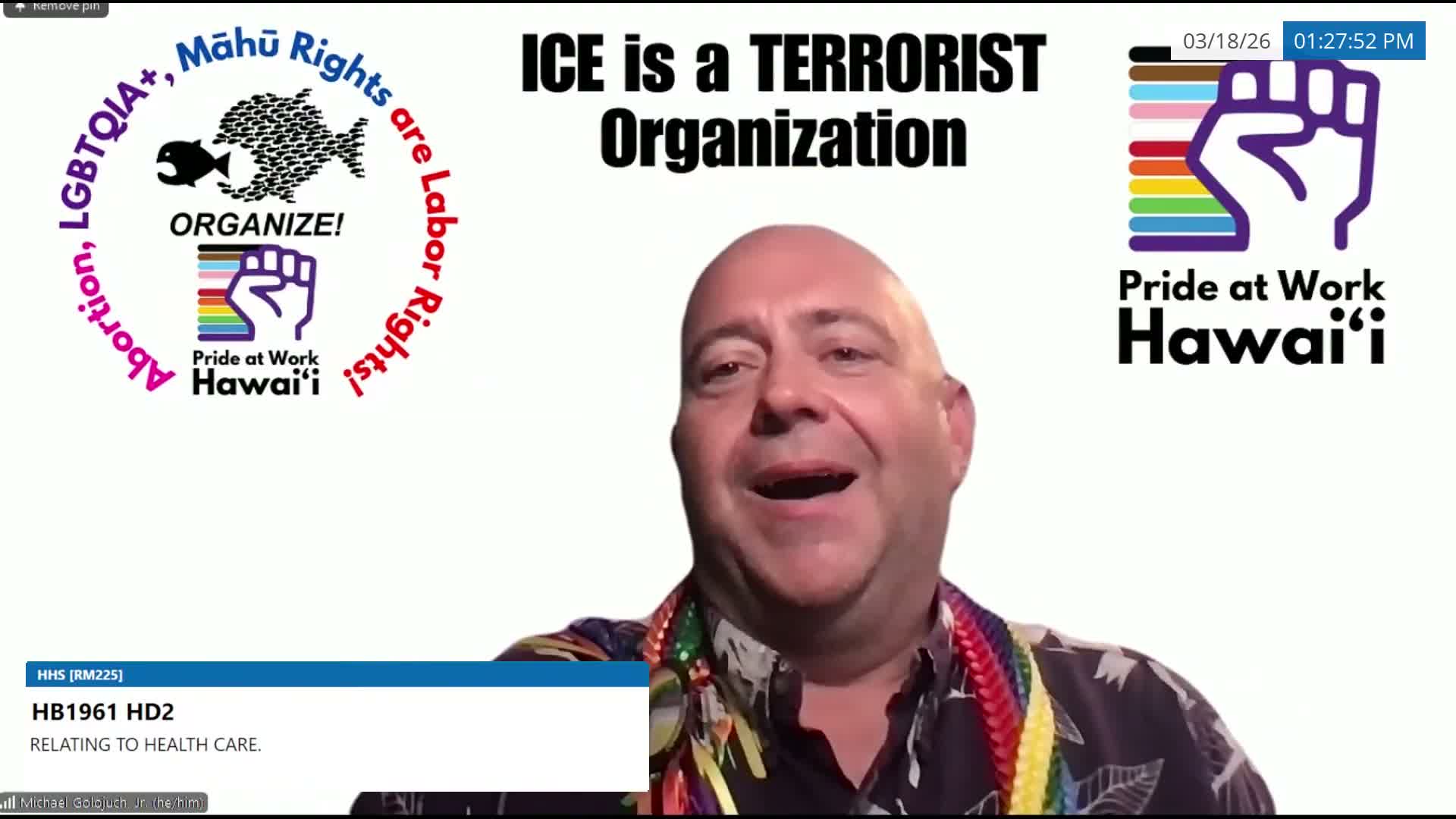
The Senate Committee on Human Services advanced HB1961 — legislation aimed at protecting access to health‑care facilities — after extended testimony that divided providers, advocacy groups and opponents.
Supporters, including Planned Parenthood, the American College of Obstetricians and Gynecologists’ Hawaii section and the Hawaii State LGBTQ+ Commission, described incidents of harassment and interference outside clinics that they said can deter patients from seeking time‑sensitive care. Dr. Malero Bravo, speaking for the Hawaii section of ACOG, said obstruction or intimidation can delay treatment and increase medical risk, particularly for neighbor‑island patients who already face geographic barriers.
Opponents, including Margaret Mejia of the Hawaii Christian Coalition and long‑time protesters who spoke during public comment, argued the bill duplicates existing trespass and obstruction laws, uses vague standards such as “reckless,” and could criminalize peaceful advocacy. James Wallace, a demonstrator who said he has protested outside Planned Parenthood for 15 years, called the penalties excessive and unconstitutional in his view.
Theresa Armbruster, who opposed the bill, told the committee the measure risks imposing criminal and civil penalties "based solely on allegations without requiring any evidence" and urged clearer statutory definitions for terms such as intentional, knowing and reckless interference.
The committee noted the volume of registered supporters and opponents (the clerk recorded dozens on both sides) and passed the measure with amendments; a single senator recorded a ‘no’ vote during the roll call on the draft as noted in the hearing. The committee said it would change the effective date to upon approval and incorporate technical amendments for clarity.
Why it matters: Supporters framed the bill as protecting patients’ ability to access medically necessary care without intimidation; opponents said the bill could chill constitutionally protected protest and needs narrower definitions and safeguards.
What’s next: The bill passed out of committee with amendments and will be included in the committee report for further floor consideration. The committee asked sponsors and stakeholders to work on statutory language to clarify definitions and enforcement.
Supporters, including Planned Parenthood, the American College of Obstetricians and Gynecologists’ Hawaii section and the Hawaii State LGBTQ+ Commission, described incidents of harassment and interference outside clinics that they said can deter patients from seeking time‑sensitive care. Dr. Malero Bravo, speaking for the Hawaii section of ACOG, said obstruction or intimidation can delay treatment and increase medical risk, particularly for neighbor‑island patients who already face geographic barriers.
Opponents, including Margaret Mejia of the Hawaii Christian Coalition and long‑time protesters who spoke during public comment, argued the bill duplicates existing trespass and obstruction laws, uses vague standards such as “reckless,” and could criminalize peaceful advocacy. James Wallace, a demonstrator who said he has protested outside Planned Parenthood for 15 years, called the penalties excessive and unconstitutional in his view.
Theresa Armbruster, who opposed the bill, told the committee the measure risks imposing criminal and civil penalties "based solely on allegations without requiring any evidence" and urged clearer statutory definitions for terms such as intentional, knowing and reckless interference.
The committee noted the volume of registered supporters and opponents (the clerk recorded dozens on both sides) and passed the measure with amendments; a single senator recorded a ‘no’ vote during the roll call on the draft as noted in the hearing. The committee said it would change the effective date to upon approval and incorporate technical amendments for clarity.
Why it matters: Supporters framed the bill as protecting patients’ ability to access medically necessary care without intimidation; opponents said the bill could chill constitutionally protected protest and needs narrower definitions and safeguards.
What’s next: The bill passed out of committee with amendments and will be included in the committee report for further floor consideration. The committee asked sponsors and stakeholders to work on statutory language to clarify definitions and enforcement.
Don't Miss a Word: See the Full Meeting!
Go beyond summaries. Unlock every video, transcript, and key insight with a Founder Membership.
✓
Get instant access to full meeting videos
✓
Search and clip any phrase from complete transcripts
✓
Receive AI-powered summaries & custom alerts
✓
Enjoy lifetime, unrestricted access to government data
30-day money-back guarantee
