Brentwood staff recommend education, advisory speeds and 'no‑throttle' zones as first steps in e‑bike policy
March 19, 2026 | Brentwood, Williamson County, Tennessee
This article was created by AI summarizing key points discussed. AI makes mistakes, so for full details and context, please refer to the video of the full meeting. Please report any errors so we can fix them. Report an error »
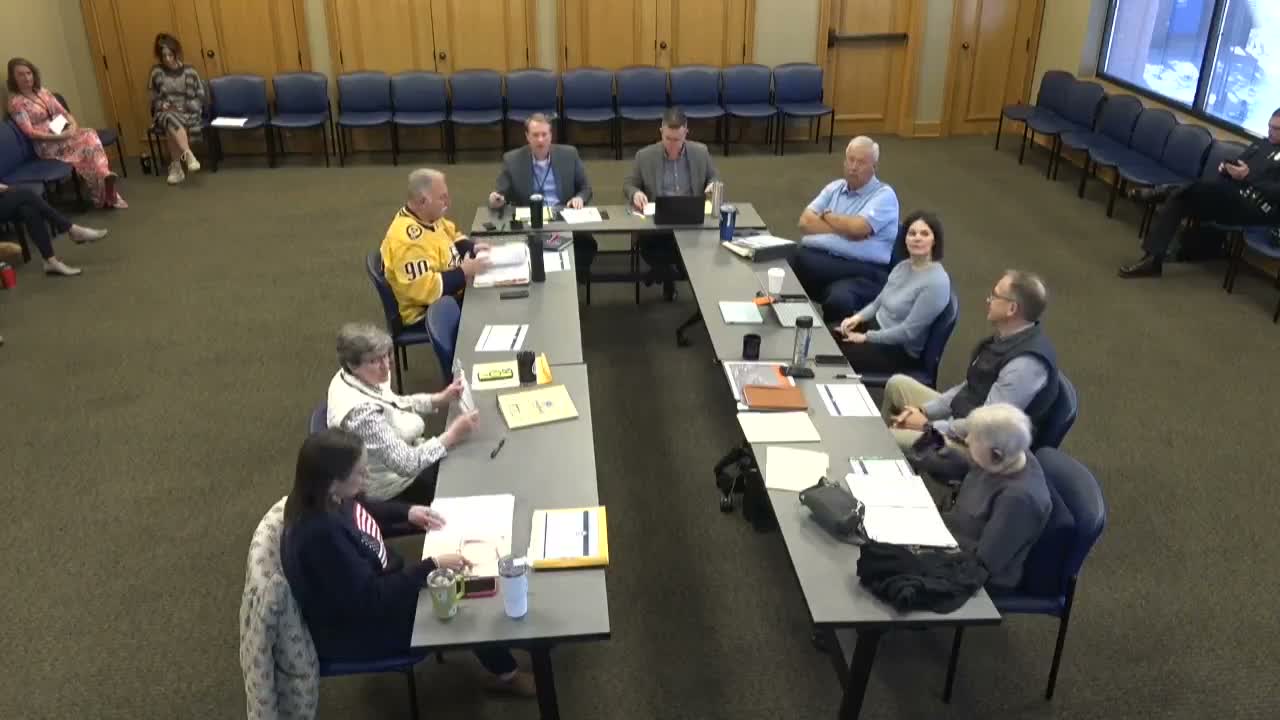
City staff recommended that the Brentwood Board of Commissioners start with public education, advisory signage and limited ordinance tweaks to address a recent rise in e‑bike use and related safety concerns.
A staff presentation reviewed local police data covering a recent sample period that included juvenile crash and injury reports and explained Tennessee’s e‑bike classes and the city’s regulatory options. The staff member said the town’s focus should be on distinguishing class 1–3 devices (motor ≤750 watts; class 1 and 2 generally allowed where regular bikes are allowed; class 3 allowed on roadways) and on practical controls the city can enforce locally.
Commissioners voiced safety concerns about throttle‑enabled class 2 e‑bikes and juvenile riders. One commissioner urged an age limit or a requirement that throttles not be used on multi‑use paths; the commissioner said, “I really don’t think that children probably under the age 14 have enough common sense and experience to be on the bike trails” and argued for a posted throttle‑off rule in shared spaces.
Staff cautioned that enforcing an age restriction in the field would be difficult and described alternatives: a no‑throttle or “pedal assist only” rule for designated zones, advisory speed limits for multi‑use paths (staff proposed an advisory 15 mph maximum and 5 mph when passing pedestrians), stronger signage and a robust education campaign targeted at parents, schools and bike retailers. An agency official representing enforcement noted the limits of short‑term enforcement but said targeted patrols and school coordination had been used successfully in specific complaint hot spots.
The presentation also covered juvenile diversion options: the municipal court could create post‑violation education, or juvenile court could require children and parents to view safety materials; staff said the decision depends on case volume and the juvenile court’s practices.
Commissioners asked staff to draft specific ordinance language and signage designs after the pending state law is finalized and to return with cost estimates for signage, a baseline monitoring plan and an education schedule. Staff recommended starting with education and signage and then adjusting enforcement and code as monitoring data indicate.
A staff presentation reviewed local police data covering a recent sample period that included juvenile crash and injury reports and explained Tennessee’s e‑bike classes and the city’s regulatory options. The staff member said the town’s focus should be on distinguishing class 1–3 devices (motor ≤750 watts; class 1 and 2 generally allowed where regular bikes are allowed; class 3 allowed on roadways) and on practical controls the city can enforce locally.
Commissioners voiced safety concerns about throttle‑enabled class 2 e‑bikes and juvenile riders. One commissioner urged an age limit or a requirement that throttles not be used on multi‑use paths; the commissioner said, “I really don’t think that children probably under the age 14 have enough common sense and experience to be on the bike trails” and argued for a posted throttle‑off rule in shared spaces.
Staff cautioned that enforcing an age restriction in the field would be difficult and described alternatives: a no‑throttle or “pedal assist only” rule for designated zones, advisory speed limits for multi‑use paths (staff proposed an advisory 15 mph maximum and 5 mph when passing pedestrians), stronger signage and a robust education campaign targeted at parents, schools and bike retailers. An agency official representing enforcement noted the limits of short‑term enforcement but said targeted patrols and school coordination had been used successfully in specific complaint hot spots.
The presentation also covered juvenile diversion options: the municipal court could create post‑violation education, or juvenile court could require children and parents to view safety materials; staff said the decision depends on case volume and the juvenile court’s practices.
Commissioners asked staff to draft specific ordinance language and signage designs after the pending state law is finalized and to return with cost estimates for signage, a baseline monitoring plan and an education schedule. Staff recommended starting with education and signage and then adjusting enforcement and code as monitoring data indicate.
Don't Miss a Word: See the Full Meeting!
Go beyond summaries. Unlock every video, transcript, and key insight with a Founder Membership.
✓
Get instant access to full meeting videos
✓
Search and clip any phrase from complete transcripts
✓
Receive AI-powered summaries & custom alerts
✓
Enjoy lifetime, unrestricted access to government data
30-day money-back guarantee
