Subcommittee pauses debate on Medicaid HCBS wage pass‑through after broad caregiver testimony
March 24, 2026 | 2026 Legislative Meetings, South Carolina
This article was created by AI summarizing key points discussed. AI makes mistakes, so for full details and context, please refer to the video of the full meeting. Please report any errors so we can fix them. Report an error »
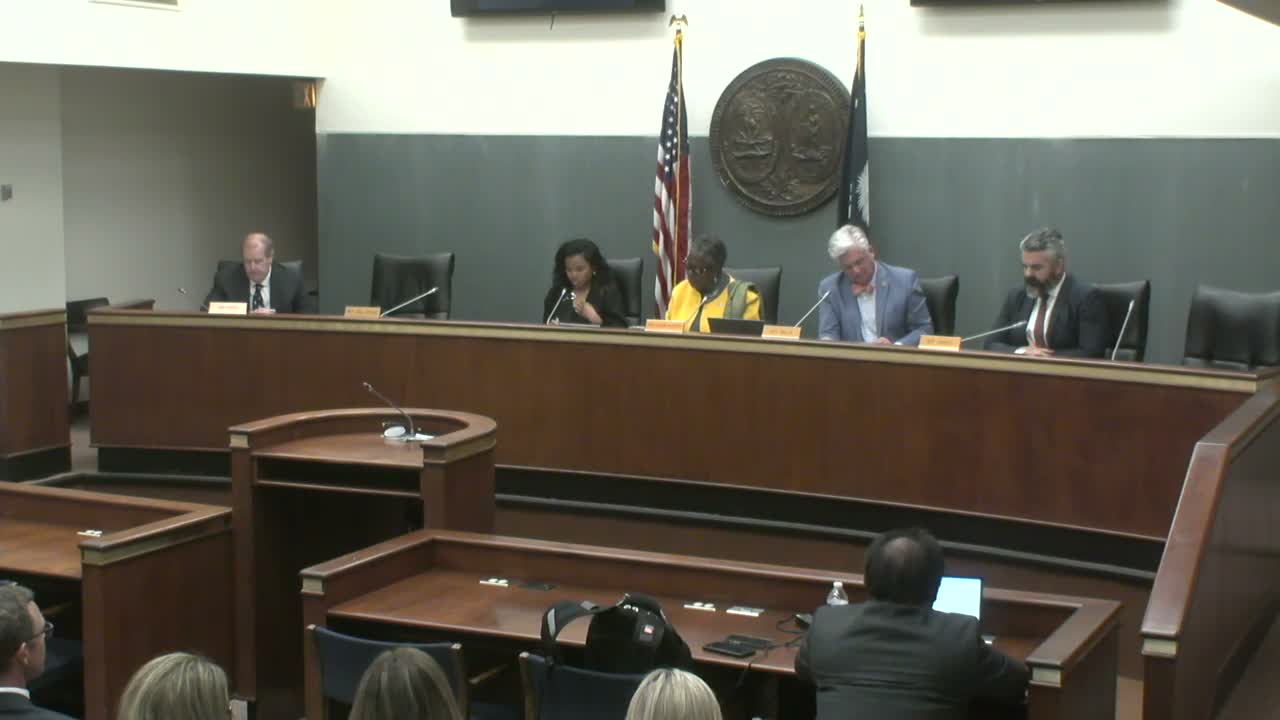
The House General Government Ways and Means Subcommittee on Thursday adjourned debate on H4464, a bill that would require Medicaid home‑ and community‑based services (HCBS) providers to pass a defined share of personal‑care reimbursement through to direct‑care workers.
Terrica Staggers summarized the bill’s mechanics: providers would be required to use 70% of the Medicaid personal‑care reimbursement as wage pass‑through initially, increasing to 75% by Jan. 1, 2028, and to 80% by Jan. 1, 2030.
Witnesses included disability‑rights advocates, caregivers and industry representatives who described how low wages and uneven employer practices have destabilized the workforce. Kimberly Tissot of Able South Carolina said HCBS in the state is “at a breaking point,” warning that the system is failing people with disabilities and resulting in costly out‑of‑state placements.
Multiple caregivers described wages they receive — in several accounts as low as $10–$11.50 per hour — lack of benefits, no mileage reimbursement, and a resulting risk that workers will leave the field for retail or other jobs that offer higher pay or benefits. Juanita McDonald told members, “When we fail to invest in PCAs, we are putting people’s lives at risk.”
Providers and some members raised legal and operational questions: several committee members pressed whether the General Assembly can require HHS to compel private providers to allocate reimbursements to wages, and staff noted federal guidance moving toward an 80/20 fiscal split for some HCBS funding by 2030. Witnesses and members said that although the state increased the reimbursement rate in 2023, many providers had not passed those funds on to workers.
Given unanswered implementation questions and the need to consult providers, analysts and federal rules, the committee voted 4–0 to adjourn debate on H4464 and continue discussions. Members said they want to find workable language that secures worker pay without unintended service disruptions or unfunded mandates.
The adjournment preserves further negotiating options; committee staff and advocates were asked to continue consultations before the measure returns to a vote.
Terrica Staggers summarized the bill’s mechanics: providers would be required to use 70% of the Medicaid personal‑care reimbursement as wage pass‑through initially, increasing to 75% by Jan. 1, 2028, and to 80% by Jan. 1, 2030.
Witnesses included disability‑rights advocates, caregivers and industry representatives who described how low wages and uneven employer practices have destabilized the workforce. Kimberly Tissot of Able South Carolina said HCBS in the state is “at a breaking point,” warning that the system is failing people with disabilities and resulting in costly out‑of‑state placements.
Multiple caregivers described wages they receive — in several accounts as low as $10–$11.50 per hour — lack of benefits, no mileage reimbursement, and a resulting risk that workers will leave the field for retail or other jobs that offer higher pay or benefits. Juanita McDonald told members, “When we fail to invest in PCAs, we are putting people’s lives at risk.”
Providers and some members raised legal and operational questions: several committee members pressed whether the General Assembly can require HHS to compel private providers to allocate reimbursements to wages, and staff noted federal guidance moving toward an 80/20 fiscal split for some HCBS funding by 2030. Witnesses and members said that although the state increased the reimbursement rate in 2023, many providers had not passed those funds on to workers.
Given unanswered implementation questions and the need to consult providers, analysts and federal rules, the committee voted 4–0 to adjourn debate on H4464 and continue discussions. Members said they want to find workable language that secures worker pay without unintended service disruptions or unfunded mandates.
The adjournment preserves further negotiating options; committee staff and advocates were asked to continue consultations before the measure returns to a vote.
View the Full Meeting & All Its Details
This article offers just a summary. Unlock complete video, transcripts, and insights as a Founder Member.
✓
Watch full, unedited meeting videos
✓
Search every word spoken in unlimited transcripts
✓
AI summaries & real-time alerts (all government levels)
✓
Permanent access to expanding government content
30-day money-back guarantee
