Senate committee hears bill to join EMS licensure compact to speed cross‑state deployments
March 25, 2026 | 2026 Legislature Alaska, Alaska
This article was created by AI summarizing key points discussed. AI makes mistakes, so for full details and context, please refer to the video of the full meeting. Please report any errors so we can fix them. Report an error »
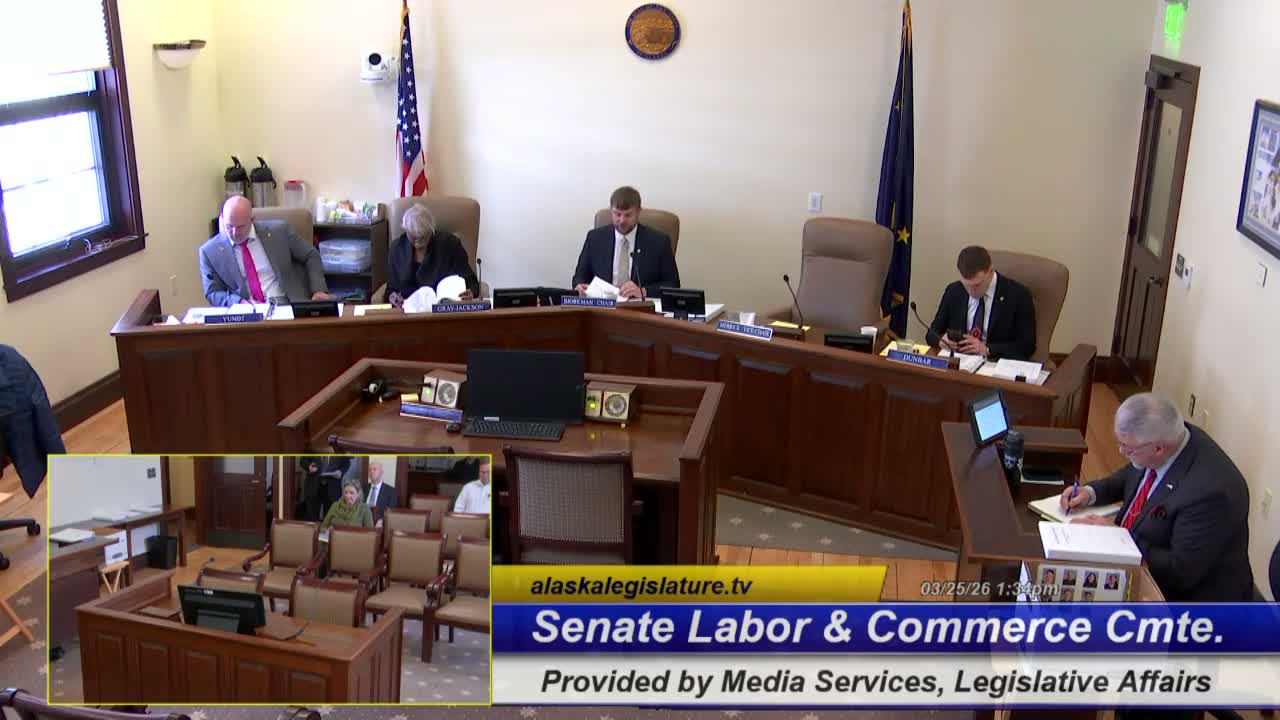
Juneau — Senators on the Senate Labor and Commerce Committee heard testimony on March 25 in favor of Senate Bill 256, which would allow Alaska to join the Emergency Medical Services Personnel Licensure Interstate Compact and create a multistate “privilege to practice” for EMTs and paramedics.
"At its core, SB 256 is about workforce mobility," said Senator Robert Myers, the bill sponsor, describing the measure as a tool to reduce administrative friction that can delay qualified providers from working across state lines during disasters and wildfire seasons. Myers said the compact would preserve Alaska's authority over licensure, discipline and scope of practice.
Tom Hatley, fire chief for Capital City Fire and Rescue, told the committee that Alaska's geography and tight staffing margins make prompt access to qualified EMS personnel essential. "This is not about lowering standards," Hatley said. "It's about removing unnecessary barriers that prevent qualified providers from getting to work in a timely manner."
Donnie Woodyard, executive director of the U.S. EMS Compact, joined by phone and said the compact is administered by the Interstate Commission for EMS Personnel Practice, now active in 25 states and covering roughly 450,000 EMS personnel nationally. "Alaska is what we would call compact ready," Woodyard said, noting the state already uses the national registry and education standards required by the compact.
Justin Perkins, executive director of the Interior Region EMS Council and a licensed paramedic, described personal delays in re‑licensing after returning to Alaska and said the compact would speed deployments and reduce administrative burden. "I still took nearly three months to submit required paperwork," Perkins said, arguing that the status quo impedes rapid deployment and contributes to burnout among rural providers.
Department of Health staff and the state Office of EMS provided technical clarifications: Brian Webb said Alaska's continuing education and scope updates align with national standards and that the state already maintains many of the administrative systems the compact would rely on. Staff explained the compact's text would be adopted into statute, create an interstate commission and a coordinated licensure database, and include a provision that Emergency Management Assistance Compact (EMAC) rules prevail during declared emergencies.
The committee did not vote on SB256; Chair Senator Bjorkman said the committee would set the bill aside for further consideration at a later meeting and review it alongside other interstate compacts.
"At its core, SB 256 is about workforce mobility," said Senator Robert Myers, the bill sponsor, describing the measure as a tool to reduce administrative friction that can delay qualified providers from working across state lines during disasters and wildfire seasons. Myers said the compact would preserve Alaska's authority over licensure, discipline and scope of practice.
Tom Hatley, fire chief for Capital City Fire and Rescue, told the committee that Alaska's geography and tight staffing margins make prompt access to qualified EMS personnel essential. "This is not about lowering standards," Hatley said. "It's about removing unnecessary barriers that prevent qualified providers from getting to work in a timely manner."
Donnie Woodyard, executive director of the U.S. EMS Compact, joined by phone and said the compact is administered by the Interstate Commission for EMS Personnel Practice, now active in 25 states and covering roughly 450,000 EMS personnel nationally. "Alaska is what we would call compact ready," Woodyard said, noting the state already uses the national registry and education standards required by the compact.
Justin Perkins, executive director of the Interior Region EMS Council and a licensed paramedic, described personal delays in re‑licensing after returning to Alaska and said the compact would speed deployments and reduce administrative burden. "I still took nearly three months to submit required paperwork," Perkins said, arguing that the status quo impedes rapid deployment and contributes to burnout among rural providers.
Department of Health staff and the state Office of EMS provided technical clarifications: Brian Webb said Alaska's continuing education and scope updates align with national standards and that the state already maintains many of the administrative systems the compact would rely on. Staff explained the compact's text would be adopted into statute, create an interstate commission and a coordinated licensure database, and include a provision that Emergency Management Assistance Compact (EMAC) rules prevail during declared emergencies.
The committee did not vote on SB256; Chair Senator Bjorkman said the committee would set the bill aside for further consideration at a later meeting and review it alongside other interstate compacts.
View the Full Meeting & All Its Details
This article offers just a summary. Unlock complete video, transcripts, and insights as a Founder Member.
✓
Watch full, unedited meeting videos
✓
Search every word spoken in unlimited transcripts
✓
AI summaries & real-time alerts (all government levels)
✓
Permanent access to expanding government content
30-day money-back guarantee
