Sellersburg BZA denies setback variance for proposed house at 1103 Dora Drive
March 17, 2026 | Town of Sellersburg, Clark County, Indiana
This article was created by AI summarizing key points discussed. AI makes mistakes, so for full details and context, please refer to the video of the full meeting. Please report any errors so we can fix them. Report an error »
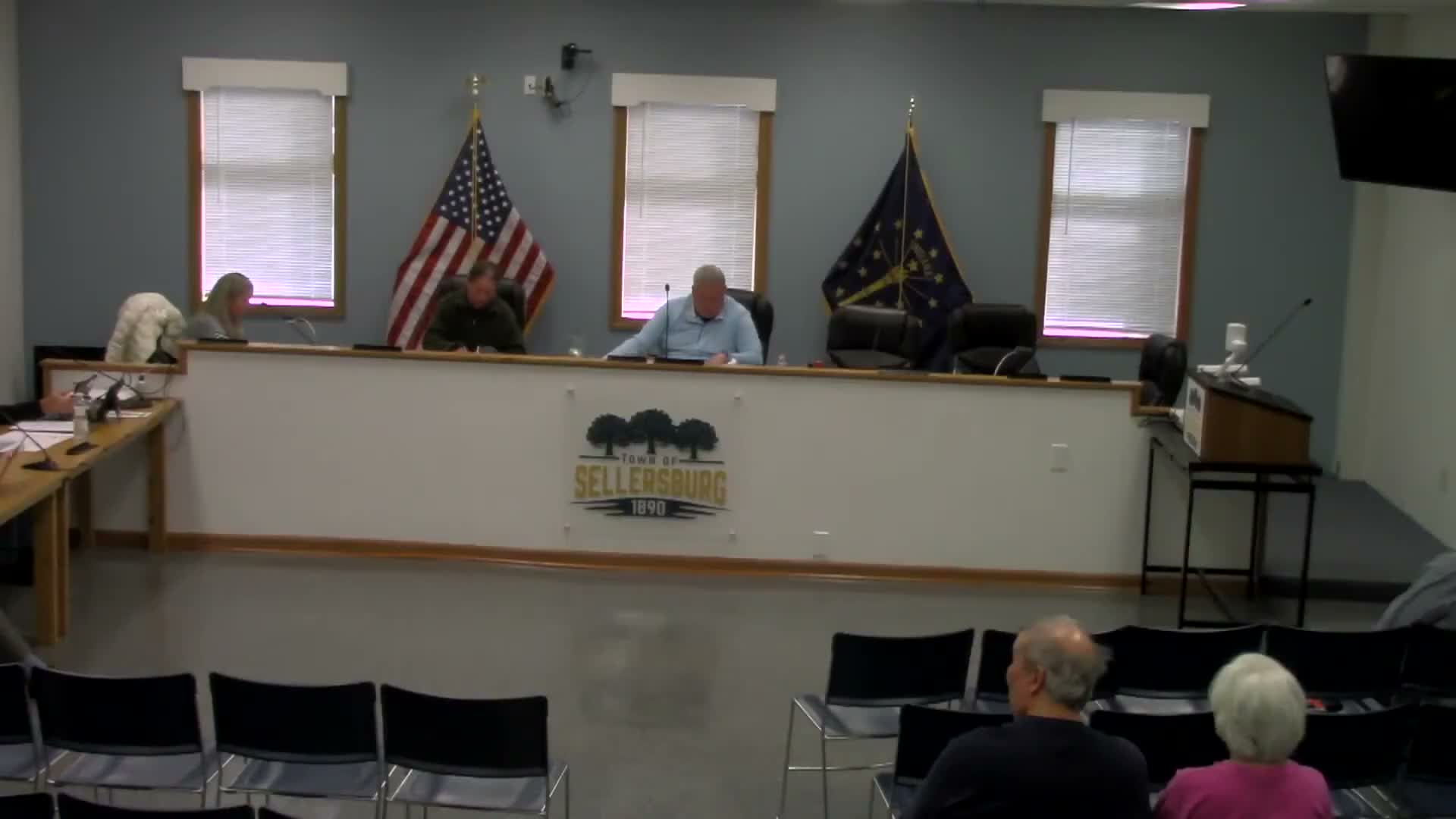
The Town of Sellersburg Board of Zoning Appeals voted to deny a development‑standard variance for 1103 Dora Drive on March 16, 2026, after concluding the applicant had not met the statutory test showing practical difficulty.
Staff presented petition 2026-02-GB-01 and summarized site data: the lot (Adams Creek, lot 28) is about 0.19 acres and the proposed single‑story residence would be roughly 1,807 square feet with a 3‑car garage. The Sellersburg Unified Development Ordinance requires an 8‑foot side‑yard setback in the R‑1 district; the applicant asked to reduce the front side setback to 5 feet 10 inches and the rear setbacks to 7 feet 3 inches.
Petitioner Patrick Martin told the board he purchased the lot to build a one‑level home “for a demographic that’s gonna be interested in it — mostly older people,” saying he had successfully marketed similar floor plans and that the three‑car garage is a market preference. Martin said the lot is “a little tight for it” and that the reductions would allow the proposed footprint.
Neighbors who spoke during the remonstrance period urged the board to deny the request. Barrett Briscoe, who identified himself as the adjacent property owner at 1105 Nora Drive, said reducing the side yards would “cut our side yard down” and raised concerns about emergency access and the placement of air‑conditioning equipment. A resident who identified herself in the hearing packet as Lauren Heberlein asked staff to clarify exactly “how much closer” the structure would be to property lines; another speaker noted inconsistent dimension sets in the distributed packet.
Staff’s analysis concluded the requested reductions are modest and unlikely to significantly change neighborhood character, but noted evidence that the need for the variance stems primarily from the size and layout of the proposed structure rather than a physical limitation of the lot. Several board members agreed that criteria one (public health, safety, morals, and general welfare) and two (effect on adjacent property) could be met, but they found the third required finding — that strict application of the ordinance would result in practical difficulties — was not satisfied because a conforming residence could be built on the lot.
After deliberation the board moved to a formal motion to deny the petition; the motion carried on the record by voice vote.
The board then recessed to an executive session to discuss anticipated litigation; no further public action on the petition was taken at that time.
Staff presented petition 2026-02-GB-01 and summarized site data: the lot (Adams Creek, lot 28) is about 0.19 acres and the proposed single‑story residence would be roughly 1,807 square feet with a 3‑car garage. The Sellersburg Unified Development Ordinance requires an 8‑foot side‑yard setback in the R‑1 district; the applicant asked to reduce the front side setback to 5 feet 10 inches and the rear setbacks to 7 feet 3 inches.
Petitioner Patrick Martin told the board he purchased the lot to build a one‑level home “for a demographic that’s gonna be interested in it — mostly older people,” saying he had successfully marketed similar floor plans and that the three‑car garage is a market preference. Martin said the lot is “a little tight for it” and that the reductions would allow the proposed footprint.
Neighbors who spoke during the remonstrance period urged the board to deny the request. Barrett Briscoe, who identified himself as the adjacent property owner at 1105 Nora Drive, said reducing the side yards would “cut our side yard down” and raised concerns about emergency access and the placement of air‑conditioning equipment. A resident who identified herself in the hearing packet as Lauren Heberlein asked staff to clarify exactly “how much closer” the structure would be to property lines; another speaker noted inconsistent dimension sets in the distributed packet.
Staff’s analysis concluded the requested reductions are modest and unlikely to significantly change neighborhood character, but noted evidence that the need for the variance stems primarily from the size and layout of the proposed structure rather than a physical limitation of the lot. Several board members agreed that criteria one (public health, safety, morals, and general welfare) and two (effect on adjacent property) could be met, but they found the third required finding — that strict application of the ordinance would result in practical difficulties — was not satisfied because a conforming residence could be built on the lot.
After deliberation the board moved to a formal motion to deny the petition; the motion carried on the record by voice vote.
The board then recessed to an executive session to discuss anticipated litigation; no further public action on the petition was taken at that time.
View the Full Meeting & All Its Details
This article offers just a summary. Unlock complete video, transcripts, and insights as a Founder Member.
✓
Watch full, unedited meeting videos
✓
Search every word spoken in unlimited transcripts
✓
AI summaries & real-time alerts (all government levels)
✓
Permanent access to expanding government content
30-day money-back guarantee
