Williamson County holds special session after chaotic March 3 primary; elections administrator describes misplaced ballots, threats and fixes
March 24, 2026 | Williamson County, Texas
This article was created by AI summarizing key points discussed. AI makes mistakes, so for full details and context, please refer to the video of the full meeting. Please report any errors so we can fix them. Report an error »
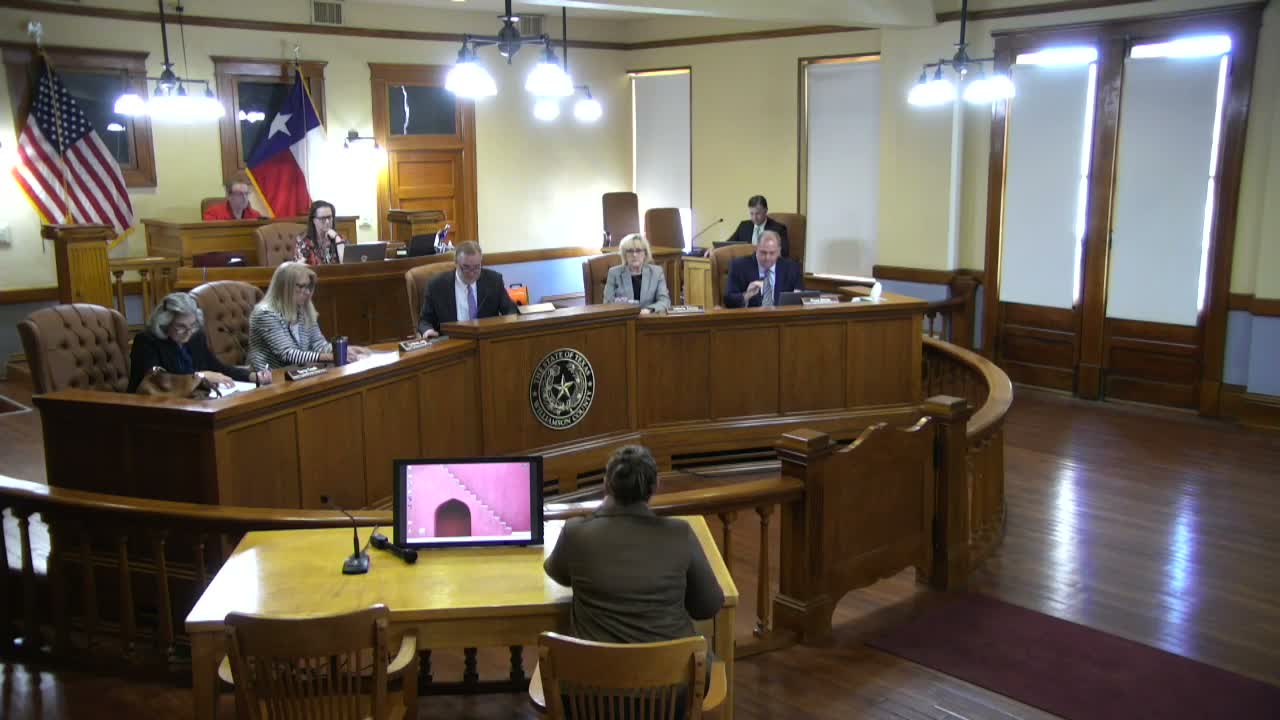
Williamson County Judge Snell called a special session to hear public comment and testimony after widespread voter confusion during the March 3 primary, where many voters reported long lines, wrong-location redirects and technical glitches.
Residents and longtime election workers told the court they saw avoidable failures on election day. “We knew this was gonna be a problem,” Katie Jimenez, of the Williamson County Democrats communications team, said, describing long lines and voters who left before casting ballots. Several precinct chairs and poll workers echoed that account, citing late location changes, missing voter cards and understaffed polling sites.
The county’s Republican chair, Michelle Evans, acknowledged the party’s decision to conduct precinct-level, party-specific polling on election day “had consequences,” apologized for errors her organization controlled and blamed a mix of factors — including last-minute location changes and unequal consumable allocations — for the breakdown in voter flow. “Failing voters and candidates is inexcusable,” Evans said, while also asserting that some confusion resulted from how locations were shared and resourced.
Democratic County Chair Kim Gilbey disputed the claim that Democrats refused to share locations and said party leaders had expressed concerns about precinct-only voting from the outset. “This was a nightmare that no one wants to revisit,” Gilbey said, while defending the party’s worker training and noting the high turnout that overwhelmed staffing plans.
Bridget Escobedo, Williamson County’s elections administrator, provided a detailed operational account and list of failures she said centered on “people, process and places.” Escobedo told commissioners her office ran a smooth early-voting period but faced extraordinary demands when the parties moved to precinct-based, party-specific election-day voting: ballot shipment timing problems, shortages of scanners and other equipment, large numbers of provisional ballots, and inconsistent reconciliation paperwork from party-run ballot drops. She said staff worked long shifts to complete counting and that full tabulation was not available until March 5.
Escobedo also said her office discovered 69 ballots that had been placed in containers intended for provisional, spoiled or surrendered mail ballots; the county obtained a district-court order to open the boxes and count those ballots. “The lack of reconciliation paperwork contributed to the 69 cast ballots not being discovered until a week after the election,” she said.
The administrator described technical contributors to voter delays: some e-poll books were not connected to MiFi hotspots early in the morning, which caused check-in and ballot-activation defaults to show only one party on screen until the devices received updates. County counsel and election staff explained that the ballot-on-demand/BMD system used at early voting required a manual activation step (an “activation code”) at primary time, and that limitation created opportunities for human error.
Escobedo also said her staff and she were subject to threats and harassment after an edited video circulated on social media alleging misconduct; she said the office filed reports with the sheriff’s department and that security resources were provided. “My staff and I have been subject to threats and hostile conduct,” she said, and she urged the public to recognize elections administration as a nonpartisan, safety-sensitive function.
Commissioners pressed for specifics about contracting, ballot ordering and equipment allocation. Officials said the Republican executive committee had voted to return to countywide voting for the upcoming runoff and that both parties had agreed to share locations and resources for that election. Escobedo told the court she would provide technical fixes before the runoff, including vendor updates to remove the manual activation steps that allowed some federal-only ballots to be presented in error.
The meeting produced several concrete follow-ups: commissioners requested a thorough after-action review; staff were asked to identify gaps in chain-of-custody procedures and reconciliation paperwork; and parties were urged to improve training and resource distribution ahead of the runoff. The court adjourned after commissioners thanked attendees and emphasized the shared goal of serving voters.
What’s next: county officials said they expect to convert lessons from the primary into concrete changes before the March 26 runoff, including restoring countywide voting for that election, confirming ballot-ordering timelines with vendors, tightening chain-of-custody procedures, and coordinating hotspot and poll-book configurations.
Residents and longtime election workers told the court they saw avoidable failures on election day. “We knew this was gonna be a problem,” Katie Jimenez, of the Williamson County Democrats communications team, said, describing long lines and voters who left before casting ballots. Several precinct chairs and poll workers echoed that account, citing late location changes, missing voter cards and understaffed polling sites.
The county’s Republican chair, Michelle Evans, acknowledged the party’s decision to conduct precinct-level, party-specific polling on election day “had consequences,” apologized for errors her organization controlled and blamed a mix of factors — including last-minute location changes and unequal consumable allocations — for the breakdown in voter flow. “Failing voters and candidates is inexcusable,” Evans said, while also asserting that some confusion resulted from how locations were shared and resourced.
Democratic County Chair Kim Gilbey disputed the claim that Democrats refused to share locations and said party leaders had expressed concerns about precinct-only voting from the outset. “This was a nightmare that no one wants to revisit,” Gilbey said, while defending the party’s worker training and noting the high turnout that overwhelmed staffing plans.
Bridget Escobedo, Williamson County’s elections administrator, provided a detailed operational account and list of failures she said centered on “people, process and places.” Escobedo told commissioners her office ran a smooth early-voting period but faced extraordinary demands when the parties moved to precinct-based, party-specific election-day voting: ballot shipment timing problems, shortages of scanners and other equipment, large numbers of provisional ballots, and inconsistent reconciliation paperwork from party-run ballot drops. She said staff worked long shifts to complete counting and that full tabulation was not available until March 5.
Escobedo also said her office discovered 69 ballots that had been placed in containers intended for provisional, spoiled or surrendered mail ballots; the county obtained a district-court order to open the boxes and count those ballots. “The lack of reconciliation paperwork contributed to the 69 cast ballots not being discovered until a week after the election,” she said.
The administrator described technical contributors to voter delays: some e-poll books were not connected to MiFi hotspots early in the morning, which caused check-in and ballot-activation defaults to show only one party on screen until the devices received updates. County counsel and election staff explained that the ballot-on-demand/BMD system used at early voting required a manual activation step (an “activation code”) at primary time, and that limitation created opportunities for human error.
Escobedo also said her staff and she were subject to threats and harassment after an edited video circulated on social media alleging misconduct; she said the office filed reports with the sheriff’s department and that security resources were provided. “My staff and I have been subject to threats and hostile conduct,” she said, and she urged the public to recognize elections administration as a nonpartisan, safety-sensitive function.
Commissioners pressed for specifics about contracting, ballot ordering and equipment allocation. Officials said the Republican executive committee had voted to return to countywide voting for the upcoming runoff and that both parties had agreed to share locations and resources for that election. Escobedo told the court she would provide technical fixes before the runoff, including vendor updates to remove the manual activation steps that allowed some federal-only ballots to be presented in error.
The meeting produced several concrete follow-ups: commissioners requested a thorough after-action review; staff were asked to identify gaps in chain-of-custody procedures and reconciliation paperwork; and parties were urged to improve training and resource distribution ahead of the runoff. The court adjourned after commissioners thanked attendees and emphasized the shared goal of serving voters.
What’s next: county officials said they expect to convert lessons from the primary into concrete changes before the March 26 runoff, including restoring countywide voting for that election, confirming ballot-ordering timelines with vendors, tightening chain-of-custody procedures, and coordinating hotspot and poll-book configurations.
Don't Miss a Word: See the Full Meeting!
Go beyond summaries. Unlock every video, transcript, and key insight with a Founder Membership.
✓
Get instant access to full meeting videos
✓
Search and clip any phrase from complete transcripts
✓
Receive AI-powered summaries & custom alerts
✓
Enjoy lifetime, unrestricted access to government data
30-day money-back guarantee
