Senate committee advances bill to stiffen penalties and civil remedies for Medicaid fraud
March 19, 2026 | 2026 Legislative Meetings, South Carolina
This article was created by AI summarizing key points discussed. AI makes mistakes, so for full details and context, please refer to the video of the full meeting. Please report any errors so we can fix them. Report an error »
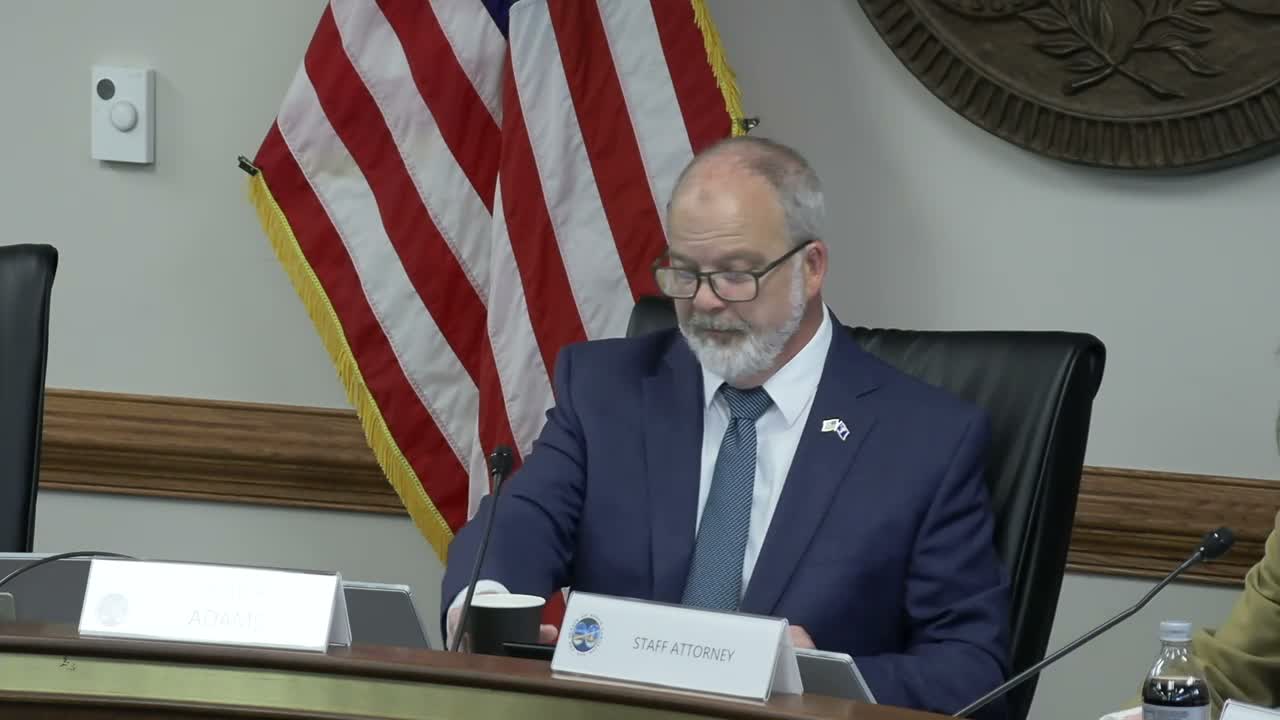
A legislative committee advanced a bill to increase criminal and civil penalties for Medicaid provider and recipient fraud at a hearing held at 9:15 a.m. Committee members adopted a technical amendment and voted to send the measure to the full committee.
The bill, introduced for explanation by Miss Wilkinson, would create tiered felony classifications and require restitution following a criminal conviction for Medicaid fraud; it would also allow consent agreements in which a defendant neither admits nor denies charges while paying civil penalties or restitution, and would give fraud investigative units administrative subpoena authority.
Supporters from the Attorney General’s office and the Department of Health and Human Services said the change is needed because current law is out of date. "South Carolina's Medicaid budget is over $9,000,000,000," Stephanie Opet, director of the Vulnerable Adults and Medicaid Provider Fraud Unit, told the committee, and cited studies estimating that "between 3 to 10 of all health care spending is lost to fraud every year," which she said translates to roughly "$270 and $900,000,000" in state losses. Opet also cited a recent prosecution, saying Operation Border War "uncovered 21,000,000 in fraudulent spending." She described fraud investigations as resource- and document-intensive and said the unit has 14 sworn officers to cover the entire state.
Deborah Tedeschi, who said she handles Medicaid recipient fraud for the Attorney General's Office, described current penalties for recipient fraud as "up to 3 years in prison and or a $1,000 fine" and said that statutory penalties written in 1994 are inadequate in 2026. Tedeschi and other presenters argued that a tiered property-crime statutory scheme would better match penalties to the scale of the misconduct and provide prosecutors greater leverage to negotiate resolutions and recover restitution.
Officials described how referrals work: the Medicaid agency and federal partners generate data that often triggers provider-fraud referrals, while the state HHS office conducts preliminary assessments on recipient-fraud tips before referring cases to the Attorney General's recipient-fraud unit. Eunice Medina, director of the Department of Health and Human Services, told the committee the agency serves about 1,000,000 enrollees and works with the AG's office on investigative referrals; she said recoveries from various audits and actions totaled $39,800,000 between 2021 and 2025.
Committee members adopted a largely technical amendment to apply tiered penalties to any offense violation (not only first-offense violations). The amendment was moved and adopted by voice vote; a subsequent motion for a favorable report on the amended bill passed by voice vote, and the committee advanced the measure to the full committee as amended.
The committee did not set a final enactment date; the bill will next be considered by the full committee.
The bill, introduced for explanation by Miss Wilkinson, would create tiered felony classifications and require restitution following a criminal conviction for Medicaid fraud; it would also allow consent agreements in which a defendant neither admits nor denies charges while paying civil penalties or restitution, and would give fraud investigative units administrative subpoena authority.
Supporters from the Attorney General’s office and the Department of Health and Human Services said the change is needed because current law is out of date. "South Carolina's Medicaid budget is over $9,000,000,000," Stephanie Opet, director of the Vulnerable Adults and Medicaid Provider Fraud Unit, told the committee, and cited studies estimating that "between 3 to 10 of all health care spending is lost to fraud every year," which she said translates to roughly "$270 and $900,000,000" in state losses. Opet also cited a recent prosecution, saying Operation Border War "uncovered 21,000,000 in fraudulent spending." She described fraud investigations as resource- and document-intensive and said the unit has 14 sworn officers to cover the entire state.
Deborah Tedeschi, who said she handles Medicaid recipient fraud for the Attorney General's Office, described current penalties for recipient fraud as "up to 3 years in prison and or a $1,000 fine" and said that statutory penalties written in 1994 are inadequate in 2026. Tedeschi and other presenters argued that a tiered property-crime statutory scheme would better match penalties to the scale of the misconduct and provide prosecutors greater leverage to negotiate resolutions and recover restitution.
Officials described how referrals work: the Medicaid agency and federal partners generate data that often triggers provider-fraud referrals, while the state HHS office conducts preliminary assessments on recipient-fraud tips before referring cases to the Attorney General's recipient-fraud unit. Eunice Medina, director of the Department of Health and Human Services, told the committee the agency serves about 1,000,000 enrollees and works with the AG's office on investigative referrals; she said recoveries from various audits and actions totaled $39,800,000 between 2021 and 2025.
Committee members adopted a largely technical amendment to apply tiered penalties to any offense violation (not only first-offense violations). The amendment was moved and adopted by voice vote; a subsequent motion for a favorable report on the amended bill passed by voice vote, and the committee advanced the measure to the full committee as amended.
The committee did not set a final enactment date; the bill will next be considered by the full committee.
Don't Miss a Word: See the Full Meeting!
Go beyond summaries. Unlock every video, transcript, and key insight with a Founder Membership.
✓
Get instant access to full meeting videos
✓
Search and clip any phrase from complete transcripts
✓
Receive AI-powered summaries & custom alerts
✓
Enjoy lifetime, unrestricted access to government data
30-day money-back guarantee
