Committee advances civil remedy bill for nonconsensual sharing of intimate images
March 19, 2026 | 2026 Legislative Meetings, South Carolina
This article was created by AI summarizing key points discussed. AI makes mistakes, so for full details and context, please refer to the video of the full meeting. Please report any errors so we can fix them. Report an error »
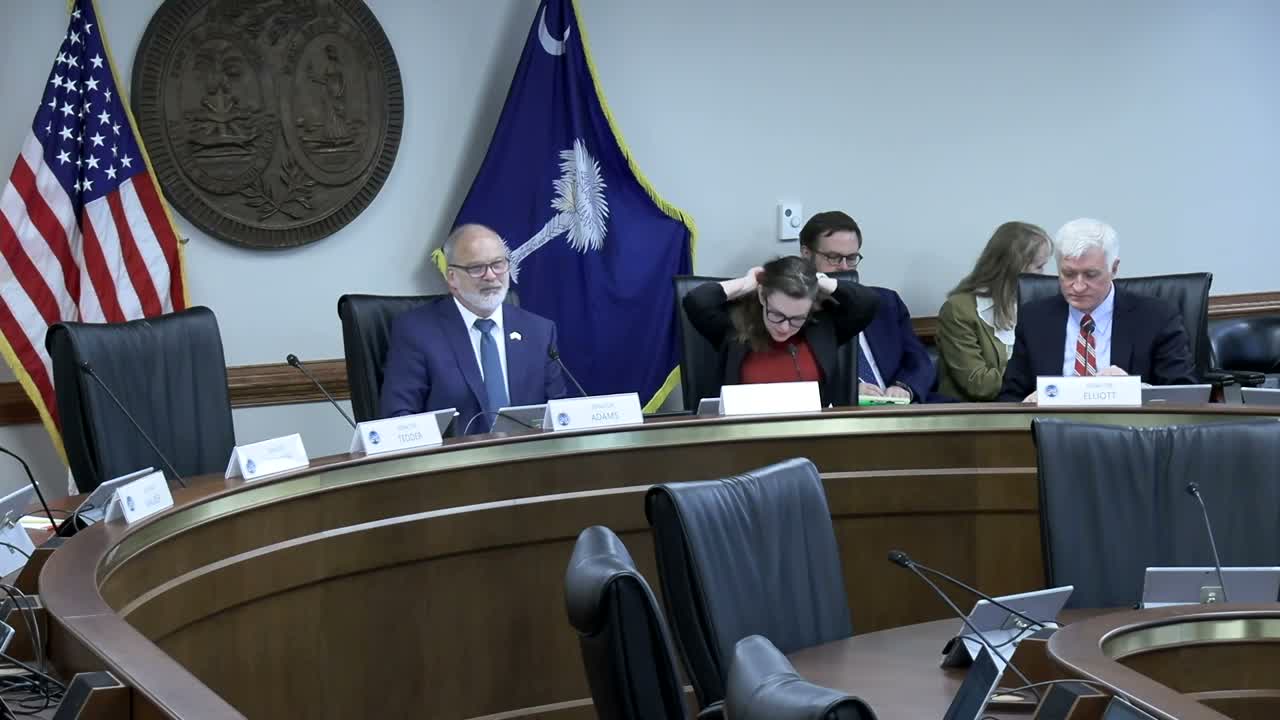
A committee advanced legislation that would let people sue for the nonconsensual disclosure of intimate images, and adopted an amendment carving out certain technology and intermediary providers from liability.
Miss Baker presented the Uniform Civil Remedies for Unauthorized Disclosure of Intimate Images Act, which would define relevant terms and create a civil action against a person who "intentionally discloses or threatens to disclose intimate images of another without their consent." The bill would allow plaintiffs to file motions to seal or otherwise protect their identity and permit recovery of the greater of economic or noneconomic damages, including emotional distress, statutory damages not to exceed $10,000 against each defendant, any monetary gain made by a defendant from the disclosure, punitive damages, attorney’s fees and costs, and other relief.
In response to stakeholder input, Miss Baker introduced language to exempt certain intermediaries and technology providers. The amendment would add subsection (e), excluding interactive computer services as defined in 47 U.S.C. §230, internet service providers, cloud providers, telecommunications networks, broadcasters, streaming platforms and similar entities from liability. It would also add subsection (f) clarifying the section does not apply to providers of any technology used in the creation of an intimate image.
Committee members expressed support for the intent of the bill while asking whether the proposed carve-outs could unintentionally shield bad actors. Miss Baker countered by saying the bill's focus is the intentional actor — "the user" — who discloses the image, not intermediary platforms. The amendment was adopted by voice vote and committee members then voted to report the bill favorably as amended; the measure moves to the full committee.
The committee did not determine final damages application rules or broader implementation details; those will be subject to committee markup and possible stakeholder negotiations in subsequent stages.
Miss Baker presented the Uniform Civil Remedies for Unauthorized Disclosure of Intimate Images Act, which would define relevant terms and create a civil action against a person who "intentionally discloses or threatens to disclose intimate images of another without their consent." The bill would allow plaintiffs to file motions to seal or otherwise protect their identity and permit recovery of the greater of economic or noneconomic damages, including emotional distress, statutory damages not to exceed $10,000 against each defendant, any monetary gain made by a defendant from the disclosure, punitive damages, attorney’s fees and costs, and other relief.
In response to stakeholder input, Miss Baker introduced language to exempt certain intermediaries and technology providers. The amendment would add subsection (e), excluding interactive computer services as defined in 47 U.S.C. §230, internet service providers, cloud providers, telecommunications networks, broadcasters, streaming platforms and similar entities from liability. It would also add subsection (f) clarifying the section does not apply to providers of any technology used in the creation of an intimate image.
Committee members expressed support for the intent of the bill while asking whether the proposed carve-outs could unintentionally shield bad actors. Miss Baker countered by saying the bill's focus is the intentional actor — "the user" — who discloses the image, not intermediary platforms. The amendment was adopted by voice vote and committee members then voted to report the bill favorably as amended; the measure moves to the full committee.
The committee did not determine final damages application rules or broader implementation details; those will be subject to committee markup and possible stakeholder negotiations in subsequent stages.
View the Full Meeting & All Its Details
This article offers just a summary. Unlock complete video, transcripts, and insights as a Founder Member.
✓
Watch full, unedited meeting videos
✓
Search every word spoken in unlimited transcripts
✓
AI summaries & real-time alerts (all government levels)
✓
Permanent access to expanding government content
30-day money-back guarantee
