Committee advances bill to allow over-the-counter ivermectin with pharmacist consultation, amid safety debate
March 24, 2026 | 2026 Legislative Meetings, South Carolina
This article was created by AI summarizing key points discussed. AI makes mistakes, so for full details and context, please refer to the video of the full meeting. Please report any errors so we can fix them. Report an error »
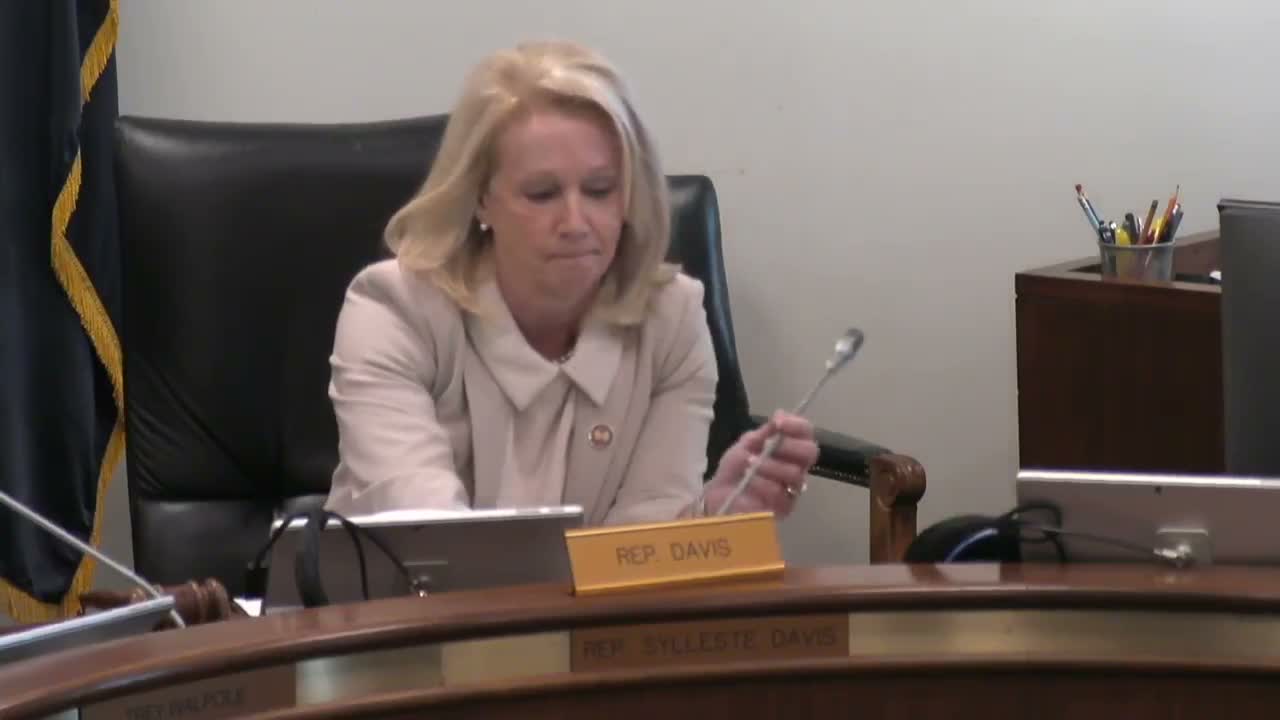
The House medical subcommittee voted to advance House Bill 4042 as amended on Thursday, a measure that would permit over-the-counter sale of ivermectin tablets for people aged 18 and older with a required pharmacist consultation and screening process.
Sponsor Representative Sessions told the committee HB4042 "would permit Ivermectin tablets to be made available to the public for over the counter purchase in the state," removing the prescription and pharmacist-consultation barrier that currently controls access. The subcommittee amendment placed an age limit of 18 and directed the State Board of Pharmacy to establish screening, risk-assessment and information protocols for point-of-sale consultations.
Debate focused on safety, misuse and pharmacist liability. Miss Waters urged caution, saying the drug "does have some side effects around toxicity" and that "some are using veterinarian situations and some are used for humans," raising concern about people accessing veterinary formulations or using ivermectin for unapproved conditions. Representative Sessions and other supporters said the amendment balances medical freedom and informed consent by placing a pharmacist at the point of sale to screen for contraindications and provide guidance.
Committee members pressed whether states can alter access given FDA classifications. One member asked whether making the drug OTC would "override the FDA classification," and members were told the bill addresses how the drug is administered and dispensed in the state, not the federal product classification.
Several lawmakers asked about pharmacist liability; the amendment includes an administrative safe-harbor for pharmacists who act "in good faith and with reasonable care" and ties immunity to compliance with Board rules (for example, requiring screening tools and patient information). Representative Bustos said he was uncomfortable with broad immunity language, and others suggested written waivers or explicit procedural safeguards be included in rules the Board will write.
Representative Pace noted five states that have taken similar steps (Tennessee, Arkansas, Idaho, Louisiana and Texas), arguing that with consultation the proposal resembles existing over-the-counter models such as pseudoephedrine controls where a pharmacist must be involved in the sale. Representative Magnusson and others reported conversations with pharmacists and some physicians who supported OTC access with point-of-sale consultation.
Procedurally, Representative Gilliard moved to table the bill at one point but withdrew or clarified the motion after discussion; a later roll-call vote on a tabling motion failed when 11 members opposed tabling. The clerk recorded a roll-call on the final question that produced a reported tally of 10 in favor; the committee advanced the bill as amended.
Next steps: the measure, as amended, will be carried to the House floor. The State Board of Pharmacy will be responsible for issuing implementing screening and consultation protocols if the bill becomes law.
Sponsor Representative Sessions told the committee HB4042 "would permit Ivermectin tablets to be made available to the public for over the counter purchase in the state," removing the prescription and pharmacist-consultation barrier that currently controls access. The subcommittee amendment placed an age limit of 18 and directed the State Board of Pharmacy to establish screening, risk-assessment and information protocols for point-of-sale consultations.
Debate focused on safety, misuse and pharmacist liability. Miss Waters urged caution, saying the drug "does have some side effects around toxicity" and that "some are using veterinarian situations and some are used for humans," raising concern about people accessing veterinary formulations or using ivermectin for unapproved conditions. Representative Sessions and other supporters said the amendment balances medical freedom and informed consent by placing a pharmacist at the point of sale to screen for contraindications and provide guidance.
Committee members pressed whether states can alter access given FDA classifications. One member asked whether making the drug OTC would "override the FDA classification," and members were told the bill addresses how the drug is administered and dispensed in the state, not the federal product classification.
Several lawmakers asked about pharmacist liability; the amendment includes an administrative safe-harbor for pharmacists who act "in good faith and with reasonable care" and ties immunity to compliance with Board rules (for example, requiring screening tools and patient information). Representative Bustos said he was uncomfortable with broad immunity language, and others suggested written waivers or explicit procedural safeguards be included in rules the Board will write.
Representative Pace noted five states that have taken similar steps (Tennessee, Arkansas, Idaho, Louisiana and Texas), arguing that with consultation the proposal resembles existing over-the-counter models such as pseudoephedrine controls where a pharmacist must be involved in the sale. Representative Magnusson and others reported conversations with pharmacists and some physicians who supported OTC access with point-of-sale consultation.
Procedurally, Representative Gilliard moved to table the bill at one point but withdrew or clarified the motion after discussion; a later roll-call vote on a tabling motion failed when 11 members opposed tabling. The clerk recorded a roll-call on the final question that produced a reported tally of 10 in favor; the committee advanced the bill as amended.
Next steps: the measure, as amended, will be carried to the House floor. The State Board of Pharmacy will be responsible for issuing implementing screening and consultation protocols if the bill becomes law.
View the Full Meeting & All Its Details
This article offers just a summary. Unlock complete video, transcripts, and insights as a Founder Member.
✓
Watch full, unedited meeting videos
✓
Search every word spoken in unlimited transcripts
✓
AI summaries & real-time alerts (all government levels)
✓
Permanent access to expanding government content
30-day money-back guarantee
