Madison council adopts UDO after resident concerns about solar setbacks; traffic code change also approved
March 18, 2026 | Madison City, Jefferson County, Indiana
This article was created by AI summarizing key points discussed. AI makes mistakes, so for full details and context, please refer to the video of the full meeting. Please report any errors so we can fix them. Report an error »
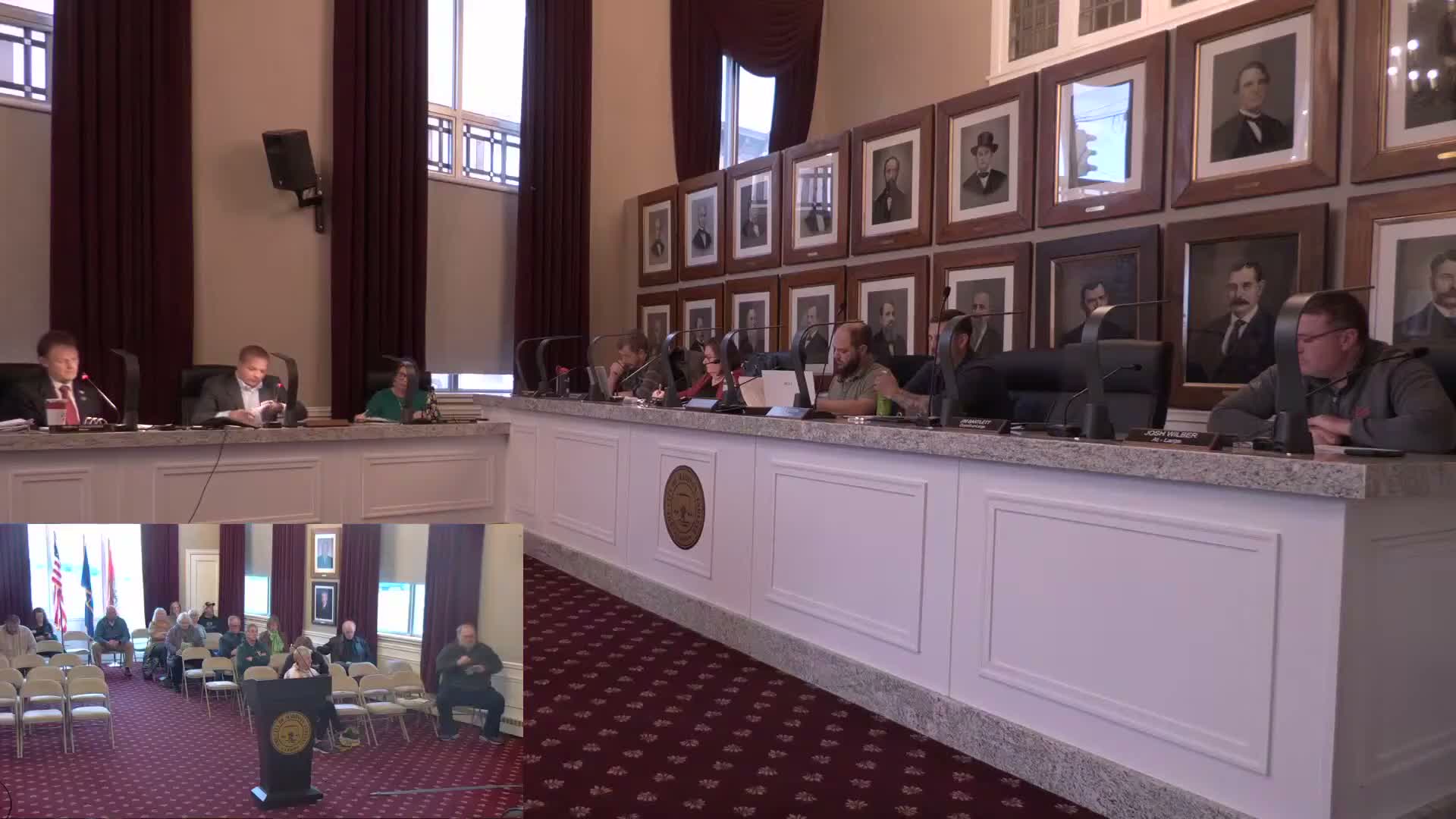
The Madison City Council completed second reading and approval of Ordinance 2026‑4, the city’s new Unified Development Ordinance, after consultant Amy Williams explained how the ordinance treats commercial solar and buffer zones and after several residents voiced concerns about setbacks and data‑center protections.
Amy Williams, consultant with Taylor Seifker Williams, told the council that the draft UDO requires a 500‑foot setback for commercial solar from the closest edge of any existing dwelling, church, school or cemetery and that the ordinance also applies a 500‑foot setback from a platted residential parcel or a parcel zoned residential. "Commercial solar requires a 500 foot setback from the closest edge of any, existing dwelling, church, school, or cemetery," Williams said, explaining that commercial energy uses would generally be allowed only in agricultural or heavy‑industry districts and would require Board of Zoning Appeals review.
During public comment, several residents sought stronger protections. Sherry Chabot, a Deputy Pike resident and member of a buffer‑zone group, urged the council to consider a moratorium or a referral back to the planning commission to address protections for the community. "I'm gonna ask council to please consider a moratorium or to send it back to your plan commission to at least have an exploratory commission," Chabot said. Cindy Goli and Cheryl Tandy also raised questions about how the 500‑foot rule is applied to parcels zoned R1 or RA and whether county and city boundaries affect protections for farm properties.
The council responded by noting that the UDO language mirrors many county provisions and that where parcels fall under county jurisdiction, the county’s rules may apply; council members said the document is intended to be revisited as experience warrants. After discussion and public comment, the clerk recorded roll call votes on Ordinance 2026‑4; present council members recorded affirmative votes and one member was absent, and the ordinance advanced on second reading.
The council also considered Ordinance 2026‑5, a traffic‑code amendment to establish a two‑way stop at Second and Central Streets; the council recorded affirmative roll call votes and passed that ordinance on second reading.
Separately, the council heard the first reading of Ordinance 2026‑6c, the employee handbook benefits update. Jenna Gibbs (city staff) summarized substantive changes to benefit policies, including adding Indiana child educational activities leave, clearer accrual and usage guidance for vacation and sick leave, expanded bereavement provisions, and replacing a narrower parental‑leave policy with a broader personal‑leave policy to cover qualifying medical situations for employees and family members.
Next steps: the mayor noted that the city will continue to accept public input and will revisit the UDO and related policies as needed; council business then moved on to other agenda items.
Amy Williams, consultant with Taylor Seifker Williams, told the council that the draft UDO requires a 500‑foot setback for commercial solar from the closest edge of any existing dwelling, church, school or cemetery and that the ordinance also applies a 500‑foot setback from a platted residential parcel or a parcel zoned residential. "Commercial solar requires a 500 foot setback from the closest edge of any, existing dwelling, church, school, or cemetery," Williams said, explaining that commercial energy uses would generally be allowed only in agricultural or heavy‑industry districts and would require Board of Zoning Appeals review.
During public comment, several residents sought stronger protections. Sherry Chabot, a Deputy Pike resident and member of a buffer‑zone group, urged the council to consider a moratorium or a referral back to the planning commission to address protections for the community. "I'm gonna ask council to please consider a moratorium or to send it back to your plan commission to at least have an exploratory commission," Chabot said. Cindy Goli and Cheryl Tandy also raised questions about how the 500‑foot rule is applied to parcels zoned R1 or RA and whether county and city boundaries affect protections for farm properties.
The council responded by noting that the UDO language mirrors many county provisions and that where parcels fall under county jurisdiction, the county’s rules may apply; council members said the document is intended to be revisited as experience warrants. After discussion and public comment, the clerk recorded roll call votes on Ordinance 2026‑4; present council members recorded affirmative votes and one member was absent, and the ordinance advanced on second reading.
The council also considered Ordinance 2026‑5, a traffic‑code amendment to establish a two‑way stop at Second and Central Streets; the council recorded affirmative roll call votes and passed that ordinance on second reading.
Separately, the council heard the first reading of Ordinance 2026‑6c, the employee handbook benefits update. Jenna Gibbs (city staff) summarized substantive changes to benefit policies, including adding Indiana child educational activities leave, clearer accrual and usage guidance for vacation and sick leave, expanded bereavement provisions, and replacing a narrower parental‑leave policy with a broader personal‑leave policy to cover qualifying medical situations for employees and family members.
Next steps: the mayor noted that the city will continue to accept public input and will revisit the UDO and related policies as needed; council business then moved on to other agenda items.
View the Full Meeting & All Its Details
This article offers just a summary. Unlock complete video, transcripts, and insights as a Founder Member.
✓
Watch full, unedited meeting videos
✓
Search every word spoken in unlimited transcripts
✓
AI summaries & real-time alerts (all government levels)
✓
Permanent access to expanding government content
30-day money-back guarantee
