Committee advances bill requiring local jails to seek written immigration enforcement agreements amid civil-rights concerns
March 24, 2026 | 2026 Legislative Meetings, South Carolina
This article was created by AI summarizing key points discussed. AI makes mistakes, so for full details and context, please refer to the video of the full meeting. Please report any errors so we can fix them. Report an error »
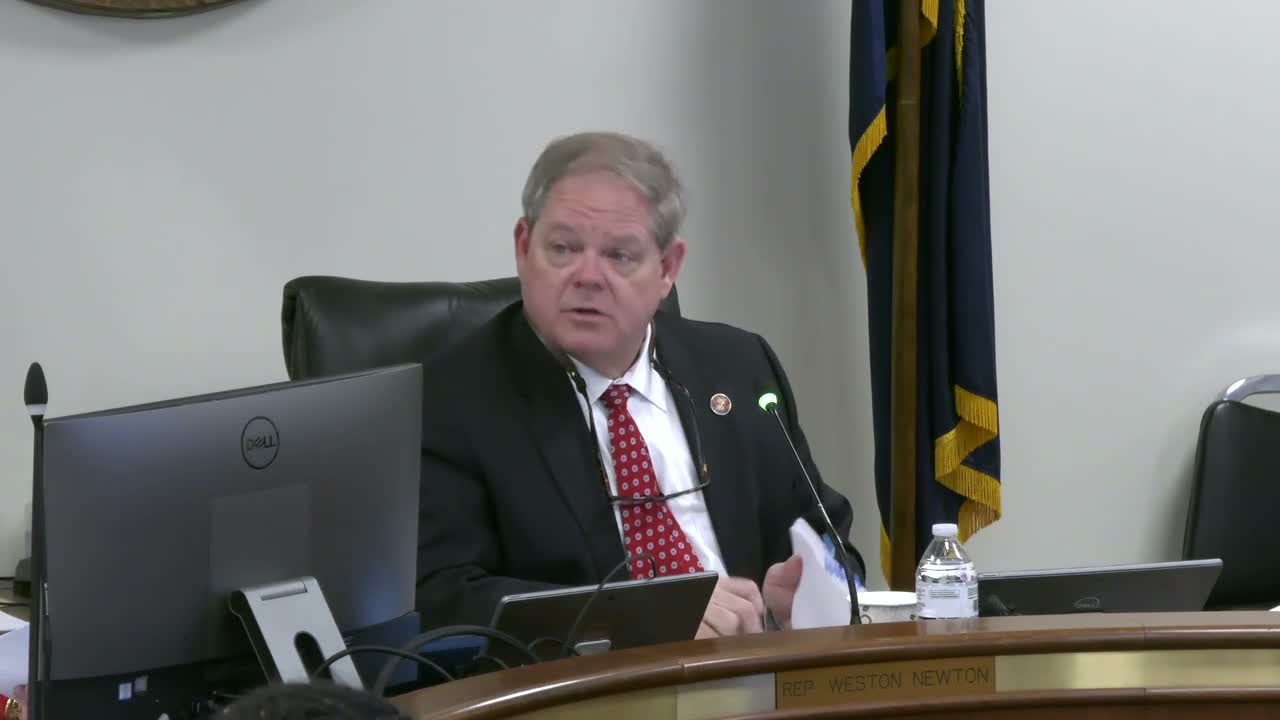
A House committee voted to report H4764 favorably after extended debate over a measure that would require local law-enforcement agencies operating correctional facilities to attempt annual written agreements with federal immigration authorities under models commonly associated with the 287(g) program.
Subcommittee chair Mister Moore described the bill as a means to standardize three optional models — jail enforcement, warrant-service, or task-force arrangements — while allowing each agency to negotiate the scope, duties and cost allocation. The bill, he said, also requires agencies to file proof of an annual attempt to enter an agreement with South Carolina's illegal immigration enforcement unit in SLED and provides training and defined compliance safe harbors when federal authorities decline to participate.
Opponents, including Representative Wetmore, warned the mandate could undermine community trust in local police and create unfunded obligations for counties. Wetmore and others said the bill risks widening a trust gap in jurisdictions still trying to strengthen transparency and community policing.
Lawmakers pressed the measure on funding and liability questions. Representative King asked whether the state will subsidize local implementation; Moore responded that the statute leaves cost negotiations to local agencies, that the bill includes a narrowly tailored safe-harbor for fiscally or operationally impracticable situations, and that no direct state subsidy is specified in the bill text.
A significant point of contention was subsection I, which creates a civil-immunity clause for government officers and entities acting in good faith under the agreements. Representative Rose moved to strike that immunity provision; the chair moved to table Rose's amendment and the committee voted to table it. Members who opposed the immunity language argued it would bar meaningful judicial review if residents were harmed during cooperative operations.
Supporters, including Representative Landy and Representative Bailey, said better coordination between local and federal authorities can help prevent crimes that cross jurisdictions and cited past multiagency operations as examples where cooperation aided investigations.
By the end of debate the committee recorded a favorable report on H4764 as amended (roll-call reported in the transcript). The bill's supporters emphasized the provision's negotiated safe harbors and reporting requirements; critics requested further protections and clarification on liability and the scope of mandatory efforts.
What happens next: The committee report sends H4764 to the next legislative stage with the existing amendments and the immunity language still in place. Additional floor amendments or clarifying changes could be offered as the bill progresses.
Subcommittee chair Mister Moore described the bill as a means to standardize three optional models — jail enforcement, warrant-service, or task-force arrangements — while allowing each agency to negotiate the scope, duties and cost allocation. The bill, he said, also requires agencies to file proof of an annual attempt to enter an agreement with South Carolina's illegal immigration enforcement unit in SLED and provides training and defined compliance safe harbors when federal authorities decline to participate.
Opponents, including Representative Wetmore, warned the mandate could undermine community trust in local police and create unfunded obligations for counties. Wetmore and others said the bill risks widening a trust gap in jurisdictions still trying to strengthen transparency and community policing.
Lawmakers pressed the measure on funding and liability questions. Representative King asked whether the state will subsidize local implementation; Moore responded that the statute leaves cost negotiations to local agencies, that the bill includes a narrowly tailored safe-harbor for fiscally or operationally impracticable situations, and that no direct state subsidy is specified in the bill text.
A significant point of contention was subsection I, which creates a civil-immunity clause for government officers and entities acting in good faith under the agreements. Representative Rose moved to strike that immunity provision; the chair moved to table Rose's amendment and the committee voted to table it. Members who opposed the immunity language argued it would bar meaningful judicial review if residents were harmed during cooperative operations.
Supporters, including Representative Landy and Representative Bailey, said better coordination between local and federal authorities can help prevent crimes that cross jurisdictions and cited past multiagency operations as examples where cooperation aided investigations.
By the end of debate the committee recorded a favorable report on H4764 as amended (roll-call reported in the transcript). The bill's supporters emphasized the provision's negotiated safe harbors and reporting requirements; critics requested further protections and clarification on liability and the scope of mandatory efforts.
What happens next: The committee report sends H4764 to the next legislative stage with the existing amendments and the immunity language still in place. Additional floor amendments or clarifying changes could be offered as the bill progresses.
Don't Miss a Word: See the Full Meeting!
Go beyond summaries. Unlock every video, transcript, and key insight with a Founder Membership.
✓
Get instant access to full meeting videos
✓
Search and clip any phrase from complete transcripts
✓
Receive AI-powered summaries & custom alerts
✓
Enjoy lifetime, unrestricted access to government data
30-day money-back guarantee
