Committee backs bill to limit addictive social-media features for children and set parental-consent safeguards
March 24, 2026 | 2026 Legislative Meetings, South Carolina
This article was created by AI summarizing key points discussed. AI makes mistakes, so for full details and context, please refer to the video of the full meeting. Please report any errors so we can fix them. Report an error »
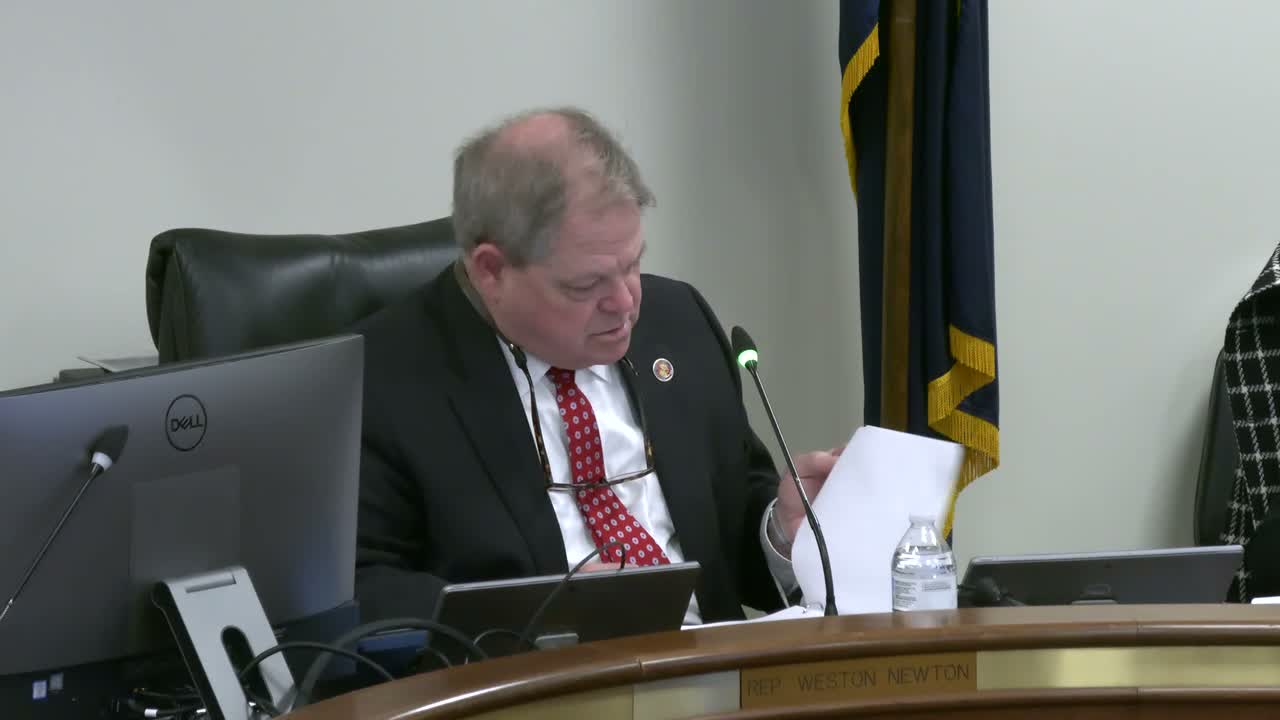
A committee reported H4591, the "Stop Harm from Addictive Social Media Act," favorably after members debated definitions and scope. The bill would require covered large platforms (defined by ad-revenue thresholds) to estimate account-holders' ages after certain usage triggers and to default child accounts to the highest privacy settings unless verifiable parental consent is supplied.
Sponsor and subcommittee chair Mister Moore said the bill targets "covered social media platforms" that generated at least $1 billion in advertising revenue in one of the prior three years, focusing the rule on very large firms rather than smaller new apps. The bill would prohibit certain "addictive features" (including infinite scrolling among listed interface features), forbid profile-based advertising in child feeds, and require dispute processes and account termination rules when platforms cannot verify parental consent.
Members asked technical questions about definitions and unintended consequences: Representative Mitchell noted prior legislative language on infinite scrolling and asked staff to ensure the new terms do not create loopholes between related bills. Representative Bamberg raised concerns about how the bill's age-estimation trigger could misclassify an adult'owned account temporarily used by a child and the potential operational impact on platforms like YouTube.
Panels and written submissions from industry groups such as TechNet and NetChoice appeared in the subcommittee record; lawmakers including Representative Martin and others said stakeholder pushback underscores why statutory clarity and enforceable safeguards are necessary to protect minors' mental health.
The committee adopted technical amendments to clarify covered-platform scope, enforcement language, and to align definitions; the effective date was set to 01/01/2027 to allow platforms and courts to adjust. The committee recorded a favorable report as amended.
What happens next: H4591 moves forward to the full floor with clarified definitions and an effective date of January 1, 2027; members and staff signaled readiness to refine definitions to avoid regulatory gaps while preserving protections for children.
Sponsor and subcommittee chair Mister Moore said the bill targets "covered social media platforms" that generated at least $1 billion in advertising revenue in one of the prior three years, focusing the rule on very large firms rather than smaller new apps. The bill would prohibit certain "addictive features" (including infinite scrolling among listed interface features), forbid profile-based advertising in child feeds, and require dispute processes and account termination rules when platforms cannot verify parental consent.
Members asked technical questions about definitions and unintended consequences: Representative Mitchell noted prior legislative language on infinite scrolling and asked staff to ensure the new terms do not create loopholes between related bills. Representative Bamberg raised concerns about how the bill's age-estimation trigger could misclassify an adult'owned account temporarily used by a child and the potential operational impact on platforms like YouTube.
Panels and written submissions from industry groups such as TechNet and NetChoice appeared in the subcommittee record; lawmakers including Representative Martin and others said stakeholder pushback underscores why statutory clarity and enforceable safeguards are necessary to protect minors' mental health.
The committee adopted technical amendments to clarify covered-platform scope, enforcement language, and to align definitions; the effective date was set to 01/01/2027 to allow platforms and courts to adjust. The committee recorded a favorable report as amended.
What happens next: H4591 moves forward to the full floor with clarified definitions and an effective date of January 1, 2027; members and staff signaled readiness to refine definitions to avoid regulatory gaps while preserving protections for children.
Don't Miss a Word: See the Full Meeting!
Go beyond summaries. Unlock every video, transcript, and key insight with a Founder Membership.
✓
Get instant access to full meeting videos
✓
Search and clip any phrase from complete transcripts
✓
Receive AI-powered summaries & custom alerts
✓
Enjoy lifetime, unrestricted access to government data
30-day money-back guarantee
