Senate debate over appointments bill exposes split over interim appointments and public‑health leadership
March 24, 2026 | 2026 Legislative Meetings, South Carolina
This article was created by AI summarizing key points discussed. AI makes mistakes, so for full details and context, please refer to the video of the full meeting. Please report any errors so we can fix them. Report an error »
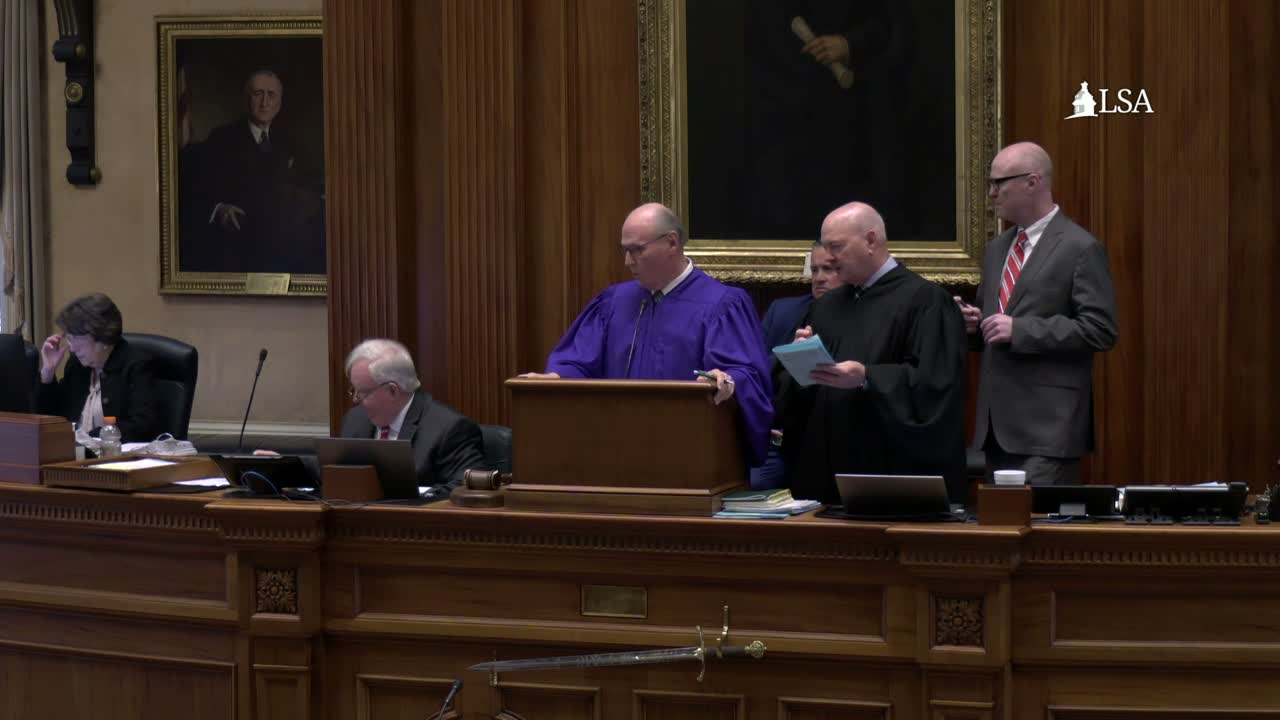
The South Carolina Senate spent a large portion of its March 24 floor period debating S.922, a bill that reorganizes how the governor’s appointments and certain boards are handled and clarifies interim‑appointment procedures. At issue was an amendment that, if adopted as written, would remove the advice‑and‑consent requirement for some posts and effectively vacate a specified agency director’s office at the end of the legislative session.
Supporters said the amendment fixed a drafting mistake and made the appointment process clearer. Senator from Edgefield, explaining the amendment, said the bill would require interim appointments to be made during the interim in which a vacancy occurred and would ensure the governor notifies the Senate when making interim appointments. He said the change corrected language inserted when DHEC was split into new agencies and would prevent an unelected director from serving indefinitely without Senate confirmation.
Opponents argued the amendment singled out a current director and could leave the Department of Public Health (DPH) without permanent leadership during a critical period. Senator from Charleston pressed that the amendment, as it had been applied, would force the current director out at session end and could leave the state without an experienced executive through months when public‑health incidents can arise. “If we start making bills about people, personalities, is that good practice?” one senator asked during floor exchanges.
Several senators raised process and precedent concerns: they said the core bill had been a bipartisan, forward‑looking clarification of appointments, and that the late insertion of a removal date turned a process bill into one that affects personnel. Senator from Kershaw said he added his name to the bill in protest after the amendment was attached, arguing the change ran counter to the bill’s original intent to protect the Senate’s advice‑and‑consent role.
The Senate voted on a motion to table the contested amendment; the motion carried (tabling vote recorded at 31–12). Later the body completed third reading of S.922 and advanced it on the calendar. Floor exchanges also included extended discussion of recent measles outbreaks and the practical effect of leaving DPH leadership vacant — senators asked whether the bill’s language would apply prospectively or retroactively, and whether an interim appointment procedure would leave gaps in leadership when the Senate is not in session.
What happens next: With the amendment tabled on the floor, S.922 was given third reading and now proceeds through the legislative process. The debate highlighted lingering divisions about how aggressively the General Assembly should alter appointment rules and underscored concerns from some members about ensuring continuous leadership of critical public‑health agencies.
Supporters said the amendment fixed a drafting mistake and made the appointment process clearer. Senator from Edgefield, explaining the amendment, said the bill would require interim appointments to be made during the interim in which a vacancy occurred and would ensure the governor notifies the Senate when making interim appointments. He said the change corrected language inserted when DHEC was split into new agencies and would prevent an unelected director from serving indefinitely without Senate confirmation.
Opponents argued the amendment singled out a current director and could leave the Department of Public Health (DPH) without permanent leadership during a critical period. Senator from Charleston pressed that the amendment, as it had been applied, would force the current director out at session end and could leave the state without an experienced executive through months when public‑health incidents can arise. “If we start making bills about people, personalities, is that good practice?” one senator asked during floor exchanges.
Several senators raised process and precedent concerns: they said the core bill had been a bipartisan, forward‑looking clarification of appointments, and that the late insertion of a removal date turned a process bill into one that affects personnel. Senator from Kershaw said he added his name to the bill in protest after the amendment was attached, arguing the change ran counter to the bill’s original intent to protect the Senate’s advice‑and‑consent role.
The Senate voted on a motion to table the contested amendment; the motion carried (tabling vote recorded at 31–12). Later the body completed third reading of S.922 and advanced it on the calendar. Floor exchanges also included extended discussion of recent measles outbreaks and the practical effect of leaving DPH leadership vacant — senators asked whether the bill’s language would apply prospectively or retroactively, and whether an interim appointment procedure would leave gaps in leadership when the Senate is not in session.
What happens next: With the amendment tabled on the floor, S.922 was given third reading and now proceeds through the legislative process. The debate highlighted lingering divisions about how aggressively the General Assembly should alter appointment rules and underscored concerns from some members about ensuring continuous leadership of critical public‑health agencies.
View the Full Meeting & All Its Details
This article offers just a summary. Unlock complete video, transcripts, and insights as a Founder Member.
✓
Watch full, unedited meeting videos
✓
Search every word spoken in unlimited transcripts
✓
AI summaries & real-time alerts (all government levels)
✓
Permanent access to expanding government content
30-day money-back guarantee
