Senate passes cannabinoid retail bill after hours of amendments; small‑business and veterans groups warn of unintended consequences
March 24, 2026 | 2026 Legislative Meetings, South Carolina
This article was created by AI summarizing key points discussed. AI makes mistakes, so for full details and context, please refer to the video of the full meeting. Please report any errors so we can fix them. Report an error »
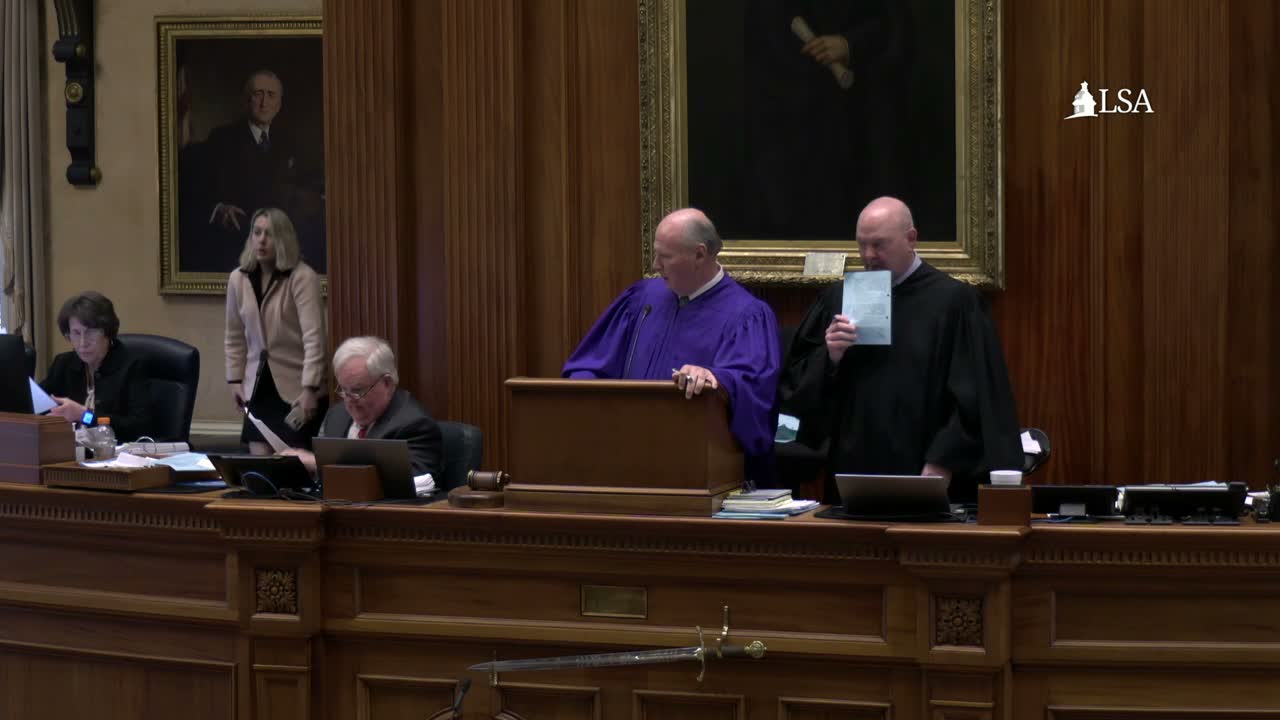
The South Carolina Senate completed lengthy floor consideration on a comprehensive cannabinoid/hemp regulation bill on March 24, voting to give the measure its third reading after adopting several technical and policy amendments. The bill draws a distinction between lower‑strength hemp products allowed in general retail and higher‑milligram cannabinoid beverages and certain gummies that would be sold under liquor‑store rules and behind‑the‑counter safeguards.
Sponsors said the adopted technical amendments clarified milligram thresholds (products under 5 mg per serving for general retail; more than 5 mg up to 10 mg for liquor‑store sales), refined the statutory definitions for chewables/gummies (adding "kosher gelatin alternative" language to capture pectin and similar products), strengthened child‑resistant packaging requirements, and added conforming edits to Sunday‑sales provisions.
Opponents and small‑business advocates warned the bill would force many existing standalone hemp retailers to obtain liquor licenses if they wish to continue selling higher‑milligram items, a change opponents said could force shops to close or sharply alter their business models. Multiple attempts to allow existing hemp stores to retain non‑intoxicating CBD inventory if they opted into liquor licensing — or to create a standalone hemp permit that expressly barred alcohol and tobacco sales — failed to earn three‑fifths support to be considered.
Senator from Charleston urged colleagues to consider the impact on small, often family‑run CBD businesses and on veterans who rely on non‑intoxicating hemp products for symptom management. Citing constituent testimony, he said the bill’s structure risks pushing people who do not drink into liquor stores to obtain non‑intoxicating products and could disadvantage small retailers relative to established liquor sellers.
Senator Johnson and other sponsors defended the framework as a regulatory compromise designed to keep stronger products out of general retail while preserving access under controlled, age‑restricted conditions. Technical fixes were offered and adopted to reduce unintended consequences; nevertheless, floor votes defeated standalone‑store and CBD‑preservation proposals at the 3/5 consideration stage.
Final action: The Senate recorded the bill’s third reading by roll‑call vote (30–13). The measure now proceeds toward further legislative steps and any implementing guidance from DOR and law‑enforcement agencies that will inform how retail rules are enforced.
Sponsors said the adopted technical amendments clarified milligram thresholds (products under 5 mg per serving for general retail; more than 5 mg up to 10 mg for liquor‑store sales), refined the statutory definitions for chewables/gummies (adding "kosher gelatin alternative" language to capture pectin and similar products), strengthened child‑resistant packaging requirements, and added conforming edits to Sunday‑sales provisions.
Opponents and small‑business advocates warned the bill would force many existing standalone hemp retailers to obtain liquor licenses if they wish to continue selling higher‑milligram items, a change opponents said could force shops to close or sharply alter their business models. Multiple attempts to allow existing hemp stores to retain non‑intoxicating CBD inventory if they opted into liquor licensing — or to create a standalone hemp permit that expressly barred alcohol and tobacco sales — failed to earn three‑fifths support to be considered.
Senator from Charleston urged colleagues to consider the impact on small, often family‑run CBD businesses and on veterans who rely on non‑intoxicating hemp products for symptom management. Citing constituent testimony, he said the bill’s structure risks pushing people who do not drink into liquor stores to obtain non‑intoxicating products and could disadvantage small retailers relative to established liquor sellers.
Senator Johnson and other sponsors defended the framework as a regulatory compromise designed to keep stronger products out of general retail while preserving access under controlled, age‑restricted conditions. Technical fixes were offered and adopted to reduce unintended consequences; nevertheless, floor votes defeated standalone‑store and CBD‑preservation proposals at the 3/5 consideration stage.
Final action: The Senate recorded the bill’s third reading by roll‑call vote (30–13). The measure now proceeds toward further legislative steps and any implementing guidance from DOR and law‑enforcement agencies that will inform how retail rules are enforced.
View the Full Meeting & All Its Details
This article offers just a summary. Unlock complete video, transcripts, and insights as a Founder Member.
✓
Watch full, unedited meeting videos
✓
Search every word spoken in unlimited transcripts
✓
AI summaries & real-time alerts (all government levels)
✓
Permanent access to expanding government content
30-day money-back guarantee
