Committee advances K–12 workforce bill after debate over FAFSA requirement and tiered credentials
March 24, 2026 | 2026 Legislative Meetings, South Carolina
This article was created by AI summarizing key points discussed. AI makes mistakes, so for full details and context, please refer to the video of the full meeting. Please report any errors so we can fix them. Report an error »
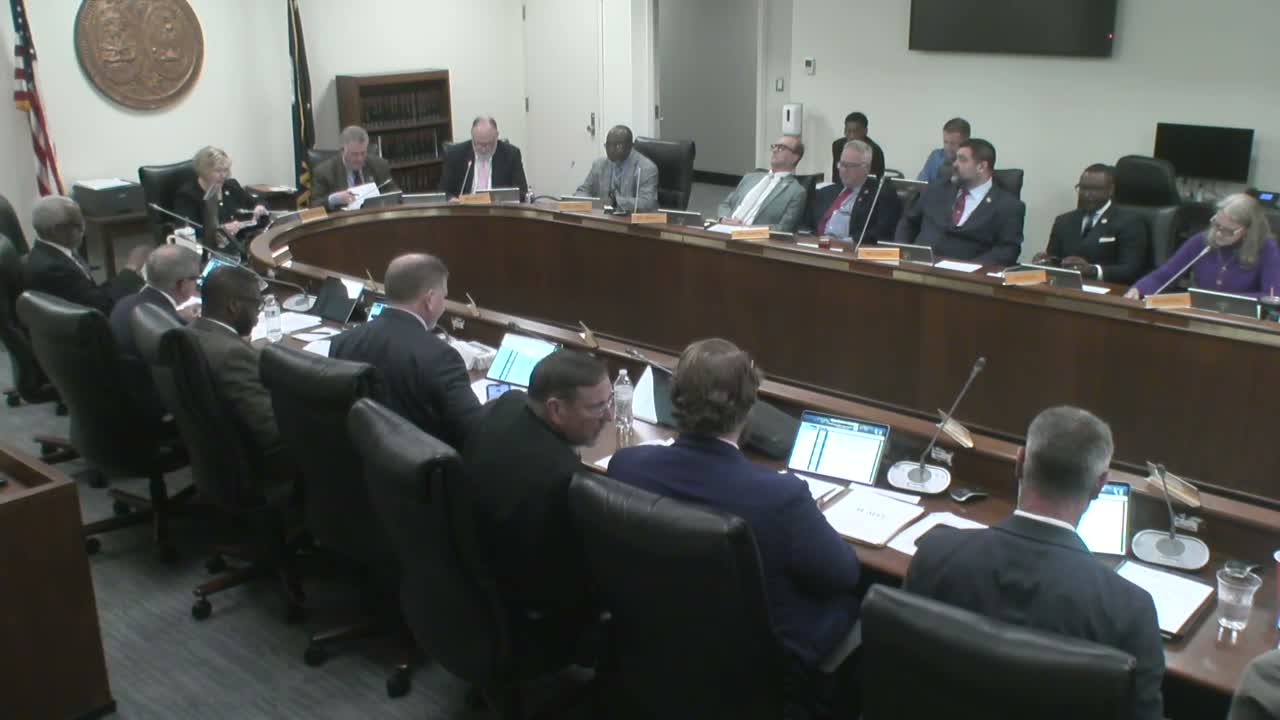
The House Education and Public Works Committee on Thursday reported bill 31-97 favorably as amended, a multi-part measure aimed at improving South Carolina's workforce-readiness and postsecondary pipeline.
Representative Bradley described the bill's five sections, which include a statutory goal that at least 60% of working-age South Carolinians hold a high-quality postsecondary degree or recognized industry credential, new senior-year remediation priorities, a FAFSA completion requirement with an opt-out provision, the transfer of an educator-preparation report card to the State Department of Education, and a directive for the Department of Employment and Workforce to publish economic-value information about college majors.
Members adopted a K–12 subcommittee amendment that prioritizes enrollment for remedial courses for students earning Cs or lower in multiple high-school credits and added a waiver if the federal FAFSA form is not published in time; the amendment passed by roll call. Representative Erickson secured an amendment directing the State Board for Technical and Comprehensive Education, the Commission on Higher Education and the State Department of Education to develop a report on how tier 3 credentials earned in high school could be awarded college credit; that amendment also passed.
The FAFSA requirement produced the most extended debate. Committee staff cited estimates that "$60,000,000–$63,000,000" in scholarship money is left on the table annually by students who do not file the form. Opponents raised concerns about privacy, the administrative burden and the risk of pushing students toward debt. Representative Frank moved to strike the FAFSA graduation requirement; the committee voted to table that motion, and ultimately the bill was reported favorably as amended (15 aye, 3 nay).
The measure now moves to the House calendar. Sponsors said staff would draft clarifying language on Individual Graduation Plan presentations and waiver procedures; they also said the amendment directing a study on credit articulation for tier 3 credentials will create guidance for institutions and employers on recognition of high-school credentials.
Representative Bradley described the bill's five sections, which include a statutory goal that at least 60% of working-age South Carolinians hold a high-quality postsecondary degree or recognized industry credential, new senior-year remediation priorities, a FAFSA completion requirement with an opt-out provision, the transfer of an educator-preparation report card to the State Department of Education, and a directive for the Department of Employment and Workforce to publish economic-value information about college majors.
Members adopted a K–12 subcommittee amendment that prioritizes enrollment for remedial courses for students earning Cs or lower in multiple high-school credits and added a waiver if the federal FAFSA form is not published in time; the amendment passed by roll call. Representative Erickson secured an amendment directing the State Board for Technical and Comprehensive Education, the Commission on Higher Education and the State Department of Education to develop a report on how tier 3 credentials earned in high school could be awarded college credit; that amendment also passed.
The FAFSA requirement produced the most extended debate. Committee staff cited estimates that "$60,000,000–$63,000,000" in scholarship money is left on the table annually by students who do not file the form. Opponents raised concerns about privacy, the administrative burden and the risk of pushing students toward debt. Representative Frank moved to strike the FAFSA graduation requirement; the committee voted to table that motion, and ultimately the bill was reported favorably as amended (15 aye, 3 nay).
The measure now moves to the House calendar. Sponsors said staff would draft clarifying language on Individual Graduation Plan presentations and waiver procedures; they also said the amendment directing a study on credit articulation for tier 3 credentials will create guidance for institutions and employers on recognition of high-school credentials.
View the Full Meeting & All Its Details
This article offers just a summary. Unlock complete video, transcripts, and insights as a Founder Member.
✓
Watch full, unedited meeting videos
✓
Search every word spoken in unlimited transcripts
✓
AI summaries & real-time alerts (all government levels)
✓
Permanent access to expanding government content
30-day money-back guarantee
