Bill to increase oversight of special-purpose districts draws concerns about cost and duplication
March 24, 2026 | 2026 Legislative Meetings, South Carolina
This article was created by AI summarizing key points discussed. AI makes mistakes, so for full details and context, please refer to the video of the full meeting. Please report any errors so we can fix them. Report an error »
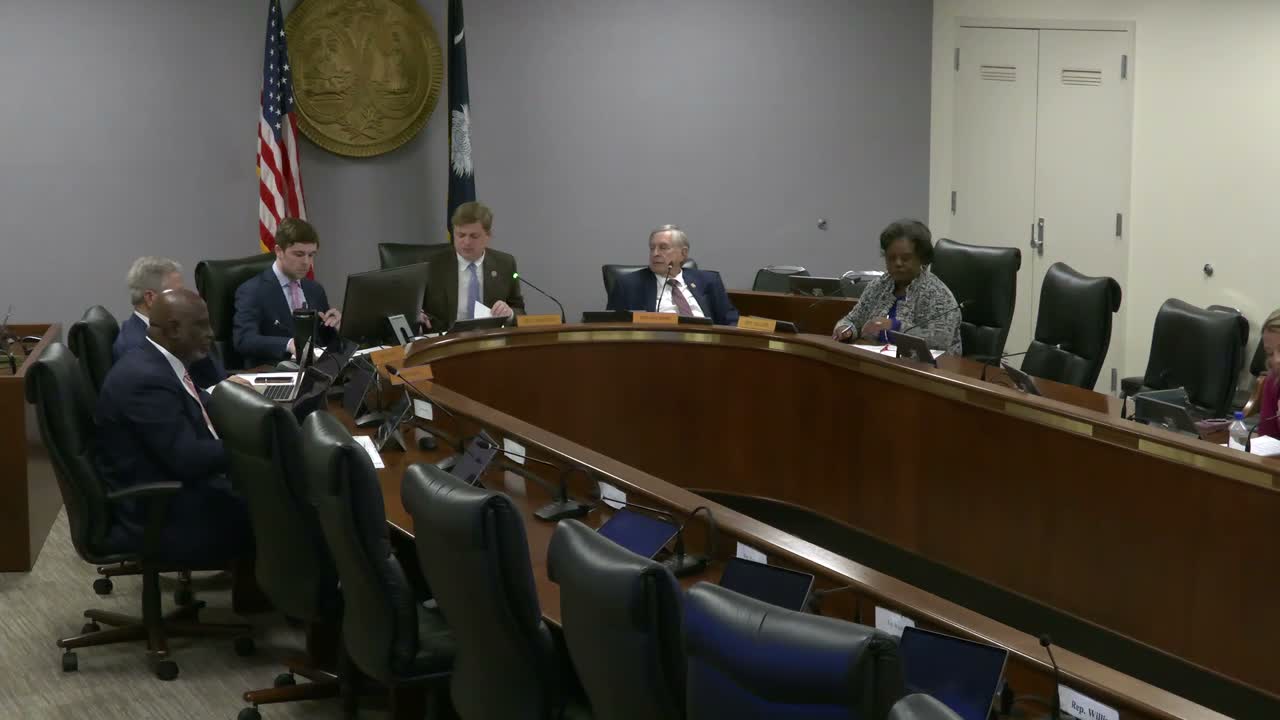
Representative Remus introduced House Bill 4703, the Special Purpose District Accountability and Transparency Act, telling the committee she discovered several special-purpose districts in her area had not filed audits and that the bill seeks to create oversight so ratepayer funds are transparent and accountable. She said the measure was not intended to create state-funded programs and that an amendment could move oversight to the county level to limit fiscal impact.
Remus said she found "over 200 special purpose districts" statewide and described examples where required audits were not available to ratepayers. Members and stakeholders pressed for details about who is responsible for enforcement; Remus said there is currently no single agency ensuring compliance and that the bill aims chiefly to provide notice and a capacity to act rather than to punish entities that are already compliant.
Multiple witnesses representing utilities, fire districts and the state association of special-purpose districts opposed the bill as drafted. Wes Burton (York County Natural Gas Authority) and Taft Matney (representing Upstate fire and rescue districts) said many districts already prepare audits and related reports but warned H 4703 would duplicate statutory requirements and impose personnel and financial costs. Matney cited a fiscal-impact estimate of roughly $29,000 and 150–200 staff hours for one district and about $27,500 and up to 250 staff hours for another, saying compliance burdens could pull chiefs and staff away from operational readiness.
Anthony Segars, chief of the Belmont Fire Department and president of the South Carolina Association of Special Purpose Districts, and law‑firm partner Citi Rhodes reiterated that many reporting obligations already exist (including filings to the Secretary of State and county auditors) and suggested that targeted education or enforcement of current law could address gaps. Rhodes said audits are generally performed but that small local governments sometimes struggle to find auditors and that improved education might be a better first step than creating a new state office.
Interim State Auditor Sue Moss said she was not taking a position but that the state auditor’s office is at capacity and that counties might be a better fit for local oversight; Moss also suggested considering a less-intensive "compilation" alternative for very small entities that receive under $500,000 in revenue.
The committee encouraged stakeholders to work with Representative Remus on an amendment intended to keep oversight local and mitigate duplication; members agreed to circulate the draft and revisit the bill at a future meeting.
Remus said she found "over 200 special purpose districts" statewide and described examples where required audits were not available to ratepayers. Members and stakeholders pressed for details about who is responsible for enforcement; Remus said there is currently no single agency ensuring compliance and that the bill aims chiefly to provide notice and a capacity to act rather than to punish entities that are already compliant.
Multiple witnesses representing utilities, fire districts and the state association of special-purpose districts opposed the bill as drafted. Wes Burton (York County Natural Gas Authority) and Taft Matney (representing Upstate fire and rescue districts) said many districts already prepare audits and related reports but warned H 4703 would duplicate statutory requirements and impose personnel and financial costs. Matney cited a fiscal-impact estimate of roughly $29,000 and 150–200 staff hours for one district and about $27,500 and up to 250 staff hours for another, saying compliance burdens could pull chiefs and staff away from operational readiness.
Anthony Segars, chief of the Belmont Fire Department and president of the South Carolina Association of Special Purpose Districts, and law‑firm partner Citi Rhodes reiterated that many reporting obligations already exist (including filings to the Secretary of State and county auditors) and suggested that targeted education or enforcement of current law could address gaps. Rhodes said audits are generally performed but that small local governments sometimes struggle to find auditors and that improved education might be a better first step than creating a new state office.
Interim State Auditor Sue Moss said she was not taking a position but that the state auditor’s office is at capacity and that counties might be a better fit for local oversight; Moss also suggested considering a less-intensive "compilation" alternative for very small entities that receive under $500,000 in revenue.
The committee encouraged stakeholders to work with Representative Remus on an amendment intended to keep oversight local and mitigate duplication; members agreed to circulate the draft and revisit the bill at a future meeting.
View the Full Meeting & All Its Details
This article offers just a summary. Unlock complete video, transcripts, and insights as a Founder Member.
✓
Watch full, unedited meeting videos
✓
Search every word spoken in unlimited transcripts
✓
AI summaries & real-time alerts (all government levels)
✓
Permanent access to expanding government content
30-day money-back guarantee
