Missouri House advances "Sawyer's Law" after emotional floor debate over bullying reports
March 23, 2026 | 2026 Legislature MO, Missouri
This article was created by AI summarizing key points discussed. AI makes mistakes, so for full details and context, please refer to the video of the full meeting. Please report any errors so we can fix them. Report an error »
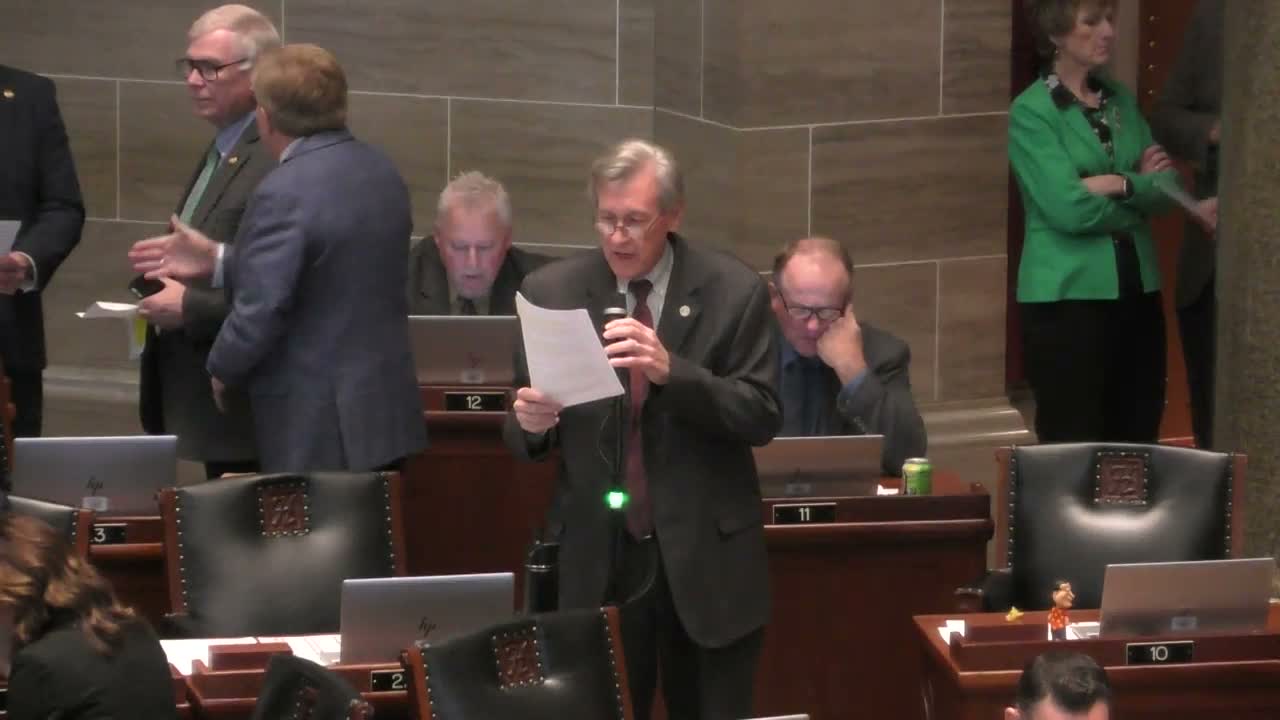
The House adopted a committee substitute to H.B. 21-20, known on the floor as "Sawyer's Law," after extended debate about whether school boards should receive incident reports and how to protect students' privacy.
The sponsor, the gentleman from Webster, said the bill requires prompt investigation of bullying, reporting to school administration and, when substantiated, reporting to the local school board to ensure elected officials know what is happening in their schools. "This bill would address those issues," he said, arguing the change would give boards the information they need to improve school environments.
The bill's emotional proponent, the lady from Harrison, told the chamber the bill was motivated by the suicide of a 15-year-old she identified as Sawyer and described graphic harassment the student endured. "If they would've just done the courageous thing and called her family ... she would still be here today," the lady from Harrison said, urging support "for the kids that this bill will protect."
Rep. speakers on both sides focused on two trade-offs: ensuring rapid notification and support when bullying occurs, and protecting students' due-process and privacy. The lady from Boone offered an amendment (House Amendment No. 1) to remove zero-tolerance language, allow reports to the board to be presented in summarized, non-identifying form for districts with many incidents, and to give school boards flexibility on reporting cycles. She said the amendment preserves the law's protection while limiting potential harms of exposing names to the board.
Opponents argued the amendment could hamper board oversight; supporters said it protects students and administrators from unwarranted exposure and potential legal problems. Members repeatedly raised concern about whether board-level reports could create ex parte communications that might later taint disciplinary hearings. The sponsor said the bill leaves naming discretion to schools and noted FERPA limits for education records.
The House rejected the Boone amendment by voice vote; later, the House adopted the committee substitute for H.B. 21-20 and ordered it perfected and printed. The floor debate concluded with members calling for additional refinements in committee and underscoring the bill's goal to prevent tragedies tied to bullying.
The next procedural step for the bill is final perfection and printing; members said they expected further work on specific reporting forms and timelines back in committee.
The sponsor, the gentleman from Webster, said the bill requires prompt investigation of bullying, reporting to school administration and, when substantiated, reporting to the local school board to ensure elected officials know what is happening in their schools. "This bill would address those issues," he said, arguing the change would give boards the information they need to improve school environments.
The bill's emotional proponent, the lady from Harrison, told the chamber the bill was motivated by the suicide of a 15-year-old she identified as Sawyer and described graphic harassment the student endured. "If they would've just done the courageous thing and called her family ... she would still be here today," the lady from Harrison said, urging support "for the kids that this bill will protect."
Rep. speakers on both sides focused on two trade-offs: ensuring rapid notification and support when bullying occurs, and protecting students' due-process and privacy. The lady from Boone offered an amendment (House Amendment No. 1) to remove zero-tolerance language, allow reports to the board to be presented in summarized, non-identifying form for districts with many incidents, and to give school boards flexibility on reporting cycles. She said the amendment preserves the law's protection while limiting potential harms of exposing names to the board.
Opponents argued the amendment could hamper board oversight; supporters said it protects students and administrators from unwarranted exposure and potential legal problems. Members repeatedly raised concern about whether board-level reports could create ex parte communications that might later taint disciplinary hearings. The sponsor said the bill leaves naming discretion to schools and noted FERPA limits for education records.
The House rejected the Boone amendment by voice vote; later, the House adopted the committee substitute for H.B. 21-20 and ordered it perfected and printed. The floor debate concluded with members calling for additional refinements in committee and underscoring the bill's goal to prevent tragedies tied to bullying.
The next procedural step for the bill is final perfection and printing; members said they expected further work on specific reporting forms and timelines back in committee.
View the Full Meeting & All Its Details
This article offers just a summary. Unlock complete video, transcripts, and insights as a Founder Member.
✓
Watch full, unedited meeting videos
✓
Search every word spoken in unlimited transcripts
✓
AI summaries & real-time alerts (all government levels)
✓
Permanent access to expanding government content
30-day money-back guarantee
