House adopts optional "innovation district" framework, setting up statewide economic incentives
March 23, 2026 | 2026 Legislature MO, Missouri
This article was created by AI summarizing key points discussed. AI makes mistakes, so for full details and context, please refer to the video of the full meeting. Please report any errors so we can fix them. Report an error »
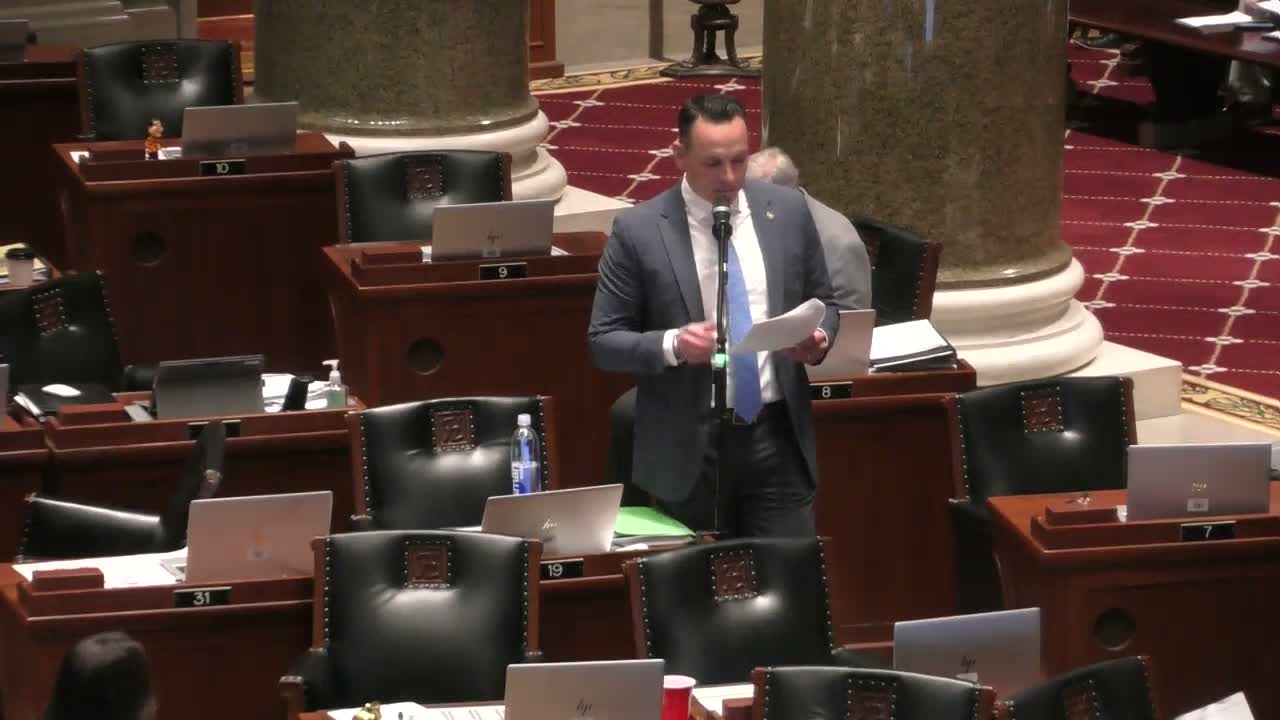
The House adopted a committee substitute to H.B. 32-31, a broad economic-development package that would let local governments opt into a state-run "innovation zone" program offering streamlined permitting, tax incentives and targeted reinvestment of net new revenues.
The sponsor, the gentleman from Saint Louis County, said the bill provides a uniform, statewide framework so cities can apply for an innovation zone, submit a master plan to the Department of Economic Development and meet local policy commitments such as fast-track permitting and building-code flexibility for adaptive reuse. "It's a one-stop shop that streamlines the process for development," he said.
Key elements include capturing 10% of net new property-tax revenue from participating zones into a rural Missouri development fund, a public-safety reinvestment deferral for net new income and sales tax, and an angel-investment incentive administered by Missouri Technology Corporation (capped at $6 million in the bill as presented). The sponsor said projects proposed under the program could include adaptive reuse of major downtown buildings and that he had identified approximately $1.5–2 billion in shovel-ready development that could use the framework.
Opponents and questioners pressed for fiscal offsets and pointed to the bill's projected fiscal note (members referenced a range around $50–75 million). The sponsor described the change as an investment that could spur substantially more private development and said he would work with colleagues to identify inefficient tax credits to trim as offsets.
The House adopted several floor amendments — including an angel-investor incentive provision offered from the floor — and approved the committee substitute. Members stressed the program is voluntary: municipalities must opt in to receive incentives and any participating city must meet the program's requirements.
The bill now heads back for final drafting and fiscal analysis; floor discussion flagged questions about cap sizes, accountability metrics and whether the program's incentives will deliver the projected private investment, particularly given current state budget constraints.
The sponsor, the gentleman from Saint Louis County, said the bill provides a uniform, statewide framework so cities can apply for an innovation zone, submit a master plan to the Department of Economic Development and meet local policy commitments such as fast-track permitting and building-code flexibility for adaptive reuse. "It's a one-stop shop that streamlines the process for development," he said.
Key elements include capturing 10% of net new property-tax revenue from participating zones into a rural Missouri development fund, a public-safety reinvestment deferral for net new income and sales tax, and an angel-investment incentive administered by Missouri Technology Corporation (capped at $6 million in the bill as presented). The sponsor said projects proposed under the program could include adaptive reuse of major downtown buildings and that he had identified approximately $1.5–2 billion in shovel-ready development that could use the framework.
Opponents and questioners pressed for fiscal offsets and pointed to the bill's projected fiscal note (members referenced a range around $50–75 million). The sponsor described the change as an investment that could spur substantially more private development and said he would work with colleagues to identify inefficient tax credits to trim as offsets.
The House adopted several floor amendments — including an angel-investor incentive provision offered from the floor — and approved the committee substitute. Members stressed the program is voluntary: municipalities must opt in to receive incentives and any participating city must meet the program's requirements.
The bill now heads back for final drafting and fiscal analysis; floor discussion flagged questions about cap sizes, accountability metrics and whether the program's incentives will deliver the projected private investment, particularly given current state budget constraints.
View the Full Meeting & All Its Details
This article offers just a summary. Unlock complete video, transcripts, and insights as a Founder Member.
✓
Watch full, unedited meeting videos
✓
Search every word spoken in unlimited transcripts
✓
AI summaries & real-time alerts (all government levels)
✓
Permanent access to expanding government content
30-day money-back guarantee
