Task force debates Willamette Valley map as counties face loss of nearby landfill
March 20, 2026 | Legislative, Oregon
This article was created by AI summarizing key points discussed. AI makes mistakes, so for full details and context, please refer to the video of the full meeting. Please report any errors so we can fix them. Report an error »
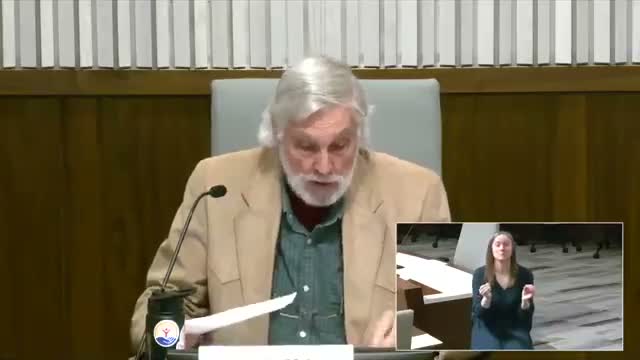
Chair Malone opened the March 20 meeting of the Task Force on Municipal Solid Waste in the Willamette Valley and framed the group's job as information‑gathering to refine recommendations from last year’s Sustainable Materials Management Plan.
Sean McGuire of the Benton County commissioner's office presented historical tonnage and maps used in the SMMP, saying the prior work shows a steady flow of trash to Coffin Butte and noting the central question: “Where does this 1,100,000 tons of trash go knowing that we're not gonna have anything nearby?” His presentation and the SMMP materials were offered as the factual basis for deciding the group’s geographic focus.
Task force members pressed on what ‘primary’ versus ‘secondary’ counties would mean in practice. Crystal asked whether designating a county secondary might leave it without planning or options for disposal if Coffin Butte were no longer available; Vice Chair (speaker identified as Vice Chair) and others agreed that marking a county as secondary in the map’s initial scope should not mean exclusion from future planning. Several participants noted that some coastal counties currently send 100% of their waste to Coffin Butte and would still need solutions even if they did not actively participate in the earlier SMMP process.
After discussion members agreed to focus the task force’s initial work on seven core counties identified in the SMMP map while keeping the boundary flexible. Chair Malone emphasized the agreement is provisional: the map can be adjusted when new data or participation levels warrant change.
What happens next: the task force will use the agreed‑upon focus area to prioritize data collection (tons generated, transfer‑station capacity, hauler relationships) and will revisit map boundaries as engineering, participation, or legislative changes emerge. The meeting also scheduled the next session for April 10, 2026 to continue mapping and infrastructure conversations.
Sean McGuire of the Benton County commissioner's office presented historical tonnage and maps used in the SMMP, saying the prior work shows a steady flow of trash to Coffin Butte and noting the central question: “Where does this 1,100,000 tons of trash go knowing that we're not gonna have anything nearby?” His presentation and the SMMP materials were offered as the factual basis for deciding the group’s geographic focus.
Task force members pressed on what ‘primary’ versus ‘secondary’ counties would mean in practice. Crystal asked whether designating a county secondary might leave it without planning or options for disposal if Coffin Butte were no longer available; Vice Chair (speaker identified as Vice Chair) and others agreed that marking a county as secondary in the map’s initial scope should not mean exclusion from future planning. Several participants noted that some coastal counties currently send 100% of their waste to Coffin Butte and would still need solutions even if they did not actively participate in the earlier SMMP process.
After discussion members agreed to focus the task force’s initial work on seven core counties identified in the SMMP map while keeping the boundary flexible. Chair Malone emphasized the agreement is provisional: the map can be adjusted when new data or participation levels warrant change.
What happens next: the task force will use the agreed‑upon focus area to prioritize data collection (tons generated, transfer‑station capacity, hauler relationships) and will revisit map boundaries as engineering, participation, or legislative changes emerge. The meeting also scheduled the next session for April 10, 2026 to continue mapping and infrastructure conversations.
Don't Miss a Word: See the Full Meeting!
Go beyond summaries. Unlock every video, transcript, and key insight with a Founder Membership.
✓
Get instant access to full meeting videos
✓
Search and clip any phrase from complete transcripts
✓
Receive AI-powered summaries & custom alerts
✓
Enjoy lifetime, unrestricted access to government data
30-day money-back guarantee
