Counties outline transfer‑station strategies and financing hurdles for post‑landfill planning
March 20, 2026 | Legislative, Oregon
This article was created by AI summarizing key points discussed. AI makes mistakes, so for full details and context, please refer to the video of the full meeting. Please report any errors so we can fix them. Report an error »
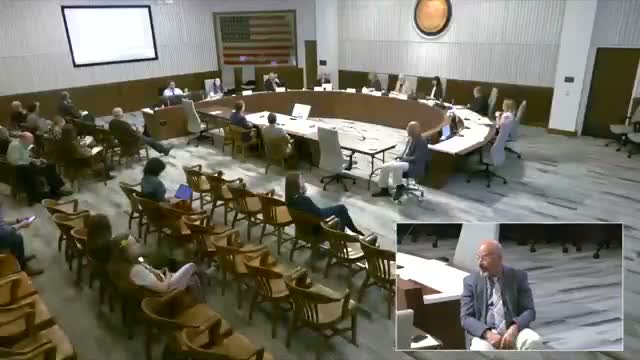
County and local government speakers used case studies to show how transfer stations, intermodal options and system fees factor into regional disposal planning.
Bailey Payne described Deschutes County’s model: population a little over 213,000, roughly 225,000 tons of garbage annually and about 85,000 tons recovered. He highlighted enterprise fund management, multiple transfer stations, on‑site composting and a system‑benefit fee that supports hazardous waste events and outreach.
Brian May (Marion County) reported Marion County’s 2022 DEQ numbers: about 625,000 tons generated with a recovery rate near 47% and roughly 230,000 tons currently going to Coffin Butte. He said Marion relies on a mix of private partners (expanded material‑recovery facilities) and aging county 'convenience drop' sites. May warned that timing is critical: building new infrastructure too early burdens ratepayers; too late leaves the region exposed when Coffin Butte capacity declines.
Austin McGuigan (Polk County community development director) recounted Polk’s decade‑long effort to site a modern transfer facility at Rickreil. Polk has limited throughput (under 5% of Coffin Butte tonnage), which makes private financing difficult. He said Polk is pursuing intergovernmental agreements (IGAs) with cities to encourage franchise haulers to use the county facility, but lenders worry an IGA without enforceable flow control may not be adequate collateral; Polk estimates a modern facility cost in the ~$10M ballpark.
Panelists and state coordinators (Lane County, Regional Solutions and Metro) emphasized options—local transfer stations, intermodal rail, and regional coordination through system benefit fees—and warned that affordability and hauler logistics (trucking distances, route costs) are key constraints. Several speakers urged the task force to examine coordinated funding tools (enterprise funds, system‑benefit fees, state grants) and legal mechanisms (flow control or a regional authority) to secure investment and equitable access for rural communities.
Next steps: the task force will collect more detailed throughput, cost and franchise‑agreement data and consider what financing and governance tools the region needs to ensure small counties are not left without affordable disposal options.
Bailey Payne described Deschutes County’s model: population a little over 213,000, roughly 225,000 tons of garbage annually and about 85,000 tons recovered. He highlighted enterprise fund management, multiple transfer stations, on‑site composting and a system‑benefit fee that supports hazardous waste events and outreach.
Brian May (Marion County) reported Marion County’s 2022 DEQ numbers: about 625,000 tons generated with a recovery rate near 47% and roughly 230,000 tons currently going to Coffin Butte. He said Marion relies on a mix of private partners (expanded material‑recovery facilities) and aging county 'convenience drop' sites. May warned that timing is critical: building new infrastructure too early burdens ratepayers; too late leaves the region exposed when Coffin Butte capacity declines.
Austin McGuigan (Polk County community development director) recounted Polk’s decade‑long effort to site a modern transfer facility at Rickreil. Polk has limited throughput (under 5% of Coffin Butte tonnage), which makes private financing difficult. He said Polk is pursuing intergovernmental agreements (IGAs) with cities to encourage franchise haulers to use the county facility, but lenders worry an IGA without enforceable flow control may not be adequate collateral; Polk estimates a modern facility cost in the ~$10M ballpark.
Panelists and state coordinators (Lane County, Regional Solutions and Metro) emphasized options—local transfer stations, intermodal rail, and regional coordination through system benefit fees—and warned that affordability and hauler logistics (trucking distances, route costs) are key constraints. Several speakers urged the task force to examine coordinated funding tools (enterprise funds, system‑benefit fees, state grants) and legal mechanisms (flow control or a regional authority) to secure investment and equitable access for rural communities.
Next steps: the task force will collect more detailed throughput, cost and franchise‑agreement data and consider what financing and governance tools the region needs to ensure small counties are not left without affordable disposal options.
Don't Miss a Word: See the Full Meeting!
Go beyond summaries. Unlock every video, transcript, and key insight with a Founder Membership.
✓
Get instant access to full meeting videos
✓
Search and clip any phrase from complete transcripts
✓
Receive AI-powered summaries & custom alerts
✓
Enjoy lifetime, unrestricted access to government data
30-day money-back guarantee
