MDH-backed bill would set limits, reporting and training for restraints in assisted living
March 25, 2026 | 2026 Legislature MN, Minnesota
This article was created by AI summarizing key points discussed. AI makes mistakes, so for full details and context, please refer to the video of the full meeting. Please report any errors so we can fix them. Report an error »
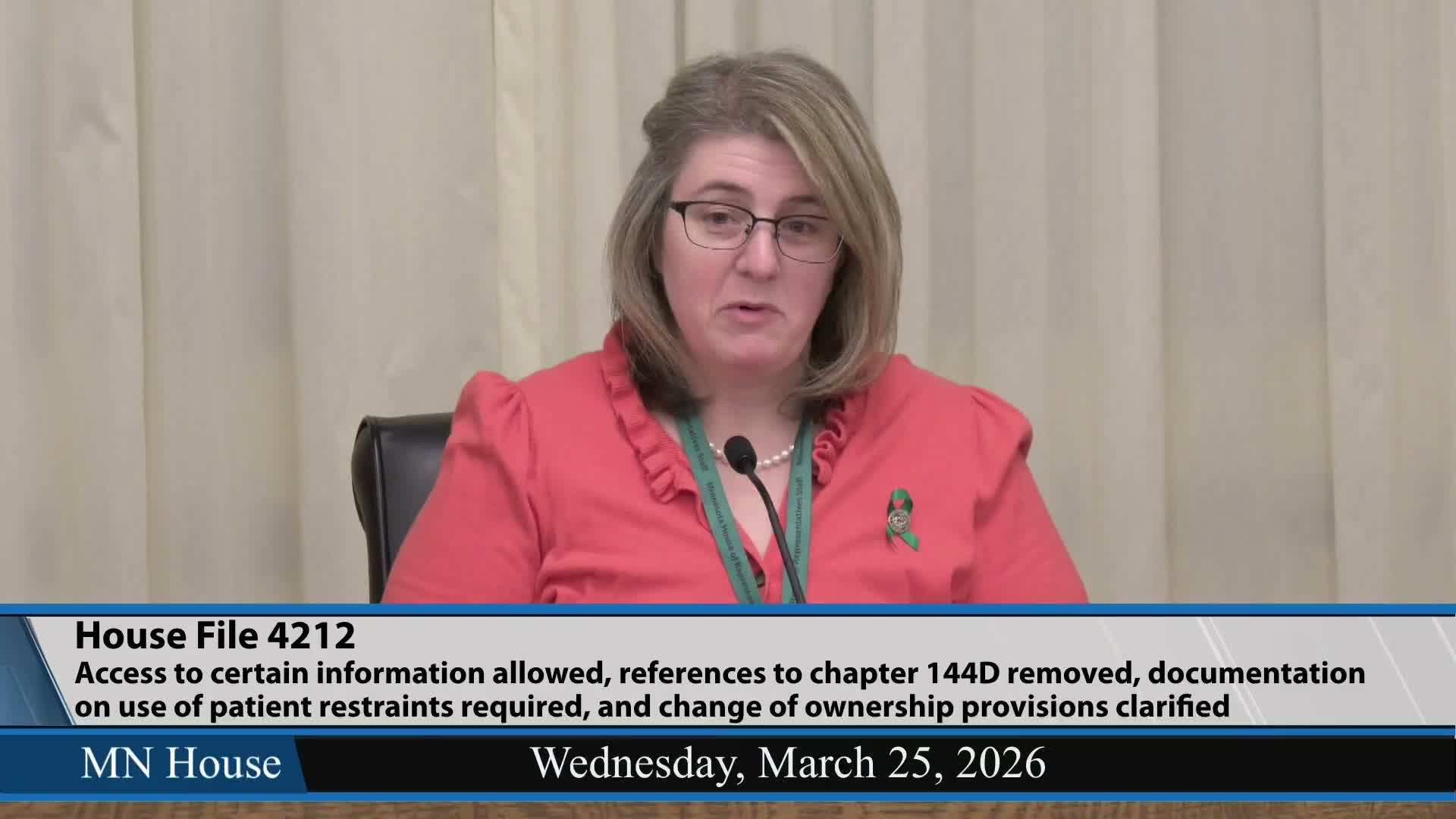
The Minnesota Department of Health presented House File 4212, a multi-article bill that would strengthen protections for older and vulnerable adults in assisted living and long-term care settings. The bill addresses four themes: supplemental nursing services compliance; statutory cleanup to reflect the assisted-living licensure framework; new standards that limit restraint use to emergencies while requiring documentation, reporting and training; and clarifying responsibility for fines and correction orders following changes of ownership.
Parice Rudina from the Office of Ombudsman for Long Term Care backed the bill and said assisted living currently lacks statutory guidance on restraints, which has led to confusion for residents and providers. Rudina gave examples advocates have documented, including a hospice patient who was allegedly given excessive sedatives and a resident who was initially prevented from using a walker because staff had classified it as a restraint.
MDH staff described how enforcement would work: Matthew Heffron, assistant division director in Health Regulation, said MDH already receives complaints about restraint use and would respond through its enforcement and inspection process; violations would prompt correction orders and, if uncorrected, fines assessed based on level of harm (Heffron said fines could range from $500 to $5,000). Rachel Gacyak, an MDH operations manager, explained the change-of-ownership language clarifies that new licensees would assume existing fines and correction orders so regulatory gaps do not leave residents unprotected.
Committee members asked whether the bill would interfere with hospice care or individuals' informed choices. MDH and ombudsman staff said appropriate hospice prescribing and person-centered informed consent are not intended to be restricted. The bill includes reporting requirements tied to federal collections for home- and community-based services funding and maintains vulnerable-adult reporting when abuse is suspected. The bill also adds training and implementation expectations for manual restraints while allowing providers that prohibit manual restraint to be exempt from corresponding training requirements.
Representative Alexander gave closing remarks that HF4212 updates and clarifies long-term care regulations; the committee adopted a technical A1 amendment earlier in the hearing and laid HF4212 over for possible inclusion for further bipartisan work and stakeholder engagement.
Parice Rudina from the Office of Ombudsman for Long Term Care backed the bill and said assisted living currently lacks statutory guidance on restraints, which has led to confusion for residents and providers. Rudina gave examples advocates have documented, including a hospice patient who was allegedly given excessive sedatives and a resident who was initially prevented from using a walker because staff had classified it as a restraint.
MDH staff described how enforcement would work: Matthew Heffron, assistant division director in Health Regulation, said MDH already receives complaints about restraint use and would respond through its enforcement and inspection process; violations would prompt correction orders and, if uncorrected, fines assessed based on level of harm (Heffron said fines could range from $500 to $5,000). Rachel Gacyak, an MDH operations manager, explained the change-of-ownership language clarifies that new licensees would assume existing fines and correction orders so regulatory gaps do not leave residents unprotected.
Committee members asked whether the bill would interfere with hospice care or individuals' informed choices. MDH and ombudsman staff said appropriate hospice prescribing and person-centered informed consent are not intended to be restricted. The bill includes reporting requirements tied to federal collections for home- and community-based services funding and maintains vulnerable-adult reporting when abuse is suspected. The bill also adds training and implementation expectations for manual restraints while allowing providers that prohibit manual restraint to be exempt from corresponding training requirements.
Representative Alexander gave closing remarks that HF4212 updates and clarifies long-term care regulations; the committee adopted a technical A1 amendment earlier in the hearing and laid HF4212 over for possible inclusion for further bipartisan work and stakeholder engagement.
View the Full Meeting & All Its Details
This article offers just a summary. Unlock complete video, transcripts, and insights as a Founder Member.
✓
Watch full, unedited meeting videos
✓
Search every word spoken in unlimited transcripts
✓
AI summaries & real-time alerts (all government levels)
✓
Permanent access to expanding government content
30-day money-back guarantee
