Coroners urge clearer law after hearing on unclaimed and unidentified remains amendment
March 25, 2026 | 2026 Legislative Meetings, South Carolina
This article was created by AI summarizing key points discussed. AI makes mistakes, so for full details and context, please refer to the video of the full meeting. Please report any errors so we can fix them. Report an error »
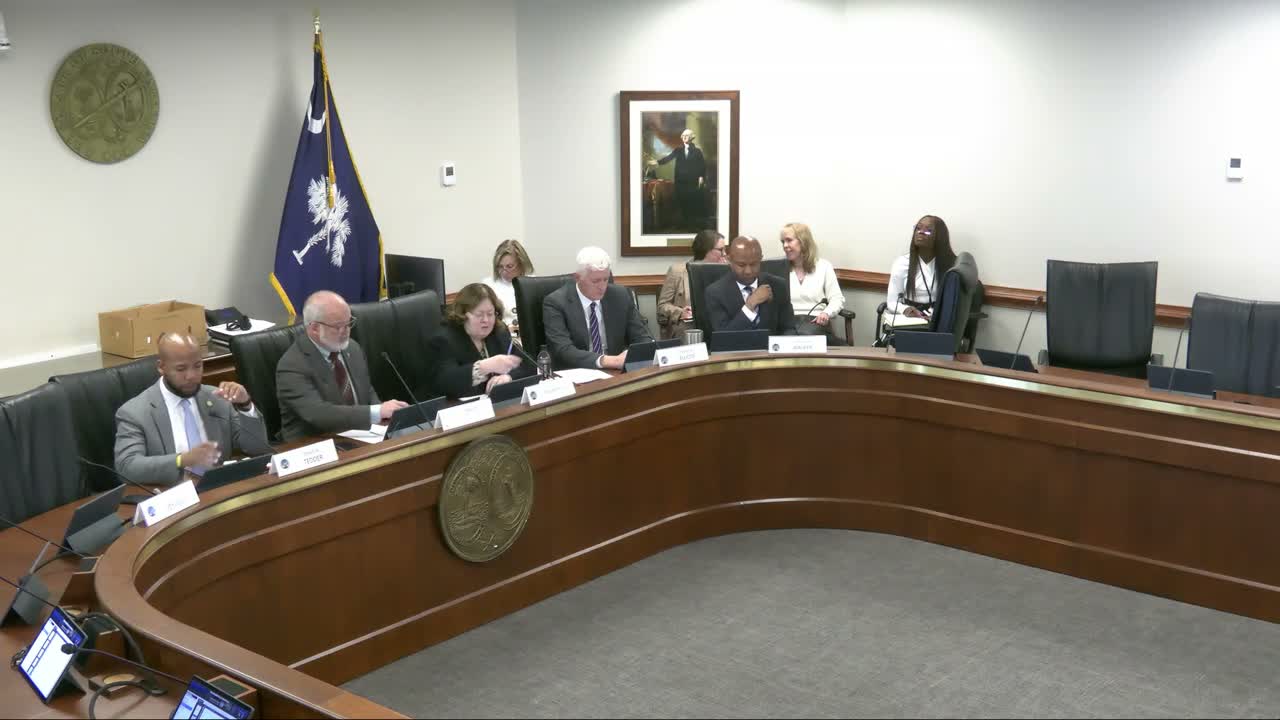
A legislative subcommittee considered amendments that would change how coroners handle unclaimed and unidentified human remains, and coroners urged lawmakers to rewrite ambiguous sections before advancing the measure.
Nada Rutherford, coroner for Richland County, said the draft bill conflates two distinct categories: unclaimed remains (where a known next of kin declines to claim a body) and unidentified remains (where no family is known). She warned that the provision allowing coroners to act when a next of kin is "uncooperative" is "vague and subjective" and could improperly shift judicial responsibilities to coroners. "Someone being charged is not a conviction," Rutherford said, arguing for bifurcated language and better safeguards.
Bobby Joe O'Neil, Charleston County coroner and president of the State Coroners Association, supported changes that address operational gaps and noted counties often lack space to bury the unclaimed. O'Neil recommended practical protections and said coroners already determine next-of-kin in the field and sometimes must proceed without probate guidance. Another coroner testifying by video suggested that if cremation of unidentified remains is allowed the law should require retention of human tissue samples (for example a femur or other material) to preserve DNA for future identification.
Lawmakers and coroners discussed existing processes, including reporting unidentified remains to SLED and using NamUs for national matching. Committee members asked staff to work with coroners on specific wording, including replacing "uncooperative" with clearer language such as "refuses to assist the coroner" or similar operational definitions. The committee voted to carry the amendment over while staff and stakeholders revise the language.
What happens next: Staff will work with coroners and interested parties to clarify definitions, preserve DNA evidence when cremation is authorized, and craft a hierarchy or process for release of remains; the item was carried over for redrafting.
Nada Rutherford, coroner for Richland County, said the draft bill conflates two distinct categories: unclaimed remains (where a known next of kin declines to claim a body) and unidentified remains (where no family is known). She warned that the provision allowing coroners to act when a next of kin is "uncooperative" is "vague and subjective" and could improperly shift judicial responsibilities to coroners. "Someone being charged is not a conviction," Rutherford said, arguing for bifurcated language and better safeguards.
Bobby Joe O'Neil, Charleston County coroner and president of the State Coroners Association, supported changes that address operational gaps and noted counties often lack space to bury the unclaimed. O'Neil recommended practical protections and said coroners already determine next-of-kin in the field and sometimes must proceed without probate guidance. Another coroner testifying by video suggested that if cremation of unidentified remains is allowed the law should require retention of human tissue samples (for example a femur or other material) to preserve DNA for future identification.
Lawmakers and coroners discussed existing processes, including reporting unidentified remains to SLED and using NamUs for national matching. Committee members asked staff to work with coroners on specific wording, including replacing "uncooperative" with clearer language such as "refuses to assist the coroner" or similar operational definitions. The committee voted to carry the amendment over while staff and stakeholders revise the language.
What happens next: Staff will work with coroners and interested parties to clarify definitions, preserve DNA evidence when cremation is authorized, and craft a hierarchy or process for release of remains; the item was carried over for redrafting.
View the Full Meeting & All Its Details
This article offers just a summary. Unlock complete video, transcripts, and insights as a Founder Member.
✓
Watch full, unedited meeting videos
✓
Search every word spoken in unlimited transcripts
✓
AI summaries & real-time alerts (all government levels)
✓
Permanent access to expanding government content
30-day money-back guarantee
