Debate on SAFE Act pauses after DMV Q&A on 'safe' registration notation
March 25, 2026 | 2026 Legislative Meetings, South Carolina
This article was created by AI summarizing key points discussed. AI makes mistakes, so for full details and context, please refer to the video of the full meeting. Please report any errors so we can fix them. Report an error »
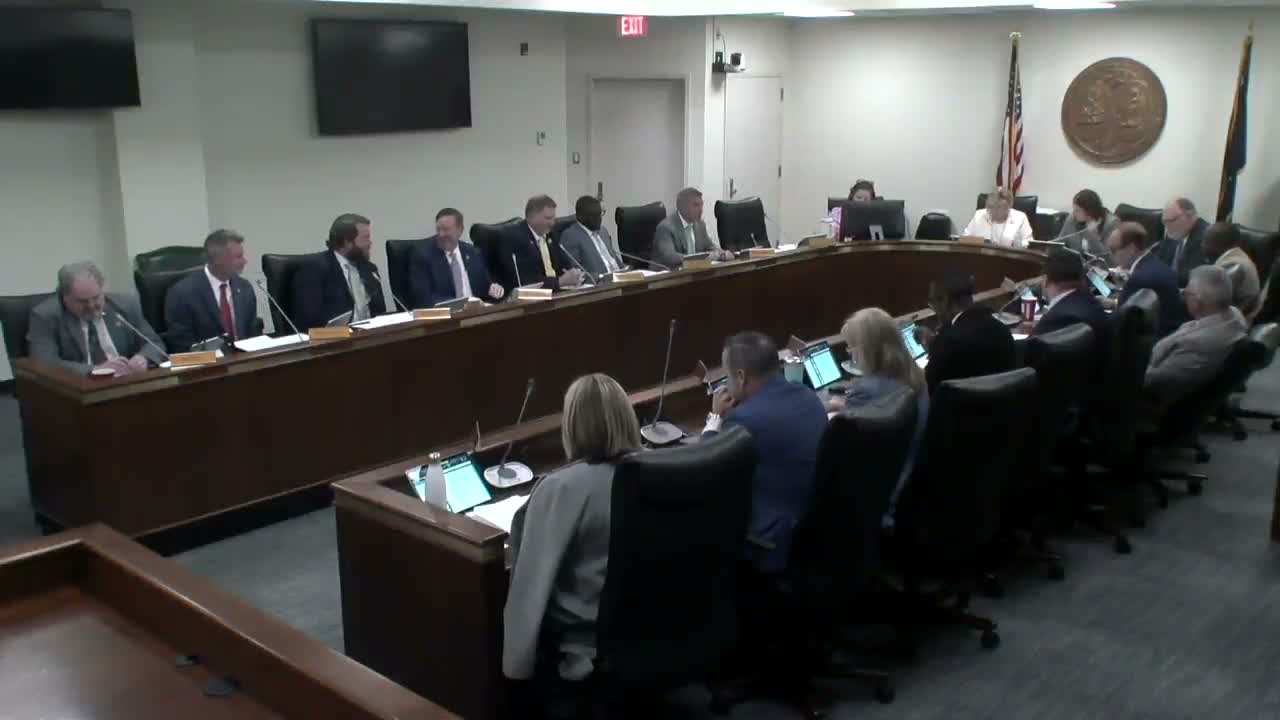
The committee took up S 585, the SAFE Act, which would add a "safe" notation to vehicle registrations so law enforcement could see a designation before approaching a car. Sponsors said they moved the bill language into section 56-31-15 so the notation appears on the registration rather than the driver record.
Sponsor explanation: "This is so law enforcement when they do a traffic stop and they run the license plate, they will see the designation before they even get out of the car to go talk to the person." Members asked whether the notation would identify specific diagnoses and whether it would increase workload or legal liability for officers.
Hannah Warner of the DMV responded: "When they pull up a motor vehicle registration, they see the caduceus, which is a medical symbol. This will replace that caduceus, and law enforcement ... will be trained to know that safe indicates this group of criteria ... But no, you're correct. It would not have the exact diagnosis." Warner said implementation would include a one-year training period and that DMV could consider future system changes to include more specific information but not in the initial implementation window.
Committee members pressed on liability protections and operational details (how family-shared registrations would be handled and whether an officer could determine which occupant the notation applies to). DMV and sponsors said current statutory liability protections (cited as section 56-1-80 in discussion) and a housekeeping bill under consideration are intended to address liability concerns. After extended Q&A and calls for more input from law enforcement, a member moved to "simple adjourn debate," the motion was seconded, and the committee agreed to adjourn further debate to a later full-committee meeting for additional review and potential law-enforcement input.
Sponsor explanation: "This is so law enforcement when they do a traffic stop and they run the license plate, they will see the designation before they even get out of the car to go talk to the person." Members asked whether the notation would identify specific diagnoses and whether it would increase workload or legal liability for officers.
Hannah Warner of the DMV responded: "When they pull up a motor vehicle registration, they see the caduceus, which is a medical symbol. This will replace that caduceus, and law enforcement ... will be trained to know that safe indicates this group of criteria ... But no, you're correct. It would not have the exact diagnosis." Warner said implementation would include a one-year training period and that DMV could consider future system changes to include more specific information but not in the initial implementation window.
Committee members pressed on liability protections and operational details (how family-shared registrations would be handled and whether an officer could determine which occupant the notation applies to). DMV and sponsors said current statutory liability protections (cited as section 56-1-80 in discussion) and a housekeeping bill under consideration are intended to address liability concerns. After extended Q&A and calls for more input from law enforcement, a member moved to "simple adjourn debate," the motion was seconded, and the committee agreed to adjourn further debate to a later full-committee meeting for additional review and potential law-enforcement input.
View the Full Meeting & All Its Details
This article offers just a summary. Unlock complete video, transcripts, and insights as a Founder Member.
✓
Watch full, unedited meeting videos
✓
Search every word spoken in unlimited transcripts
✓
AI summaries & real-time alerts (all government levels)
✓
Permanent access to expanding government content
30-day money-back guarantee
