Committee clarifies abandoned-buildings tax credit after DOR ruling; bill reported 5–0
March 25, 2026 | 2026 Legislative Meetings, South Carolina
This article was created by AI summarizing key points discussed. AI makes mistakes, so for full details and context, please refer to the video of the full meeting. Please report any errors so we can fix them. Report an error »
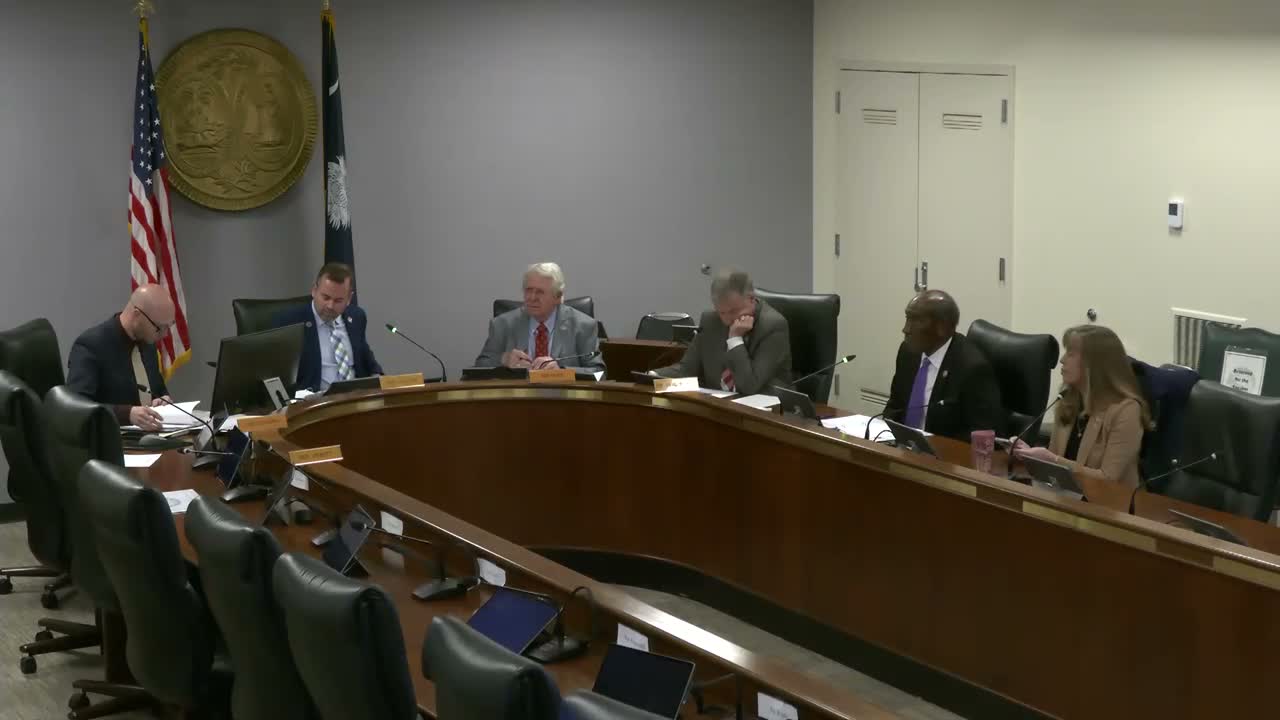
A legislative subcommittee reported Senate Bill 853 favorably after testimony from developers and tax-credit practitioners who said the bill corrects a Department of Revenue interpretation and preserves an incentive used for redevelopment projects.
Staff explained SB 853 would amend the Abandoned Buildings Revitalization Act to remove a separate state-owned abandoned-buildings category and clarify that a building’s income-producing use prior to abandonment is not required for eligibility. The bill requires taxpayers to file a notice of intent to rehabilitate with the Department of Revenue before obtaining a building permit and excludes rehabilitation expenses incurred before approval of that notice from qualifying for the credit. The bill also bars using tax credits obtained under the act as collateral.
"The most important part of what this legislation does is that it clarifies and corrects a Department of Revenue ruling that came out in January indicating that a property had to be revenue producing prior to its abandonment," said Mark James, founder and principal with Cypress Real Estate Partners, who testified in strong support and cited dozens of past projects that relied on the credit.
Robert Lewis, a practitioner in tax-credit matters, told the committee that for 13 years the credit has been used for nonprofit and public properties as well as private projects and that the recent revenue ruling changed long-standing practice. "What we're asking this committee to do is to clarify the original bill to make sure that everyone, especially the Department of Revenue, understands that the code section of the bill applies to income and non income producing property," he said.
Committee members asked clarifying questions about the bill's scope. No opposition testimony was noted and the subcommittee voted 5–0 to report the bill favorably.
The bill will proceed through the regular committee process.
Staff explained SB 853 would amend the Abandoned Buildings Revitalization Act to remove a separate state-owned abandoned-buildings category and clarify that a building’s income-producing use prior to abandonment is not required for eligibility. The bill requires taxpayers to file a notice of intent to rehabilitate with the Department of Revenue before obtaining a building permit and excludes rehabilitation expenses incurred before approval of that notice from qualifying for the credit. The bill also bars using tax credits obtained under the act as collateral.
"The most important part of what this legislation does is that it clarifies and corrects a Department of Revenue ruling that came out in January indicating that a property had to be revenue producing prior to its abandonment," said Mark James, founder and principal with Cypress Real Estate Partners, who testified in strong support and cited dozens of past projects that relied on the credit.
Robert Lewis, a practitioner in tax-credit matters, told the committee that for 13 years the credit has been used for nonprofit and public properties as well as private projects and that the recent revenue ruling changed long-standing practice. "What we're asking this committee to do is to clarify the original bill to make sure that everyone, especially the Department of Revenue, understands that the code section of the bill applies to income and non income producing property," he said.
Committee members asked clarifying questions about the bill's scope. No opposition testimony was noted and the subcommittee voted 5–0 to report the bill favorably.
The bill will proceed through the regular committee process.
View the Full Meeting & All Its Details
This article offers just a summary. Unlock complete video, transcripts, and insights as a Founder Member.
✓
Watch full, unedited meeting videos
✓
Search every word spoken in unlimited transcripts
✓
AI summaries & real-time alerts (all government levels)
✓
Permanent access to expanding government content
30-day money-back guarantee
