House subcommittee hears praise and practical concerns on Senate Bill 52 DUI reform
March 25, 2026 | 2026 Legislative Meetings, South Carolina
This article was created by AI summarizing key points discussed. AI makes mistakes, so for full details and context, please refer to the video of the full meeting. Please report any errors so we can fix them. Report an error »
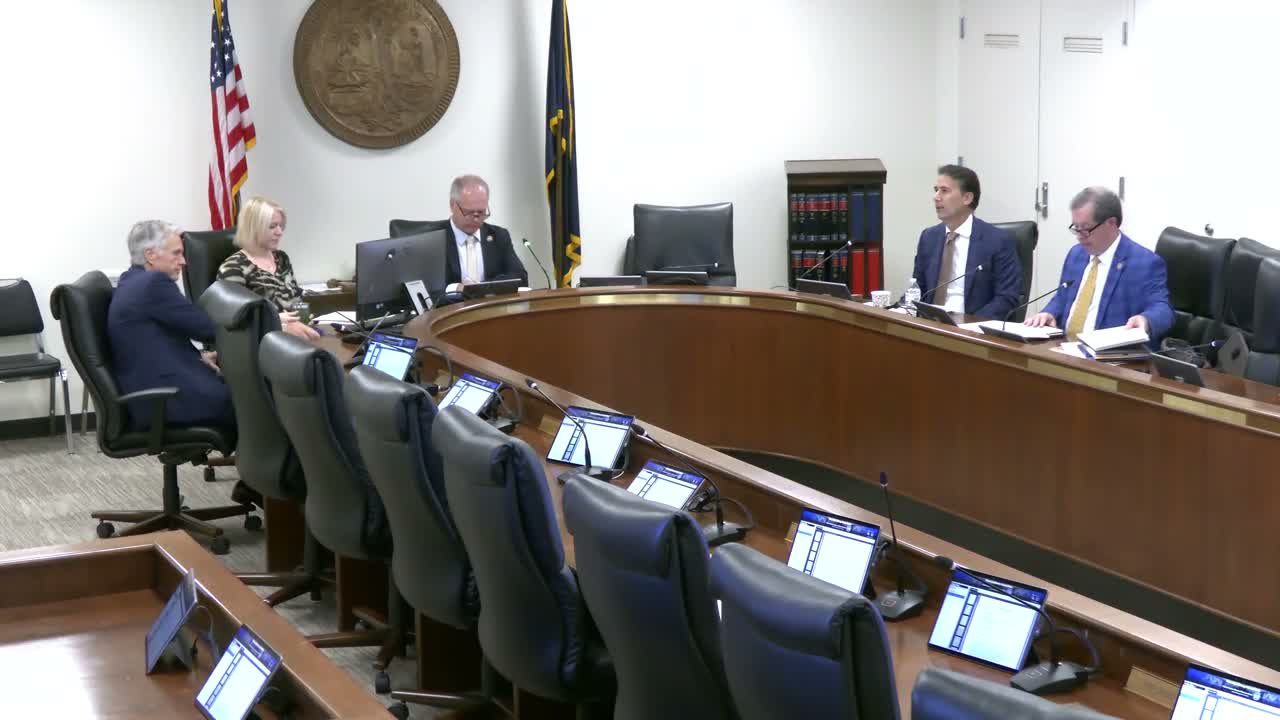
The House Criminal Law Subcommittee, chaired by Representative Jeff Johnson, heard testimony on Senate Bill 52 — a comprehensive overhaul of the state's DUI laws — and drew both strong support from victims' advocates and detailed operational and legal concerns from solicitors, the Department of Motor Vehicles and criminal defense representatives.
Jimmy Richardson, solicitor for Horry and Georgetown counties, told the panel he supports the effort to close gaps in DUI law but warned the bill will change case-processing needs on the ground. Richardson said the proposal would centralize many magistrate DUI cases, require more prosecutors and expand roadside drug testing and interlock requirements. "I am supportive of the bill," he said, adding the measures could require additional prosecutors and centralized courts to handle the caseload. Richardson estimated the bill would affect roughly 12,000 cases statewide and put the near-term cost to county prosecution operations at about $7.4 million.
Victims' advocates urged swift action. Mr. Barrett, identified in the record as a regional executive director for Mothers Against Drunk Driving, described the bill as an opportunity to address what he called South Carolina's disproportionately high per-capita deadly-crash rate. "This is the time, this is the year, we believe, to do things differently and attack this issue in the way that it needs to be done," he said, praising provisions such as improved diversion oversight, interlock use and victim-impact panels.
But stakeholders told the committee the bill contains operational ambiguities that could cause administrative burdens and unintended consequences. Lauren Phillips, director of driver services at the South Carolina Department of Motor Vehicles, said the agency is not taking a legislative position but asked the committee to clarify several provisions before the law takes effect. Phillips pointed to potential scrivener's errors in section 9 affecting how child-endangerment suspensions would apply and urged explicit direction in section 11 on how implied-consent and IID requirements would be administered. She highlighted a data-processing concern: the DMV currently receives many suspension notices by mail and found an average 12-day lag from stop to agency notice; moving to electronic notice, she said, would let the DMV suspend records and immediately notify drivers of appeal rights.
Defense counsel raised due-process and cost objections to parts of the bill that would require ignition interlocks before administrative hearings. Jennifer Wells, vice president of the South Carolina Association of Criminal Defense Attorneys, said mandatory pre-hearing IID installation could force people to pay hundreds of dollars upfront — potentially about $1,000 once device installation, hearing fees and other costs are combined — only to learn months later at an administrative hearing that the driver was entitled to relief. "What happens to that person's basically $1,000 that they're out of pocket?" she asked, urging the committee to consider striking or revising pre-hearing IID language and to provide clearer statutory definitions for key terms such as "injury" in third-degree DUI provisions.
Committee members asked for more data, particularly on felony-DUI-with-death conviction rates, to match claims about statewide performance. Mr. Barrett said his organization tracks misdemeanor-level conviction rates in selected counties but does not maintain comprehensive felony conviction statistics; he said S.52 focuses in part on shoring up misdemeanor and procedural weaknesses that can contribute to deaths.
The DMV also noted the bill’s House-Senate negotiated language moved the effective date for DMV-related sections to Dec. 31, 2026, and asked lawmakers to move with "expediency" to give the agency time to update systems and train staff if the measure becomes law. No formal votes were taken at the hearing; Chair Johnson closed the session and said the panel will meet again next week for continued discussion.
The subcommittee's next procedural step is another meeting next week to continue consideration and to reconcile operational language and definitions, according to the chair.
Jimmy Richardson, solicitor for Horry and Georgetown counties, told the panel he supports the effort to close gaps in DUI law but warned the bill will change case-processing needs on the ground. Richardson said the proposal would centralize many magistrate DUI cases, require more prosecutors and expand roadside drug testing and interlock requirements. "I am supportive of the bill," he said, adding the measures could require additional prosecutors and centralized courts to handle the caseload. Richardson estimated the bill would affect roughly 12,000 cases statewide and put the near-term cost to county prosecution operations at about $7.4 million.
Victims' advocates urged swift action. Mr. Barrett, identified in the record as a regional executive director for Mothers Against Drunk Driving, described the bill as an opportunity to address what he called South Carolina's disproportionately high per-capita deadly-crash rate. "This is the time, this is the year, we believe, to do things differently and attack this issue in the way that it needs to be done," he said, praising provisions such as improved diversion oversight, interlock use and victim-impact panels.
But stakeholders told the committee the bill contains operational ambiguities that could cause administrative burdens and unintended consequences. Lauren Phillips, director of driver services at the South Carolina Department of Motor Vehicles, said the agency is not taking a legislative position but asked the committee to clarify several provisions before the law takes effect. Phillips pointed to potential scrivener's errors in section 9 affecting how child-endangerment suspensions would apply and urged explicit direction in section 11 on how implied-consent and IID requirements would be administered. She highlighted a data-processing concern: the DMV currently receives many suspension notices by mail and found an average 12-day lag from stop to agency notice; moving to electronic notice, she said, would let the DMV suspend records and immediately notify drivers of appeal rights.
Defense counsel raised due-process and cost objections to parts of the bill that would require ignition interlocks before administrative hearings. Jennifer Wells, vice president of the South Carolina Association of Criminal Defense Attorneys, said mandatory pre-hearing IID installation could force people to pay hundreds of dollars upfront — potentially about $1,000 once device installation, hearing fees and other costs are combined — only to learn months later at an administrative hearing that the driver was entitled to relief. "What happens to that person's basically $1,000 that they're out of pocket?" she asked, urging the committee to consider striking or revising pre-hearing IID language and to provide clearer statutory definitions for key terms such as "injury" in third-degree DUI provisions.
Committee members asked for more data, particularly on felony-DUI-with-death conviction rates, to match claims about statewide performance. Mr. Barrett said his organization tracks misdemeanor-level conviction rates in selected counties but does not maintain comprehensive felony conviction statistics; he said S.52 focuses in part on shoring up misdemeanor and procedural weaknesses that can contribute to deaths.
The DMV also noted the bill’s House-Senate negotiated language moved the effective date for DMV-related sections to Dec. 31, 2026, and asked lawmakers to move with "expediency" to give the agency time to update systems and train staff if the measure becomes law. No formal votes were taken at the hearing; Chair Johnson closed the session and said the panel will meet again next week for continued discussion.
The subcommittee's next procedural step is another meeting next week to continue consideration and to reconcile operational language and definitions, according to the chair.
View the Full Meeting & All Its Details
This article offers just a summary. Unlock complete video, transcripts, and insights as a Founder Member.
✓
Watch full, unedited meeting videos
✓
Search every word spoken in unlimited transcripts
✓
AI summaries & real-time alerts (all government levels)
✓
Permanent access to expanding government content
30-day money-back guarantee
