Panel approves amendment to protect heirs' property transfers from reassessment
March 25, 2026 | 2026 Legislative Meetings, South Carolina
This article was created by AI summarizing key points discussed. AI makes mistakes, so for full details and context, please refer to the video of the full meeting. Please report any errors so we can fix them. Report an error »
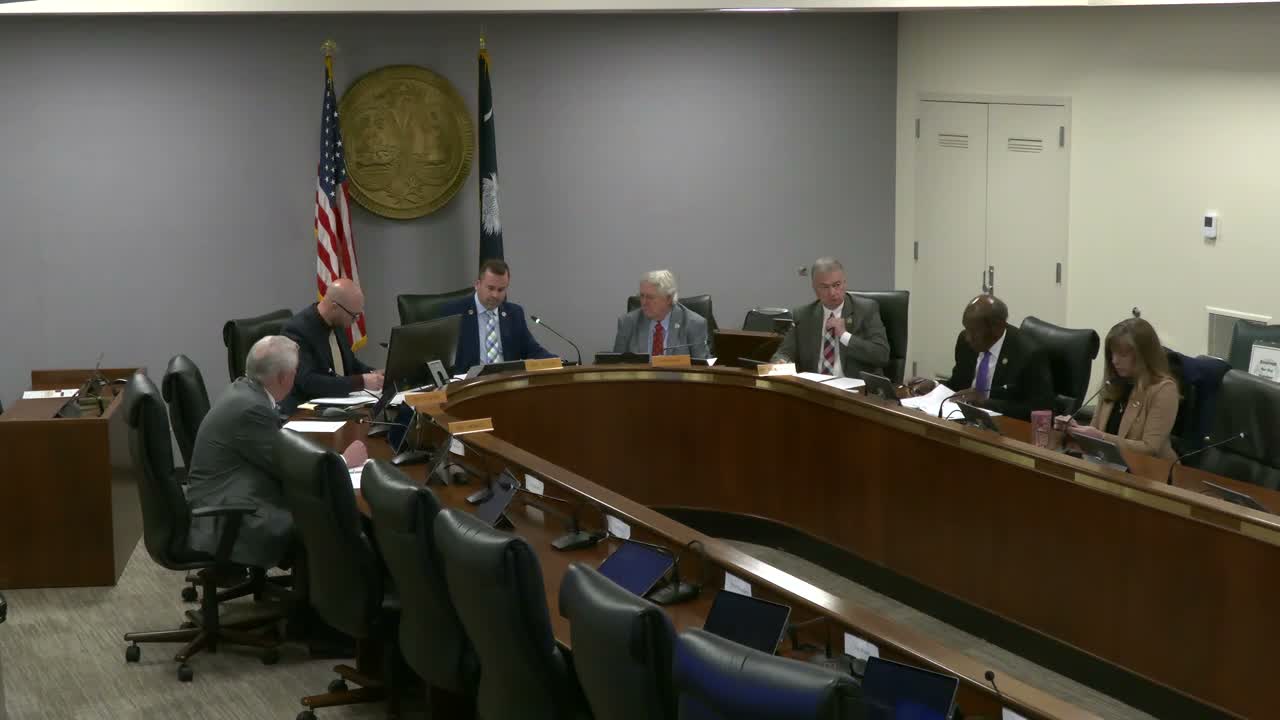
A legislative subcommittee reported House Bill 4,071, the Heirs' Property Bill, after adopting a strike-and-insert amendment incorporating language from a companion measure. The bill would exclude certain transfers among related descendants made for the purpose of clearing title from being treated as assessable transfers that trigger property-tax reassessments.
Representative Landing, the bill sponsor, described settlement communities in his district and said the threat of a reassessment when families clear title often forces fractional owners to sell. "If they go to clear a title right now ... it might be owned by 50 people ... and ... that would lead to an automatic reassessment," he said, adding that the bill provides a one-time exclusion to allow families to clear title without an immediate reassessment.
The subcommittee received supporting testimony from Nancy Lee, executive director of Habitat for Humanity South Carolina, who said the amendment is narrow and protects families trying to clear title without shifting costs to taxpayers. Luana Graves Sellers, founder of the Lowcountry Gullah Foundation, described specific family cases where a reassessment raised taxes from a few hundred dollars to several thousand, threatening family retention of land. Elizabeth Wellman, a staff attorney with the Center for Heirs' Property, said the amendment adds clarifying language and listed stakeholders who assisted drafting.
Committee members asked detailed questions about qualifying family members, probate involvement, and the scenarios that would trigger the one-time exclusion. Witnesses and counsel explained that qualifying transfers recognized by a court (quiet-title or partition actions, master's in equity deeds, etc.) are the triggering mechanisms for the exclusion and that ordinary sales to nonfamily members or later transfers would still be subject to reassessment.
Sponsors moved the strike-and-insert amendment (which uses language from bill 52 49 to clarify county determinations and protections); the amendment passed by voice and roll call and the committee reported the bill favorably with amendment, 5–0. The subcommittee then adjourned.
Representative Landing, the bill sponsor, described settlement communities in his district and said the threat of a reassessment when families clear title often forces fractional owners to sell. "If they go to clear a title right now ... it might be owned by 50 people ... and ... that would lead to an automatic reassessment," he said, adding that the bill provides a one-time exclusion to allow families to clear title without an immediate reassessment.
The subcommittee received supporting testimony from Nancy Lee, executive director of Habitat for Humanity South Carolina, who said the amendment is narrow and protects families trying to clear title without shifting costs to taxpayers. Luana Graves Sellers, founder of the Lowcountry Gullah Foundation, described specific family cases where a reassessment raised taxes from a few hundred dollars to several thousand, threatening family retention of land. Elizabeth Wellman, a staff attorney with the Center for Heirs' Property, said the amendment adds clarifying language and listed stakeholders who assisted drafting.
Committee members asked detailed questions about qualifying family members, probate involvement, and the scenarios that would trigger the one-time exclusion. Witnesses and counsel explained that qualifying transfers recognized by a court (quiet-title or partition actions, master's in equity deeds, etc.) are the triggering mechanisms for the exclusion and that ordinary sales to nonfamily members or later transfers would still be subject to reassessment.
Sponsors moved the strike-and-insert amendment (which uses language from bill 52 49 to clarify county determinations and protections); the amendment passed by voice and roll call and the committee reported the bill favorably with amendment, 5–0. The subcommittee then adjourned.
View the Full Meeting & All Its Details
This article offers just a summary. Unlock complete video, transcripts, and insights as a Founder Member.
✓
Watch full, unedited meeting videos
✓
Search every word spoken in unlimited transcripts
✓
AI summaries & real-time alerts (all government levels)
✓
Permanent access to expanding government content
30-day money-back guarantee
