Senate advances bill limiting restroom, changing‑room access in public schools and colleges after hours of debate
March 25, 2026 | 2026 Legislative Meetings, South Carolina
This article was created by AI summarizing key points discussed. AI makes mistakes, so for full details and context, please refer to the video of the full meeting. Please report any errors so we can fix them. Report an error »
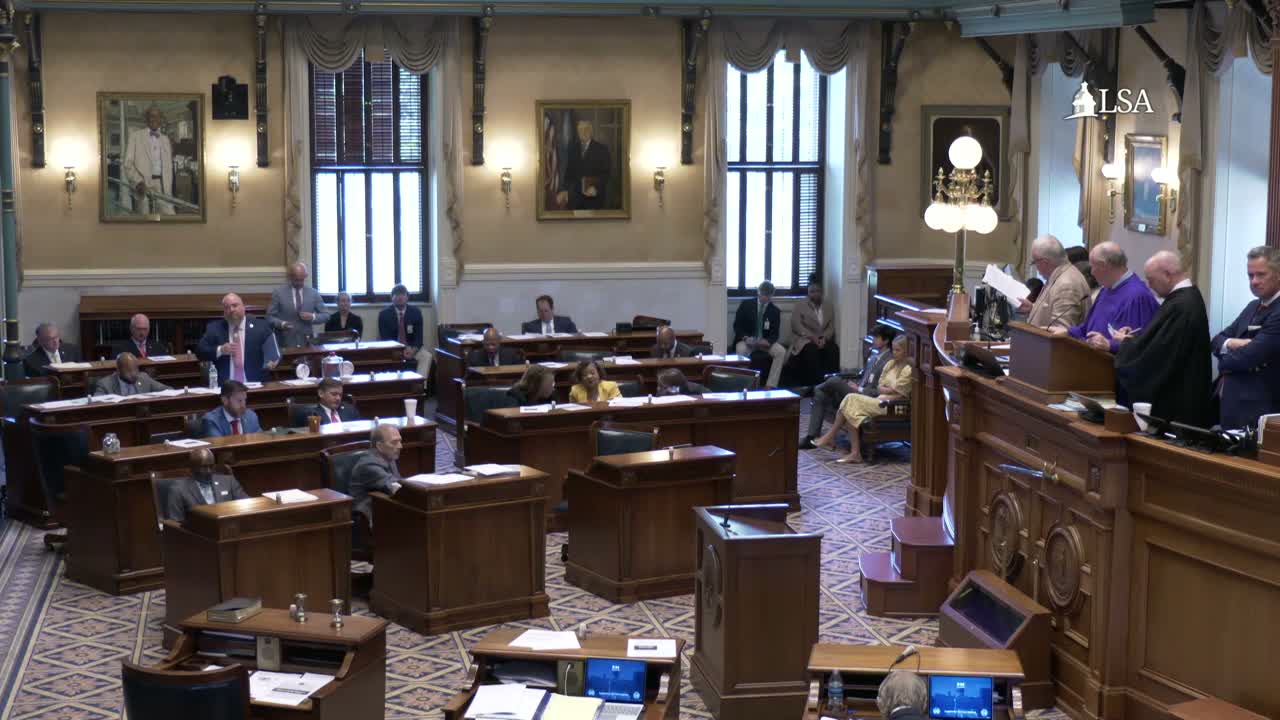
The South Carolina Senate on March 25 advanced H 47‑56 after a full day of debate, sending the bill back for further consideration while members negotiated amendments meant to narrow campus obligations and reduce potential fiscal shocks to higher education.
Senator from Chester (speaker 9), the floor sponsor, told colleagues the bill’s purpose is to restore what he called ‘‘dignity protections’’ for students and staff by requiring public K–12 schools and public institutions of higher education to maintain single‑user restroom accommodations and to ensure multi‑occupancy facilities are used in a way that preserves privacy. ‘‘This bill gives reasonable accommodations to folks who need them while protecting private spaces for others,’’ he said, urging adoption of the committee amendment.
The committee amendment converted several permissive terms to requirements (changing many ‘‘may nots’’ to ‘‘shall nots’’), broadened the set of potential plaintiffs from ‘‘student or employee’’ to ‘‘individual,’’ and named the State Board of Education and the Commission on Higher Education as the authorities to evaluate institutional compliance for withholding state funds. The amendment also kept remedies civil—primarily injunctive relief and reimbursement of attorney’s fees rather than monetary damages.
The floor debate centered on several flash points:
- Definition and scope: The bill uses sex assigned at birth as the determinative status for restroom and changing‑facility access, with narrowly enumerated exceptions (custodial workers, medical assistance, family accompaniment, event‑based temporary designations). Senate critics said the statutory tests and exceptions need clearer operational guidance.
- Penalties and enforcement: Under the bill, a noncompliant public school or institution of higher education could have a portion of state funding withheld until compliance; opponents warned that withholding funds could strain districts and universities and sought clarity about how the withholding would be applied in practice.
- Higher education and logistics: Multiple senators pressed whether every campus building would need a new single‑user restroom; in response the Senate adopted amendments clarifying that an institution must provide a campus‑level accommodation rather than retrofit every building, and that an accommodation may include a single‑user restroom, temporary exclusive use of an existing multi‑occupancy facility during events, or a single‑user portable facility in exigent circumstances.
Senator from Richland (speaker 35) pushed an amendment requiring written notice to an institution and a 30‑day cure period before bringing a civil action seeking injunctive relief; that amendment was discussed and adopted in a form the chamber accepted, in part to reduce the likelihood of immediate litigation in cases of inadvertent or previously unknown compliance gaps.
Proponents said the amendments provide enough flexibility for institutions to comply quickly—through clear signage, a campus‑level single‑user restroom or event‑based designations—while preserving a private enforcement tool if institutions refuse to remedy violations. Critics warned the law could invite litigation and asked for an updated fiscal impact statement after the amendments, arguing some campus buildings may still require physical changes.
The bill’s second reading passed on a roll call, 35 to 2. Several other amendments were adopted during floor consideration; sponsors said additional technical cleanups and implementation details were likely to be worked out before third reading.
What’s next: H 47‑56 has passed second reading and will return for additional amendments and a third‑reading vote. The committee sponsors said they will continue talks with higher‑education officials on implementation details and urged institutions to begin proactive compliance efforts.
Representative quotes used in this report are attributed to senators by the functional reference used on the Senate floor (for example, "Senator from Chester"), consistent with the meeting transcript.
Senator from Chester (speaker 9), the floor sponsor, told colleagues the bill’s purpose is to restore what he called ‘‘dignity protections’’ for students and staff by requiring public K–12 schools and public institutions of higher education to maintain single‑user restroom accommodations and to ensure multi‑occupancy facilities are used in a way that preserves privacy. ‘‘This bill gives reasonable accommodations to folks who need them while protecting private spaces for others,’’ he said, urging adoption of the committee amendment.
The committee amendment converted several permissive terms to requirements (changing many ‘‘may nots’’ to ‘‘shall nots’’), broadened the set of potential plaintiffs from ‘‘student or employee’’ to ‘‘individual,’’ and named the State Board of Education and the Commission on Higher Education as the authorities to evaluate institutional compliance for withholding state funds. The amendment also kept remedies civil—primarily injunctive relief and reimbursement of attorney’s fees rather than monetary damages.
The floor debate centered on several flash points:
- Definition and scope: The bill uses sex assigned at birth as the determinative status for restroom and changing‑facility access, with narrowly enumerated exceptions (custodial workers, medical assistance, family accompaniment, event‑based temporary designations). Senate critics said the statutory tests and exceptions need clearer operational guidance.
- Penalties and enforcement: Under the bill, a noncompliant public school or institution of higher education could have a portion of state funding withheld until compliance; opponents warned that withholding funds could strain districts and universities and sought clarity about how the withholding would be applied in practice.
- Higher education and logistics: Multiple senators pressed whether every campus building would need a new single‑user restroom; in response the Senate adopted amendments clarifying that an institution must provide a campus‑level accommodation rather than retrofit every building, and that an accommodation may include a single‑user restroom, temporary exclusive use of an existing multi‑occupancy facility during events, or a single‑user portable facility in exigent circumstances.
Senator from Richland (speaker 35) pushed an amendment requiring written notice to an institution and a 30‑day cure period before bringing a civil action seeking injunctive relief; that amendment was discussed and adopted in a form the chamber accepted, in part to reduce the likelihood of immediate litigation in cases of inadvertent or previously unknown compliance gaps.
Proponents said the amendments provide enough flexibility for institutions to comply quickly—through clear signage, a campus‑level single‑user restroom or event‑based designations—while preserving a private enforcement tool if institutions refuse to remedy violations. Critics warned the law could invite litigation and asked for an updated fiscal impact statement after the amendments, arguing some campus buildings may still require physical changes.
The bill’s second reading passed on a roll call, 35 to 2. Several other amendments were adopted during floor consideration; sponsors said additional technical cleanups and implementation details were likely to be worked out before third reading.
What’s next: H 47‑56 has passed second reading and will return for additional amendments and a third‑reading vote. The committee sponsors said they will continue talks with higher‑education officials on implementation details and urged institutions to begin proactive compliance efforts.
Representative quotes used in this report are attributed to senators by the functional reference used on the Senate floor (for example, "Senator from Chester"), consistent with the meeting transcript.
Don't Miss a Word: See the Full Meeting!
Go beyond summaries. Unlock every video, transcript, and key insight with a Founder Membership.
✓
Get instant access to full meeting videos
✓
Search and clip any phrase from complete transcripts
✓
Receive AI-powered summaries & custom alerts
✓
Enjoy lifetime, unrestricted access to government data
30-day money-back guarantee
