Committee hears dueling testimony on bill targeting 'claim-shark' veterans-benefits companies
March 24, 2026 | 2026 Legislature MO, Missouri
This article was created by AI summarizing key points discussed. AI makes mistakes, so for full details and context, please refer to the video of the full meeting. Please report any errors so we can fix them. Report an error »
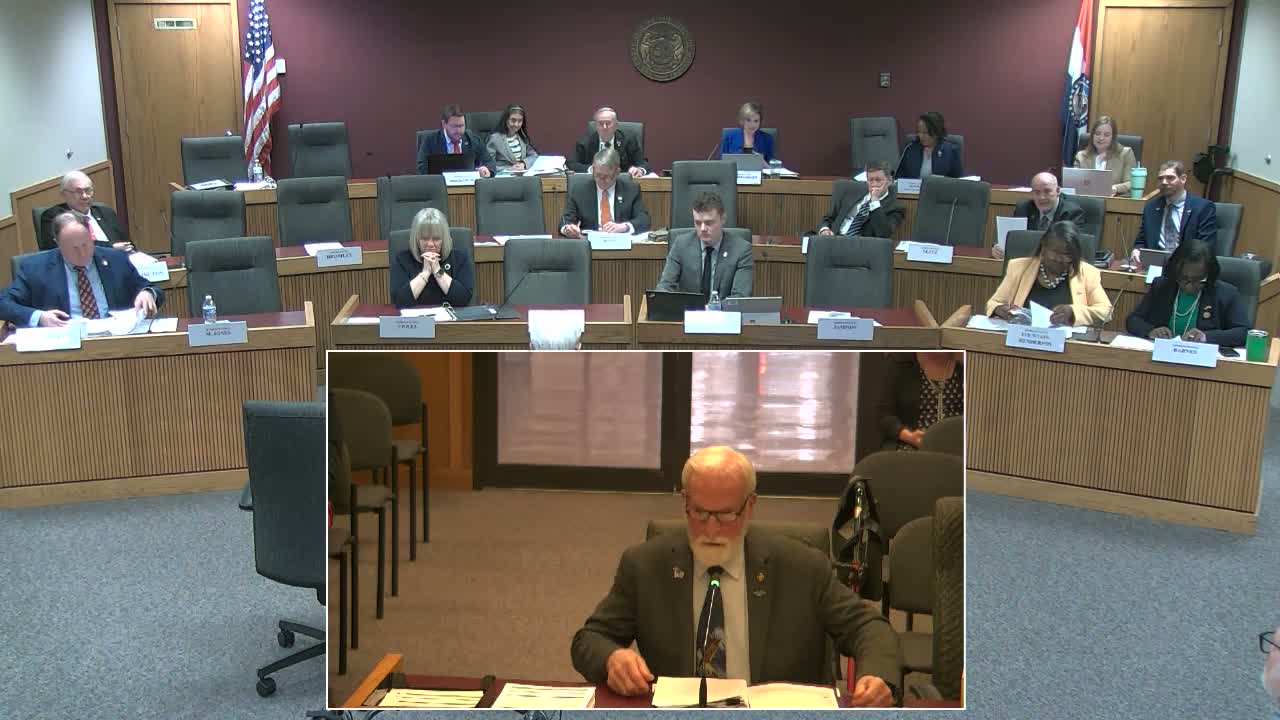
Representative Jim Schulte presented House Bill 30 29, which would require disclosures from businesses advising veterans on benefits, prohibit referral compensation in certain circumstances, and make violations a class A misdemeanor. The sponsor framed the bill as protecting veterans from firms that advertise guaranteed increases or charge large contingent fees while rebranding claim-preparation work as "consulting."
Troy Williams, legislative chairman for the Missouri Association of Veterans and a department service officer with the Veterans of Foreign Wars, testified in strong support. Williams described contracts used by third-party firms that attempt to skirt federal rules (Title 38 and VA regulations) by re-labeling claim-preparation work as pre-filing consulting and charging contingent fees tied to benefit increases. He urged the committee to align state law with federal protections and make it harder for companies to collect excessive fees or harvest veterans' personal data.
Witnesses opposing aspects of the bill included John Blumstrom of Veterans Guardian (representing the National Association for Veteran Rights) and C. W. Hadley of Parmalee Disability Advocates. Blumstrom acknowledged the need to protect veterans from bad actors but said the bill as written would remove lawful private-sector choices, risk limiting access in a system already strained, and raised potential constitutional concerns. Hadley urged an explicit exemption for VA-accredited attorneys and described how accredited providers use lead-generation and referral practices to connect veterans with legal representation; he said the bill's broad language could unintentionally block those lawful practices.
Committee members pressed witnesses on technical points: how accreditation works (forms 21-22 and the VA Office of General Counsel process), what services accredited VSOs and attorneys can provide versus what third-party firms do, typical timelines for VA adjudications, and fee structures used in the industry (examples included contingent-fee models and back-pay percentages discussed in testimony). Witnesses described real cases they are handling where veterans are locked into difficult contracts and said a state statute could aid enforcement and consumer protection.
Why it matters: HB 30 29 probes the boundary between consumer protection and market access for services veterans may use to pursue benefits. The bill raises legal and operational questions about federal preemption, accreditation requirements, and how to target bad actors without eliminating lawful service providers.
Next steps: The hearing elicited extensive technical discussion and competing proposals for amendments (including explicit exemptions or fee caps); the transcript records argument and testimony but does not show a committee vote on HB 30 29 during this session.
Troy Williams, legislative chairman for the Missouri Association of Veterans and a department service officer with the Veterans of Foreign Wars, testified in strong support. Williams described contracts used by third-party firms that attempt to skirt federal rules (Title 38 and VA regulations) by re-labeling claim-preparation work as pre-filing consulting and charging contingent fees tied to benefit increases. He urged the committee to align state law with federal protections and make it harder for companies to collect excessive fees or harvest veterans' personal data.
Witnesses opposing aspects of the bill included John Blumstrom of Veterans Guardian (representing the National Association for Veteran Rights) and C. W. Hadley of Parmalee Disability Advocates. Blumstrom acknowledged the need to protect veterans from bad actors but said the bill as written would remove lawful private-sector choices, risk limiting access in a system already strained, and raised potential constitutional concerns. Hadley urged an explicit exemption for VA-accredited attorneys and described how accredited providers use lead-generation and referral practices to connect veterans with legal representation; he said the bill's broad language could unintentionally block those lawful practices.
Committee members pressed witnesses on technical points: how accreditation works (forms 21-22 and the VA Office of General Counsel process), what services accredited VSOs and attorneys can provide versus what third-party firms do, typical timelines for VA adjudications, and fee structures used in the industry (examples included contingent-fee models and back-pay percentages discussed in testimony). Witnesses described real cases they are handling where veterans are locked into difficult contracts and said a state statute could aid enforcement and consumer protection.
Why it matters: HB 30 29 probes the boundary between consumer protection and market access for services veterans may use to pursue benefits. The bill raises legal and operational questions about federal preemption, accreditation requirements, and how to target bad actors without eliminating lawful service providers.
Next steps: The hearing elicited extensive technical discussion and competing proposals for amendments (including explicit exemptions or fee caps); the transcript records argument and testimony but does not show a committee vote on HB 30 29 during this session.
View the Full Meeting & All Its Details
This article offers just a summary. Unlock complete video, transcripts, and insights as a Founder Member.
✓
Watch full, unedited meeting videos
✓
Search every word spoken in unlimited transcripts
✓
AI summaries & real-time alerts (all government levels)
✓
Permanent access to expanding government content
30-day money-back guarantee
