Project staff say geothermal retrofit and design changes cut Tab High construction estimate to $34.77 million; building will be solar-ready
March 24, 2026 | York County, Virginia
This article was created by AI summarizing key points discussed. AI makes mistakes, so for full details and context, please refer to the video of the full meeting. Please report any errors so we can fix them. Report an error »
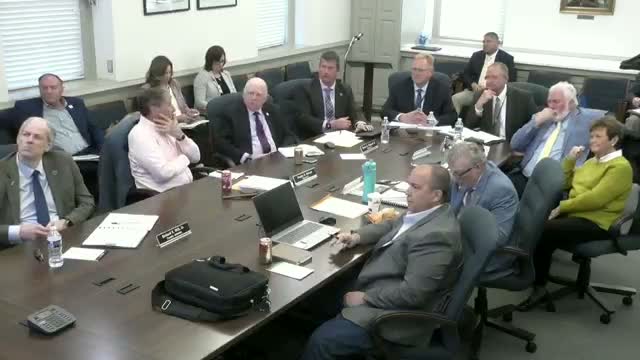
Project staff presented updated designs for Tab High School’s planned renovation and argued that switching to a geothermal heating-and-cooling system will save money over time while reducing the mechanical yard footprint.
Mr. Gilmore, a staff member leading the presentation, said the 35% construction-only estimate had been about $40,780,000 and that "when we started reviewing at 65% and making these optimizations we drove it down to 34.77." He added that Bruton High School, a sister school that already uses geothermal, costs "almost $120,000 more per fiscal year to run Tab High than Bruton High," and that avoiding future large HVAC replacements in 20–25 years is part of the long-term savings case: "So, geothermal really is the right now, we think it's the most efficient way to go, not just energy wise, but financially." (Mr. Gilmore's phrasing is as stated in the meeting.)
The design team showed renderings of a new main entrance, described program adjacencies (Kiva on the lower level, learning commons above, a security vestibule and an admin suite), and noted that selecting geothermal removes the need to replace existing chillers and a cooling tower. Mr. Gilmore said that opting for geothermal will shrink the proposed mechanical yard to only "the 5 pumps that we need for a geothermal system," reducing both equipment and outdoor mechanical-access needs.
On schedule and next steps, staff said they expect to receive 95% drawings during the week, to submit official documents to the county permits office (documents due Thursday), and to follow the normal permit timetable with review comments in May and a hoped-for public bid release in early June. An attendee asked whether demolition and locker-room demolition would occur in 2027; staff acknowledged that tear-down timing could fall in 2027 depending on scope and coordination.
When asked about solar, Mr. Gilmore said the project will be made "solar-ready": electrical switchgear, roof membranes and structural analysis will be configured to accept future panels, but "we just don't have the budget to actually go after the solar panel system itself." Meeting participants discussed past federal incentives and utility credit markets; one attendee raised that Dominion may be moving away from accepting surplus power back to the grid or paying for it, which would reduce potential revenue from selling credits.
Attendees also asked about supplemental revenue ideas such as naming rights for Bailey Field, turf-field rentals and cell-tower leases. Staff said they had not yet pursued naming-rights deals or detailed leasing negotiations and noted that experience in nearby markets (for example, a sponsored facility at PNC in Raleigh) does not guarantee local offers or favorable terms.
The presentation closed and the board moved on. Staff emphasized that further cost refinements are expected after the 95% drawings and that the project remains on a path toward permit review and a possible bid schedule in early summer.
Mr. Gilmore, a staff member leading the presentation, said the 35% construction-only estimate had been about $40,780,000 and that "when we started reviewing at 65% and making these optimizations we drove it down to 34.77." He added that Bruton High School, a sister school that already uses geothermal, costs "almost $120,000 more per fiscal year to run Tab High than Bruton High," and that avoiding future large HVAC replacements in 20–25 years is part of the long-term savings case: "So, geothermal really is the right now, we think it's the most efficient way to go, not just energy wise, but financially." (Mr. Gilmore's phrasing is as stated in the meeting.)
The design team showed renderings of a new main entrance, described program adjacencies (Kiva on the lower level, learning commons above, a security vestibule and an admin suite), and noted that selecting geothermal removes the need to replace existing chillers and a cooling tower. Mr. Gilmore said that opting for geothermal will shrink the proposed mechanical yard to only "the 5 pumps that we need for a geothermal system," reducing both equipment and outdoor mechanical-access needs.
On schedule and next steps, staff said they expect to receive 95% drawings during the week, to submit official documents to the county permits office (documents due Thursday), and to follow the normal permit timetable with review comments in May and a hoped-for public bid release in early June. An attendee asked whether demolition and locker-room demolition would occur in 2027; staff acknowledged that tear-down timing could fall in 2027 depending on scope and coordination.
When asked about solar, Mr. Gilmore said the project will be made "solar-ready": electrical switchgear, roof membranes and structural analysis will be configured to accept future panels, but "we just don't have the budget to actually go after the solar panel system itself." Meeting participants discussed past federal incentives and utility credit markets; one attendee raised that Dominion may be moving away from accepting surplus power back to the grid or paying for it, which would reduce potential revenue from selling credits.
Attendees also asked about supplemental revenue ideas such as naming rights for Bailey Field, turf-field rentals and cell-tower leases. Staff said they had not yet pursued naming-rights deals or detailed leasing negotiations and noted that experience in nearby markets (for example, a sponsored facility at PNC in Raleigh) does not guarantee local offers or favorable terms.
The presentation closed and the board moved on. Staff emphasized that further cost refinements are expected after the 95% drawings and that the project remains on a path toward permit review and a possible bid schedule in early summer.
View the Full Meeting & All Its Details
This article offers just a summary. Unlock complete video, transcripts, and insights as a Founder Member.
✓
Watch full, unedited meeting videos
✓
Search every word spoken in unlimited transcripts
✓
AI summaries & real-time alerts (all government levels)
✓
Permanent access to expanding government content
30-day money-back guarantee
