West Virginia Senate concurs with House amendments and approves a package of bills, many by unanimous vote
March 14, 2026 | 2026 Legislature WV, West Virginia
This article was created by AI summarizing key points discussed. AI makes mistakes, so for full details and context, please refer to the video of the full meeting. Please report any errors so we can fix them. Report an error »
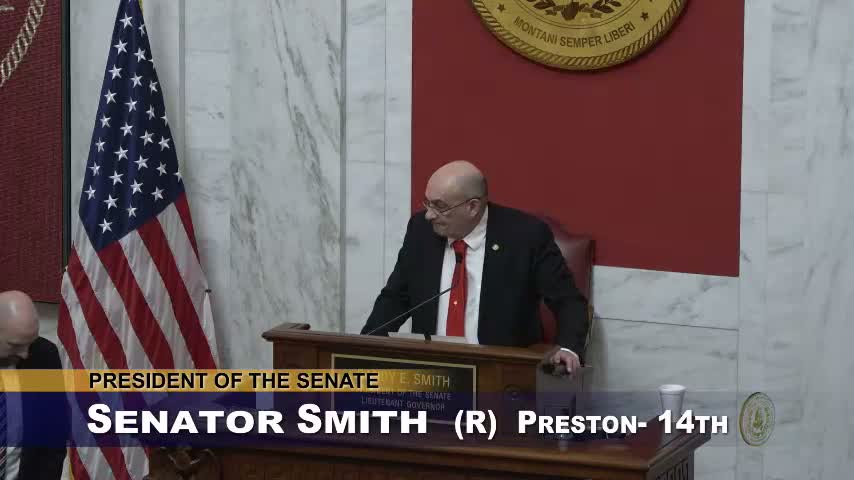
CHARLESTON — The West Virginia Senate on the floor today moved rapidly through a series of House messages, concurring with amendments and passing numerous measures by voice or recorded vote.
The body unanimously concurred and passed Senate Bill 194, which updates the definition of “disabled veteran taxpayer,” after the House removed a provision tying the expanded definition to VA individual unemployability determinations limited to injuries since Sept. 11, 2001. The clerk recorded the passage as 34 yays, 0 nays. "The house amendment only removes language limiting the expanded definition," said the Senator from Lewis, urging adoption.
The Senate also concurred in the House’s committee substitute for Senate Bill 499, which requires toxicology testing in auto-accident cases. Senator from Lewis said the House’s changes aligned the new section and removed references to urine testing; the Senate passed the bill, 34-0.
Other measures approved included a committee substitute for Senate Bill 672 (disciplinary standards for the West Virginia Real Estate Commission), which passed 25-9 after the sponsor said stakeholders supported the House amendment; and Senate Bill 724, allowing certain home confinement officers to participate in the EMS retirement system, which passed unanimously.
Votes at a glance
- Senate Bill 194 (disabled veteran taxpayer) — Senate concurred to House amendment; passed 34-0. (motion: Senator from Lewis; clerk reported passage.)
- Senate Bill 499 (auto-accident toxicology testing) — Senate concurred; passed 34-0.
- Senate Bill 672 (Real Estate Commission discipline) — Senate concurred; passed 25-9.
- Senate Bill 724 (home confinement officers / EMS retirement) — Senate concurred; passed 34-0.
- Additional bills and committee substitutes (multiple House messages) — Passed by recorded or voice votes; several were made effective on passage where indicated on the floor.
The Senate also adopted two resolutions recognizing long-serving members and placed the remarks in the journal’s appendix. The body recessed briefly to present flags to outgoing senators.
What’s next: Clerks were instructed to communicate the Senate’s actions to the House; a number of the bills were made effective from passage or set to take effect on specified future dates.
(Reporting based on the Senate floor transcript; vote tallies and motions are as recorded by the clerk on the floor.)
The body unanimously concurred and passed Senate Bill 194, which updates the definition of “disabled veteran taxpayer,” after the House removed a provision tying the expanded definition to VA individual unemployability determinations limited to injuries since Sept. 11, 2001. The clerk recorded the passage as 34 yays, 0 nays. "The house amendment only removes language limiting the expanded definition," said the Senator from Lewis, urging adoption.
The Senate also concurred in the House’s committee substitute for Senate Bill 499, which requires toxicology testing in auto-accident cases. Senator from Lewis said the House’s changes aligned the new section and removed references to urine testing; the Senate passed the bill, 34-0.
Other measures approved included a committee substitute for Senate Bill 672 (disciplinary standards for the West Virginia Real Estate Commission), which passed 25-9 after the sponsor said stakeholders supported the House amendment; and Senate Bill 724, allowing certain home confinement officers to participate in the EMS retirement system, which passed unanimously.
Votes at a glance
- Senate Bill 194 (disabled veteran taxpayer) — Senate concurred to House amendment; passed 34-0. (motion: Senator from Lewis; clerk reported passage.)
- Senate Bill 499 (auto-accident toxicology testing) — Senate concurred; passed 34-0.
- Senate Bill 672 (Real Estate Commission discipline) — Senate concurred; passed 25-9.
- Senate Bill 724 (home confinement officers / EMS retirement) — Senate concurred; passed 34-0.
- Additional bills and committee substitutes (multiple House messages) — Passed by recorded or voice votes; several were made effective on passage where indicated on the floor.
The Senate also adopted two resolutions recognizing long-serving members and placed the remarks in the journal’s appendix. The body recessed briefly to present flags to outgoing senators.
What’s next: Clerks were instructed to communicate the Senate’s actions to the House; a number of the bills were made effective from passage or set to take effect on specified future dates.
(Reporting based on the Senate floor transcript; vote tallies and motions are as recorded by the clerk on the floor.)
Don't Miss a Word: See the Full Meeting!
Go beyond summaries. Unlock every video, transcript, and key insight with a Founder Membership.
✓
Get instant access to full meeting videos
✓
Search and clip any phrase from complete transcripts
✓
Receive AI-powered summaries & custom alerts
✓
Enjoy lifetime, unrestricted access to government data
30-day money-back guarantee
