Richmond council approves bond-anticipation note and food-and-beverage-funded parks package amid 8–1 vote
March 17, 2026 | Richmond City, Wayne County, Indiana
This article was created by AI summarizing key points discussed. AI makes mistakes, so for full details and context, please refer to the video of the full meeting. Please report any errors so we can fix them. Report an error »
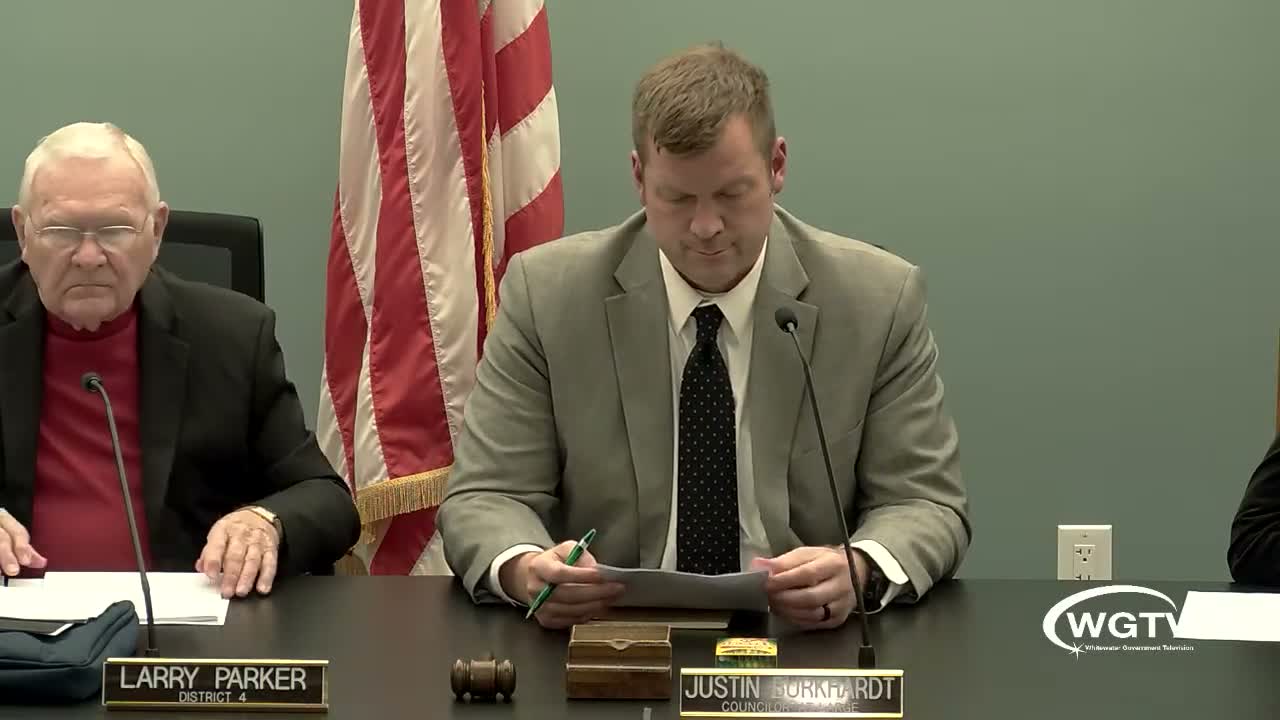
The Richmond Common Council on March 16 approved a financing package to pay for priority park and recreation repairs, voting 8–1 to move forward with a bond-anticipation note and related appropriation after public testimony and financial presentations.
Council members first approved Resolution 9, a reimbursement resolution that allows the city to spend its own money on emergency repairs now and be reimbursed later from bond proceeds. City counsel explained the financing structure: a bond anticipation note (BAN) of about $4.8 million would provide near-term capital, and the city could later issue a longer-term general revenue bond of up to $11 million if needed. The council discussed using recently enacted food-and-beverage tax collections as the primary repayment source.
Heidi Amspel of Baker Tilly, the city's financial adviser, told the council the advisers estimate roughly $740,000 of excess food-and-beverage revenue after debt service and recommended using property-tax backup as credit enhancement to secure lower interest rates while stressing the expectation that food-and-beverage proceeds would be sufficient. Bond counsel Lisa Lee (Ice Miller) said Baker Tilly would market the BAN and aimed for a closing in early to mid-April so the city could order long-lead equipment and begin projects.
During a public hearing, supporters — including Mike Devine of the Parks & Recreation Board, Mary Walker of the Wayne County Convention & Tourism Bureau and a Wayne County Area Chamber of Commerce representative — argued the funding would let Richmond address deferred maintenance and improve visitor-facing assets. A resident, Howard Price, opposed taking on long-term debt and warned about the potential for other revenue sources to be used if projections proved wrong; counsel replied that while the ordinance allows legally available sources as a backstop, projections show strong debt-coverage ratios and no expectation of needing property-tax levy repayment.
Council required that the parks director provide a plan for maintenance and that Exhibit A (a project list) be incorporated into the appropriation ordinance to clarify how BAN proceeds would be spent. The council voted 8–1 on the package (Councilor Lucinda Wright cast the lone “No”).
What happens next: with the BAN authorized, the city can access funds quickly to start priority park projects; bond marketing and final decisions on longer-term borrowing would follow later in 2026 once revenue performance is clearer.
Council members first approved Resolution 9, a reimbursement resolution that allows the city to spend its own money on emergency repairs now and be reimbursed later from bond proceeds. City counsel explained the financing structure: a bond anticipation note (BAN) of about $4.8 million would provide near-term capital, and the city could later issue a longer-term general revenue bond of up to $11 million if needed. The council discussed using recently enacted food-and-beverage tax collections as the primary repayment source.
Heidi Amspel of Baker Tilly, the city's financial adviser, told the council the advisers estimate roughly $740,000 of excess food-and-beverage revenue after debt service and recommended using property-tax backup as credit enhancement to secure lower interest rates while stressing the expectation that food-and-beverage proceeds would be sufficient. Bond counsel Lisa Lee (Ice Miller) said Baker Tilly would market the BAN and aimed for a closing in early to mid-April so the city could order long-lead equipment and begin projects.
During a public hearing, supporters — including Mike Devine of the Parks & Recreation Board, Mary Walker of the Wayne County Convention & Tourism Bureau and a Wayne County Area Chamber of Commerce representative — argued the funding would let Richmond address deferred maintenance and improve visitor-facing assets. A resident, Howard Price, opposed taking on long-term debt and warned about the potential for other revenue sources to be used if projections proved wrong; counsel replied that while the ordinance allows legally available sources as a backstop, projections show strong debt-coverage ratios and no expectation of needing property-tax levy repayment.
Council required that the parks director provide a plan for maintenance and that Exhibit A (a project list) be incorporated into the appropriation ordinance to clarify how BAN proceeds would be spent. The council voted 8–1 on the package (Councilor Lucinda Wright cast the lone “No”).
What happens next: with the BAN authorized, the city can access funds quickly to start priority park projects; bond marketing and final decisions on longer-term borrowing would follow later in 2026 once revenue performance is clearer.
View the Full Meeting & All Its Details
This article offers just a summary. Unlock complete video, transcripts, and insights as a Founder Member.
✓
Watch full, unedited meeting videos
✓
Search every word spoken in unlimited transcripts
✓
AI summaries & real-time alerts (all government levels)
✓
Permanent access to expanding government content
30-day money-back guarantee
