Senate panel advances kratom ban after anguished family testimony and medical warnings
March 25, 2026 | 2026 Legislature TN, Tennessee
This article was created by AI summarizing key points discussed. AI makes mistakes, so for full details and context, please refer to the video of the full meeting. Please report any errors so we can fix them. Report an error »
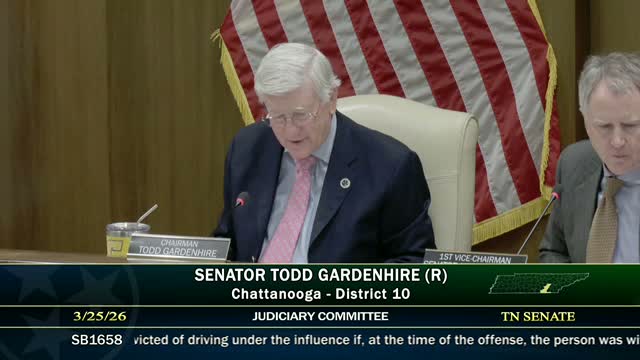
Chairman Gardenhire presented SB 16‑56, a bill that would ban kratom in all forms in Tennessee, citing public‑health and safety concerns. The sponsor told the committee that federal and state agencies have raised alarms about kratom’s risks and urged legislative action to protect Tennesseans.
Testimony split the room. Karen Davenport, a nurse practitioner and mother who said her son died after mixing prescribed medication with an over‑the‑counter kratom product, urged lawmakers to “bring an end to these preventable tragedies” and stop retail sales that she described as readily available at convenience stores. Dr. Jeff Hargas, an addiction‑medicine practitioner, described clinical concerns about synthetic kratom metabolites and urged removal of specific adulterants while considering the raw leaf separately. John Schoenholz, advocacy director for American Veterans for Kratom Safe, representing veterans who use kratom, said most consumers do not experience problems and argued a blanket ban would criminalize many people and cause downstream harms in treatment and criminal‑justice systems.
Lawmakers asked witnesses about dosing, safety data and whether the harms reported were driven by adulterated or synthetic products rather than raw leaf. Dr. Conley, a physician and addiction center director, said clinicians are seeing patients harmed by kratom use and urged removing it from retail while additional research continues. Industry witnesses and some advocates pressed the committee to remove specific synthetic compounds (eg, 7‑hydroxymitragynine) rather than outlaw raw kratom and recommended regulatory controls and quality standards instead of a ban.
After questions and public testimony, the committee voted to advance SB 16‑56 to the finance committee for further consideration (committee vote recorded as 6 ayes, 1 no, 2 present not voting). The bill as presented would criminalize retail sale and possession if enacted; supporters framed the move as a public‑safety measure while opponents asked for targeted, evidence‑based regulation.
The committee’s next step is consideration in the finance committee, where sponsors and opponents may address funding, enforcement and carve‑outs.
Testimony split the room. Karen Davenport, a nurse practitioner and mother who said her son died after mixing prescribed medication with an over‑the‑counter kratom product, urged lawmakers to “bring an end to these preventable tragedies” and stop retail sales that she described as readily available at convenience stores. Dr. Jeff Hargas, an addiction‑medicine practitioner, described clinical concerns about synthetic kratom metabolites and urged removal of specific adulterants while considering the raw leaf separately. John Schoenholz, advocacy director for American Veterans for Kratom Safe, representing veterans who use kratom, said most consumers do not experience problems and argued a blanket ban would criminalize many people and cause downstream harms in treatment and criminal‑justice systems.
Lawmakers asked witnesses about dosing, safety data and whether the harms reported were driven by adulterated or synthetic products rather than raw leaf. Dr. Conley, a physician and addiction center director, said clinicians are seeing patients harmed by kratom use and urged removing it from retail while additional research continues. Industry witnesses and some advocates pressed the committee to remove specific synthetic compounds (eg, 7‑hydroxymitragynine) rather than outlaw raw kratom and recommended regulatory controls and quality standards instead of a ban.
After questions and public testimony, the committee voted to advance SB 16‑56 to the finance committee for further consideration (committee vote recorded as 6 ayes, 1 no, 2 present not voting). The bill as presented would criminalize retail sale and possession if enacted; supporters framed the move as a public‑safety measure while opponents asked for targeted, evidence‑based regulation.
The committee’s next step is consideration in the finance committee, where sponsors and opponents may address funding, enforcement and carve‑outs.
View the Full Meeting & All Its Details
This article offers just a summary. Unlock complete video, transcripts, and insights as a Founder Member.
✓
Watch full, unedited meeting videos
✓
Search every word spoken in unlimited transcripts
✓
AI summaries & real-time alerts (all government levels)
✓
Permanent access to expanding government content
30-day money-back guarantee
