Senate adopts kratom excise and amends games-of-skill taxes as part of LB901 revenue package
March 18, 2026 | 2026 Legislature NE, Nebraska
This article was created by AI summarizing key points discussed. AI makes mistakes, so for full details and context, please refer to the video of the full meeting. Please report any errors so we can fix them. Report an error »
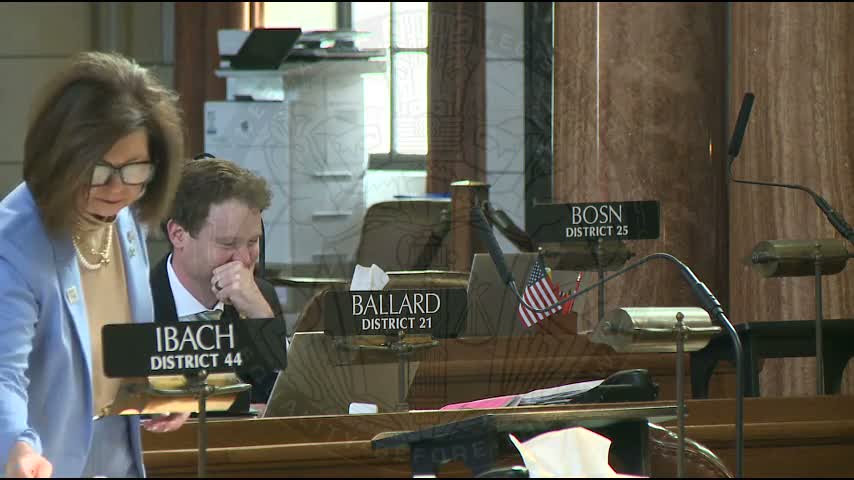
The Nebraska Legislature on the afternoon floor adopted an amendment to LB901 that imposes a 10% excise tax on kratom products and then approved further changes to the bill aimed at how games-of-skill operations are audited and funded.
Senator Bob Hallstrom, sponsor of AM26-74, told colleagues the amendment is "step two" following last year’s regulatory provisions and that the excise would begin on Jan. 1, 2027. Hallstrom said the fiscal note projects roughly $1,500,000 annually from the kratom tax, and he argued the change helps the revenue package that is being assembled to narrow the state’s projected deficit.
Several senators urged adoption, noting the amendment’s consumer-protection framing and the revenue it would bring. Senator Von Gillen and others described LB901 as a package that combines multiple bills to address the shortfall and preserve funding for property-tax credits and other specified priorities.
Opponents said taxing measures are the "easy button" for balancing the budget and urged deeper spending reductions or more targeted reforms. Senators Anderson and others warned that raising rates on games of skill and rescinding certain exemptions, including a data-center exemption, could have downstream effects on investment and on nonprofits that rely on related credits.
The Legislature also adopted FA1056, an amendment that narrows Department-of-Revenue audit language related to games-of-skill devices so the department cannot broadly audit unrelated business books; sponsors said the change limits undue burdens on small retailers while preserving compliance checks tied to the devices themselves.
Clerk-recorded votes on major procedural steps included a failed motion to cease debate (12 ayes, 26 nays), a successful cloture motion later in the day, adoption of FA1056 by recorded vote, and the adoption of AM26-74 on the kratom tax. After amendments were adopted, senators advanced LB901 to engrossing for further processing.
What happens next: LB901, as amended, was advanced for engrossing; proponents said the revenues and transfers in the package will help narrow the biennial shortfall, while critics said spending discipline should remain the primary tool to balance budgets.
Senator Bob Hallstrom, sponsor of AM26-74, told colleagues the amendment is "step two" following last year’s regulatory provisions and that the excise would begin on Jan. 1, 2027. Hallstrom said the fiscal note projects roughly $1,500,000 annually from the kratom tax, and he argued the change helps the revenue package that is being assembled to narrow the state’s projected deficit.
Several senators urged adoption, noting the amendment’s consumer-protection framing and the revenue it would bring. Senator Von Gillen and others described LB901 as a package that combines multiple bills to address the shortfall and preserve funding for property-tax credits and other specified priorities.
Opponents said taxing measures are the "easy button" for balancing the budget and urged deeper spending reductions or more targeted reforms. Senators Anderson and others warned that raising rates on games of skill and rescinding certain exemptions, including a data-center exemption, could have downstream effects on investment and on nonprofits that rely on related credits.
The Legislature also adopted FA1056, an amendment that narrows Department-of-Revenue audit language related to games-of-skill devices so the department cannot broadly audit unrelated business books; sponsors said the change limits undue burdens on small retailers while preserving compliance checks tied to the devices themselves.
Clerk-recorded votes on major procedural steps included a failed motion to cease debate (12 ayes, 26 nays), a successful cloture motion later in the day, adoption of FA1056 by recorded vote, and the adoption of AM26-74 on the kratom tax. After amendments were adopted, senators advanced LB901 to engrossing for further processing.
What happens next: LB901, as amended, was advanced for engrossing; proponents said the revenues and transfers in the package will help narrow the biennial shortfall, while critics said spending discipline should remain the primary tool to balance budgets.
View the Full Meeting & All Its Details
This article offers just a summary. Unlock complete video, transcripts, and insights as a Founder Member.
✓
Watch full, unedited meeting videos
✓
Search every word spoken in unlimited transcripts
✓
AI summaries & real-time alerts (all government levels)
✓
Permanent access to expanding government content
30-day money-back guarantee
