Counties show 'green screen' failures in Maxis as Senate considers IT modernization bill
March 25, 2026 | 2026 Legislature MN, Minnesota
This article was created by AI summarizing key points discussed. AI makes mistakes, so for full details and context, please refer to the video of the full meeting. Please report any errors so we can fix them. Report an error »
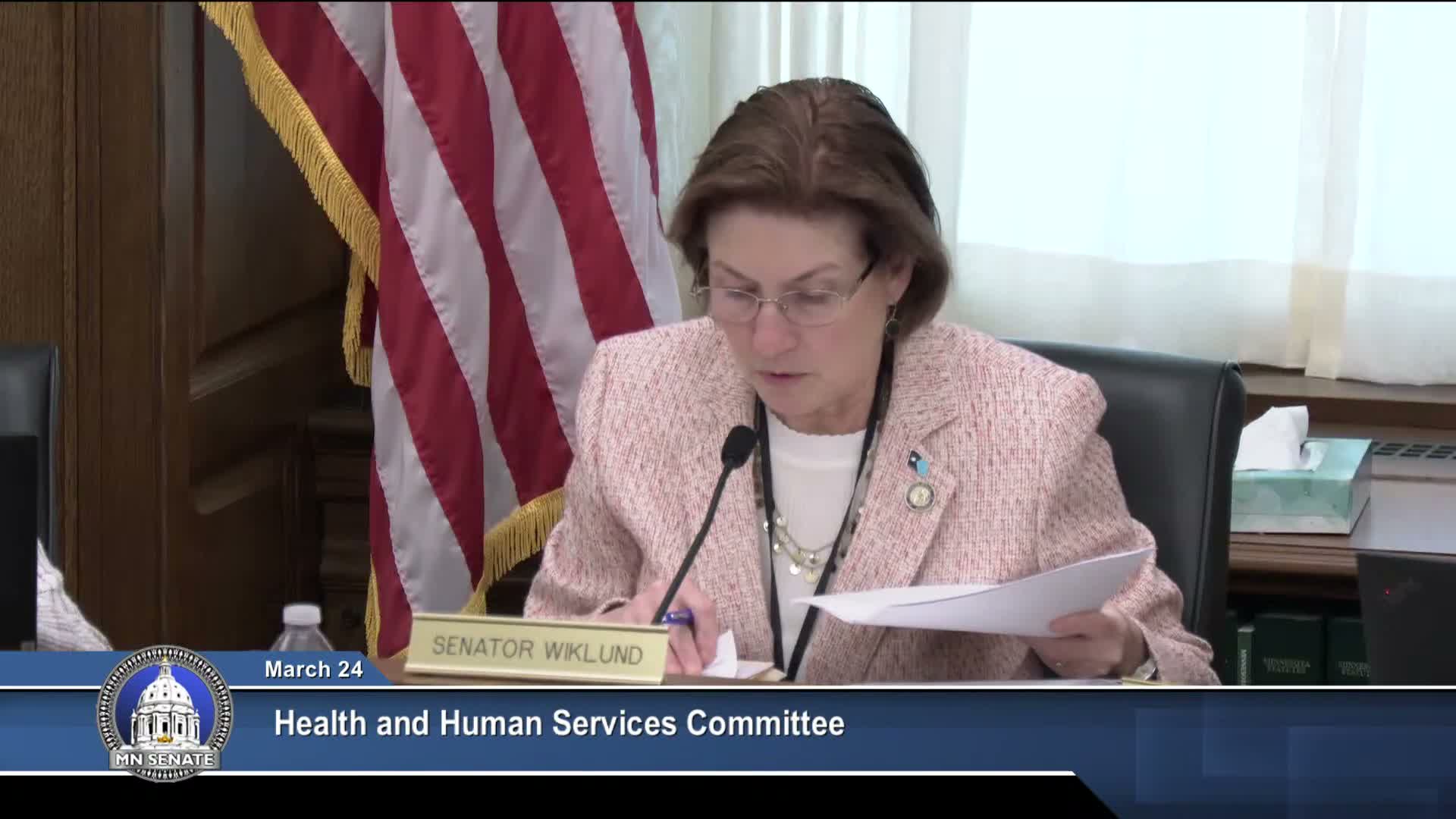
Senate File 4719, presented by Senator Wicklund, would create a multiyear approach to modernizing state human services IT systems and a steering committee to formalize county–agency planning. The committee heard an on‑screen demonstration of Maxis (the legacy eligibility system) and METS (a newer system) that highlighted workflow inefficiencies and manual entry that burden county workers and risk program errors.
Zach Wagner, a Dakota County Maxis trainer, walked members through entering a client application and repeatedly entering the same income information in multiple panels: "I have to enter income a fourth time… Maxis does not read itself." Tiffany Miller Sammons, a deputy director in Dakota County, explained that Metro's METS can be user friendly for straightforward "happy path" applications but requires prescribed workflows that force workers to close and reenter cases when exceptions arise, increasing rework and training time.
Matt Hilgert of the Association of Minnesota Counties said the issue affects workforce recruitment and county levies: inefficient systems increase case ratios and local costs, shifting burdens to property taxpayers. Dan Jensen (Olmsted County) said vendors exist who can provide integrated tools if procurement and integration are done correctly; committee members pushed for procurement approaches that include test drives of proposed systems before contracting.
Committee discussion emphasized four lenses for evaluating modernization—staff/workforce impact, property tax pressure, fraud prevention/program integrity, and client experience—and members asked about procurement strategy, integration models and near‑term fixes to automate SNAP eligibility and data integration.
The committee laid SF 4719 over for possible inclusion and later moved the bill to the State Government Committee for its steering‑committee aspects. Witnesses urged integrated design and county parity in governance before large procurement steps.
Zach Wagner, a Dakota County Maxis trainer, walked members through entering a client application and repeatedly entering the same income information in multiple panels: "I have to enter income a fourth time… Maxis does not read itself." Tiffany Miller Sammons, a deputy director in Dakota County, explained that Metro's METS can be user friendly for straightforward "happy path" applications but requires prescribed workflows that force workers to close and reenter cases when exceptions arise, increasing rework and training time.
Matt Hilgert of the Association of Minnesota Counties said the issue affects workforce recruitment and county levies: inefficient systems increase case ratios and local costs, shifting burdens to property taxpayers. Dan Jensen (Olmsted County) said vendors exist who can provide integrated tools if procurement and integration are done correctly; committee members pushed for procurement approaches that include test drives of proposed systems before contracting.
Committee discussion emphasized four lenses for evaluating modernization—staff/workforce impact, property tax pressure, fraud prevention/program integrity, and client experience—and members asked about procurement strategy, integration models and near‑term fixes to automate SNAP eligibility and data integration.
The committee laid SF 4719 over for possible inclusion and later moved the bill to the State Government Committee for its steering‑committee aspects. Witnesses urged integrated design and county parity in governance before large procurement steps.
Don't Miss a Word: See the Full Meeting!
Go beyond summaries. Unlock every video, transcript, and key insight with a Founder Membership.
✓
Get instant access to full meeting videos
✓
Search and clip any phrase from complete transcripts
✓
Receive AI-powered summaries & custom alerts
✓
Enjoy lifetime, unrestricted access to government data
30-day money-back guarantee
