Counties ask Legislature to shield property taxpayers from SNAP cost shifts tied to HR 1
March 25, 2026 | 2026 Legislature MN, Minnesota
This article was created by AI summarizing key points discussed. AI makes mistakes, so for full details and context, please refer to the video of the full meeting. Please report any errors so we can fix them. Report an error »
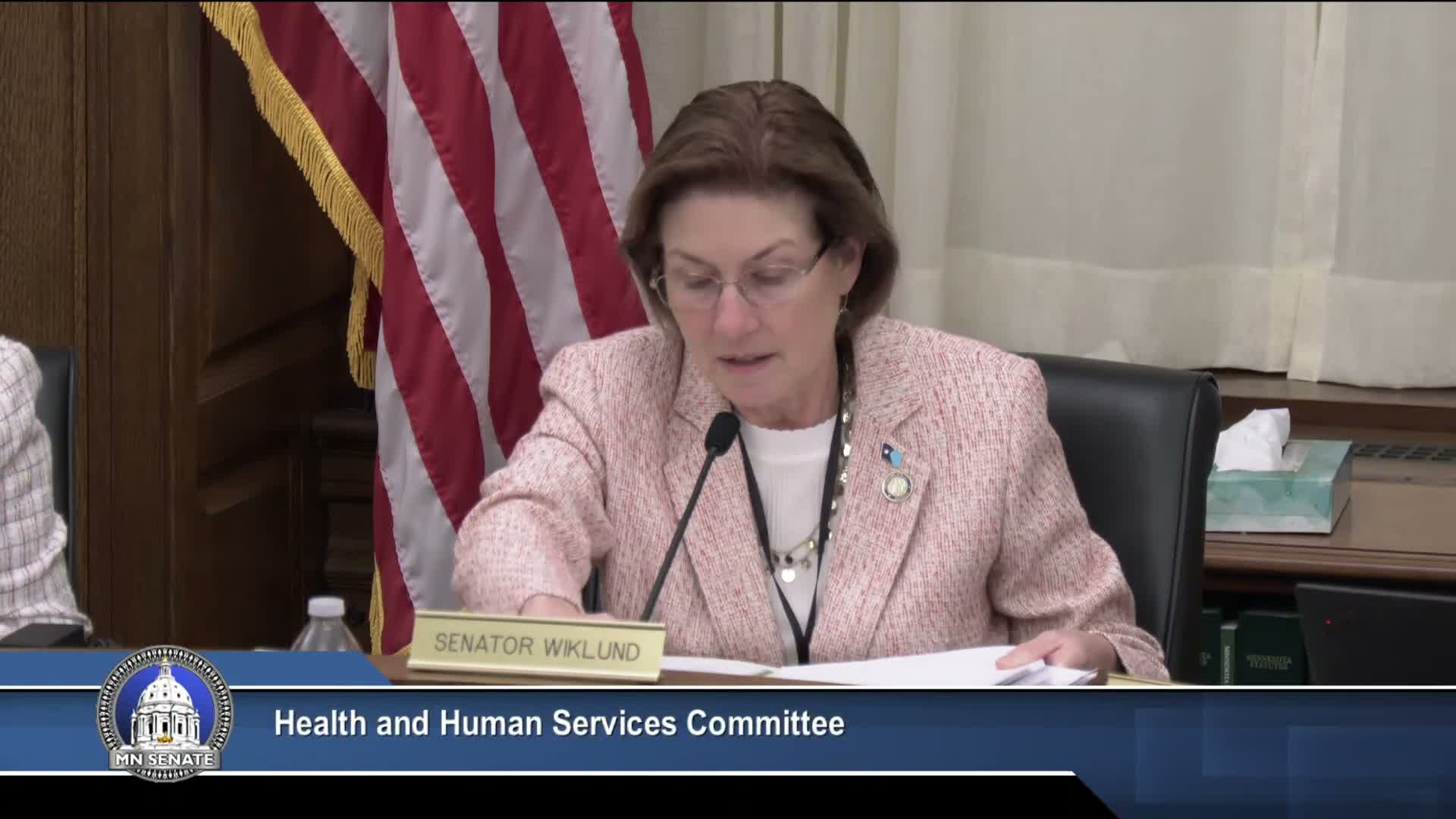
Senate File 4359, sponsored by Senator Bolden, would protect county property taxpayers from cost shifts imposed by federal HR 1 in the Supplemental Nutrition Assistance Program (SNAP). Testimony explained two major federal changes: a reduction in the federal administrative reimbursement rate (from 50% to 25%) that DCYF estimates will cost Minnesota about $39 million annually, and a new state share of SNAP benefits tied to payment error rates that DCYF estimates could expose Minnesota to about $97 million annually. County officials said the combined effect on local levies could be severe.
LeSueur County Commissioner David Preisler and Scott County HHS Director Barb Dahl testified that counties administer SNAP eligibility using outdated systems (Maxis), that payment errors are often client‑driven and that counties lack authority to control federal policy or system architecture. Dahl said payment errors are often unintentional and that Scott County's quality‑control sample showed a very small proportion of cases pulled for error review; under the new law, small errors could scale into large county costs.
The a1 amendment clarifies that the bill's intent is to protect county property taxpayers from both the SNAP administrative cost increase and the benefit cost share under HR 1. Sponsors argued the state should absorb the new federal cost share the same way other states absorb similar costs when SNAP is state‑administered.
Committee members asked for details and local impact notes; sponsors said they would work on appropriation and implementation language. The bill was laid over.
LeSueur County Commissioner David Preisler and Scott County HHS Director Barb Dahl testified that counties administer SNAP eligibility using outdated systems (Maxis), that payment errors are often client‑driven and that counties lack authority to control federal policy or system architecture. Dahl said payment errors are often unintentional and that Scott County's quality‑control sample showed a very small proportion of cases pulled for error review; under the new law, small errors could scale into large county costs.
The a1 amendment clarifies that the bill's intent is to protect county property taxpayers from both the SNAP administrative cost increase and the benefit cost share under HR 1. Sponsors argued the state should absorb the new federal cost share the same way other states absorb similar costs when SNAP is state‑administered.
Committee members asked for details and local impact notes; sponsors said they would work on appropriation and implementation language. The bill was laid over.
View the Full Meeting & All Its Details
This article offers just a summary. Unlock complete video, transcripts, and insights as a Founder Member.
✓
Watch full, unedited meeting videos
✓
Search every word spoken in unlimited transcripts
✓
AI summaries & real-time alerts (all government levels)
✓
Permanent access to expanding government content
30-day money-back guarantee
