Senate adopts first‑in‑nation agricultural data privacy measures, adds safeguards for conversational AI in amendment
March 24, 2026 | 2026 Legislature NE, Nebraska
This article was created by AI summarizing key points discussed. AI makes mistakes, so for full details and context, please refer to the video of the full meeting. Please report any errors so we can fix them. Report an error »
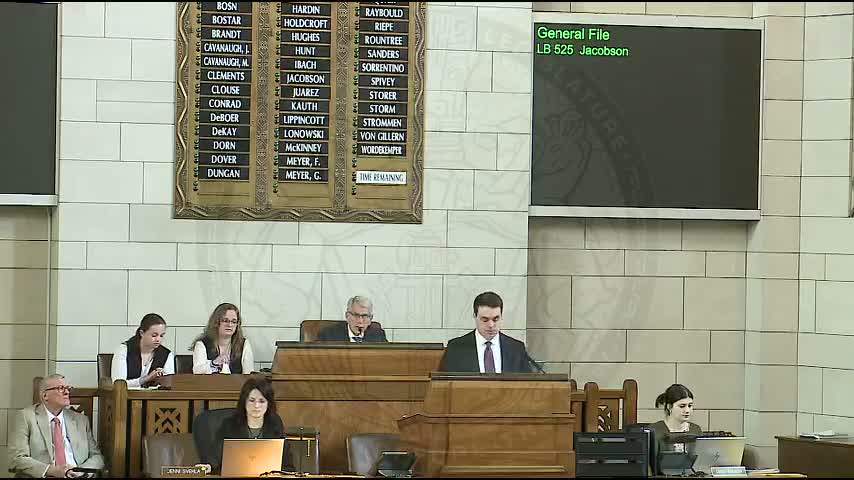
Senator Jacobson opened LB 5‑25 as a targeted approach to agricultural data privacy, saying farmers should not have their yield maps, soil moisture and other proprietary data sold without consent.
AM 24‑44, adopted on select file, makes three principal changes: (1) it adds “control” to the bill’s ownership framework so producers can prevent the sale of their raw agricultural data; (2) it amends the public records code to protect proprietary agricultural data from disclosure under §84‑712.05 unless a producer gives prior written consent; and (3) it clarifies exclusions so data already publicly available from government agencies (USDA soil maps, public land records) are not protected as agricultural data.
Senator Bostar explained the amendment also incorporates portions of LB 1185 to address conversational artificial intelligence safety — requiring clear disclosure that a user is interacting with AI, imposing safeguards to limit explicit content for minors and banning manipulative engagement techniques targeted at minor account holders. Supporters emphasized child safety and transparency, and Kavanaugh moved a technical amendment to ensure civil penalties go to the common school fund in compliance with the state constitution; that technical amendment (AM 28‑49) was adopted.
The committee amendment and related amendments were approved on recorded votes (AM 24‑44 adopted 31 ayes; AM 22‑21 adopted 32 ayes) and LB 5‑25 was advanced to E & R initial (35 ayes). Lawmakers said the bill is an initial step and recognized the state may return to refine definitions and enforcement after the law is used in practice.
Proponents stressed limited scope — preventing sale and protecting raw data — while preserving publicly available government data and allowing future statutory refinement.
AM 24‑44 and companion amendments were adopted; LB 5‑25 advanced to E & R initial.
AM 24‑44, adopted on select file, makes three principal changes: (1) it adds “control” to the bill’s ownership framework so producers can prevent the sale of their raw agricultural data; (2) it amends the public records code to protect proprietary agricultural data from disclosure under §84‑712.05 unless a producer gives prior written consent; and (3) it clarifies exclusions so data already publicly available from government agencies (USDA soil maps, public land records) are not protected as agricultural data.
Senator Bostar explained the amendment also incorporates portions of LB 1185 to address conversational artificial intelligence safety — requiring clear disclosure that a user is interacting with AI, imposing safeguards to limit explicit content for minors and banning manipulative engagement techniques targeted at minor account holders. Supporters emphasized child safety and transparency, and Kavanaugh moved a technical amendment to ensure civil penalties go to the common school fund in compliance with the state constitution; that technical amendment (AM 28‑49) was adopted.
The committee amendment and related amendments were approved on recorded votes (AM 24‑44 adopted 31 ayes; AM 22‑21 adopted 32 ayes) and LB 5‑25 was advanced to E & R initial (35 ayes). Lawmakers said the bill is an initial step and recognized the state may return to refine definitions and enforcement after the law is used in practice.
Proponents stressed limited scope — preventing sale and protecting raw data — while preserving publicly available government data and allowing future statutory refinement.
AM 24‑44 and companion amendments were adopted; LB 5‑25 advanced to E & R initial.
View the Full Meeting & All Its Details
This article offers just a summary. Unlock complete video, transcripts, and insights as a Founder Member.
✓
Watch full, unedited meeting videos
✓
Search every word spoken in unlimited transcripts
✓
AI summaries & real-time alerts (all government levels)
✓
Permanent access to expanding government content
30-day money-back guarantee
