Bill to redirect Minnesota literacy aid to needs‑based formula draws mixed testimony and is laid over
March 24, 2026 | 2026 Legislature MN, Minnesota
This article was created by AI summarizing key points discussed. AI makes mistakes, so for full details and context, please refer to the video of the full meeting. Please report any errors so we can fix them. Report an error »
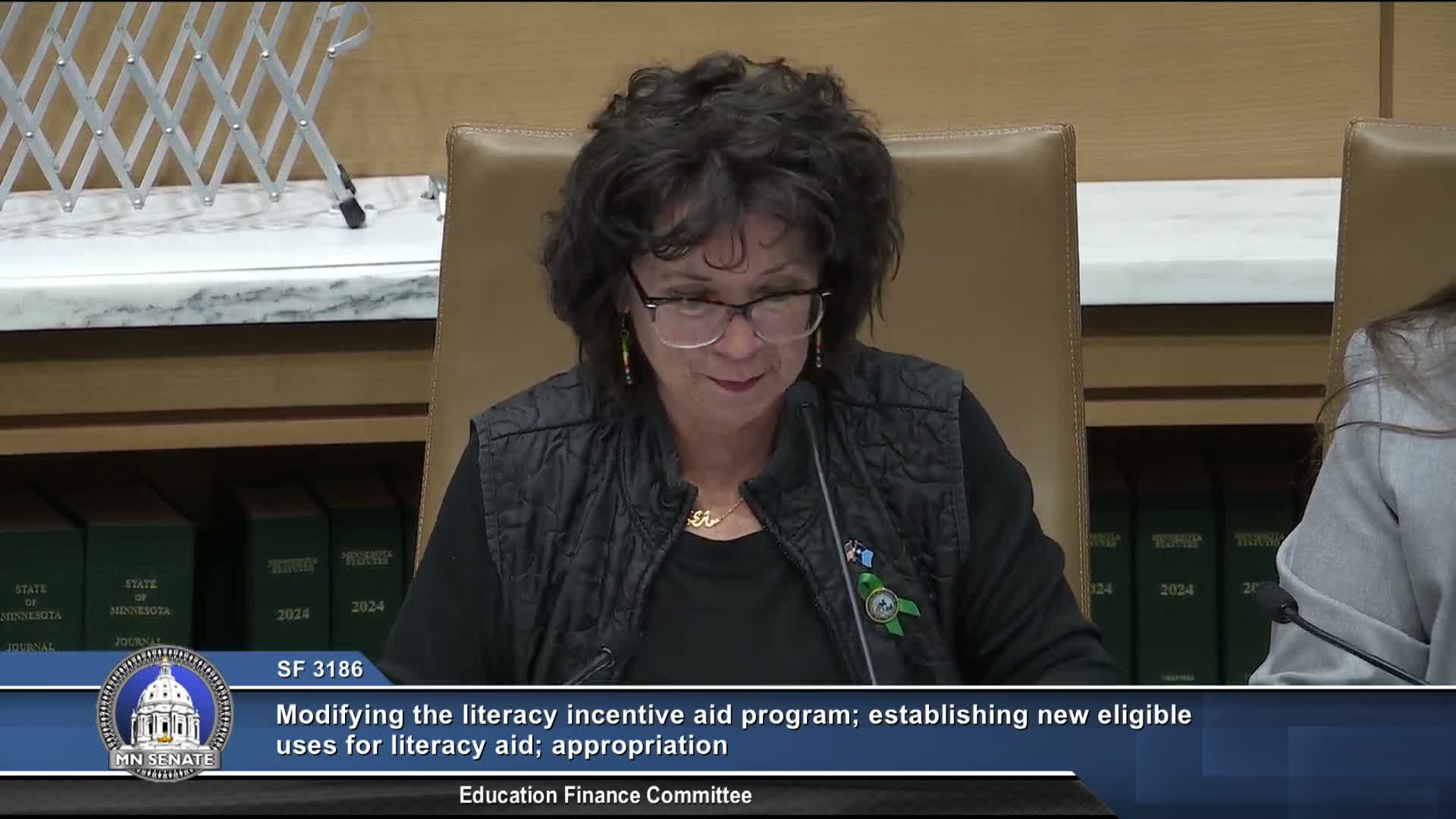
Senate File 31‑86, introduced and presented in committee by Senator McQuaid on March 25, would replace the current outcome‑based literacy incentive formula with a three‑component needs‑based distribution intended to align the aid with Read Act implementation.
Under the proposal described by the sponsor, 75% of ongoing literacy aid would be a basic per‑K–4 per‑pupil amount (a stable funding base), while the remaining 25% would be distributed through targeted components weighted for English‑learner concentration and student poverty. The committee adopted an A3 amendment to insert numeric amounts and then heard several hours of testimony and debate before laying the bill over for possible inclusion in a future omnibus bill.
Supporters argued the current formula — which ties aid to third‑grade MCA proficiency and fourth‑grade MCA growth — is volatile and sends money to schools already performing well. Matt Shaver, senior policy director and teacher, said the bill "simply directs dollars to schools based on the students that attend them" and that the change would provide stability and predictability for district budgeting. Assistant Commissioner Bobbie Burnham told the committee the change "would allow for equitable access to our most underserved and underperforming schools" and that funding must be paired with implementation supports to raise reading outcomes.
Witnesses in favor described the policy shift as better aligned to the Read Act's goals and pointed to prior one‑time appropriations for Read Act work; Matt Shaver summarized prior state investments as a $35 million curriculum reimbursement appropriation (prioritized for flexible literacy uses), a one‑time $31 million appropriation for teacher compensation for Read Act training, and ongoing literacy aid of roughly $40 million per year.
Opponents warned of redistribution effects. Patrick Chaffee, Centennial Schools executive director of business services, said the change "creates a 20% reduction in our funding allocation" and that districts using literacy aid to support training and staffing would see budget pressure. Thief River Falls Superintendent Dr. Chris Mills said his district would lose about $19,000 under the new formula and cautioned that shifting categorical funding without broader formula review produces winners and losers.
Fiscal staff walked members through a district run of current law (column A) and the bill's proposed components and totals (columns B–E). Senators debated volatility versus equity: proponents emphasized removing MCA‑driven year‑to‑year unpredictability, while opponents emphasized potential concentration of funds in some metro districts and losses in many rural districts.
The committee adopted the A3 amendment on a voice vote and laid Senate File 31‑86, as amended, over for possible inclusion in a future omnibus bill; no final floor vote occurred in committee.
Next steps: the bill was laid over for omnibus consideration; committee members requested additional review of district runs and the bill's distributional impacts before further action.
Under the proposal described by the sponsor, 75% of ongoing literacy aid would be a basic per‑K–4 per‑pupil amount (a stable funding base), while the remaining 25% would be distributed through targeted components weighted for English‑learner concentration and student poverty. The committee adopted an A3 amendment to insert numeric amounts and then heard several hours of testimony and debate before laying the bill over for possible inclusion in a future omnibus bill.
Supporters argued the current formula — which ties aid to third‑grade MCA proficiency and fourth‑grade MCA growth — is volatile and sends money to schools already performing well. Matt Shaver, senior policy director and teacher, said the bill "simply directs dollars to schools based on the students that attend them" and that the change would provide stability and predictability for district budgeting. Assistant Commissioner Bobbie Burnham told the committee the change "would allow for equitable access to our most underserved and underperforming schools" and that funding must be paired with implementation supports to raise reading outcomes.
Witnesses in favor described the policy shift as better aligned to the Read Act's goals and pointed to prior one‑time appropriations for Read Act work; Matt Shaver summarized prior state investments as a $35 million curriculum reimbursement appropriation (prioritized for flexible literacy uses), a one‑time $31 million appropriation for teacher compensation for Read Act training, and ongoing literacy aid of roughly $40 million per year.
Opponents warned of redistribution effects. Patrick Chaffee, Centennial Schools executive director of business services, said the change "creates a 20% reduction in our funding allocation" and that districts using literacy aid to support training and staffing would see budget pressure. Thief River Falls Superintendent Dr. Chris Mills said his district would lose about $19,000 under the new formula and cautioned that shifting categorical funding without broader formula review produces winners and losers.
Fiscal staff walked members through a district run of current law (column A) and the bill's proposed components and totals (columns B–E). Senators debated volatility versus equity: proponents emphasized removing MCA‑driven year‑to‑year unpredictability, while opponents emphasized potential concentration of funds in some metro districts and losses in many rural districts.
The committee adopted the A3 amendment on a voice vote and laid Senate File 31‑86, as amended, over for possible inclusion in a future omnibus bill; no final floor vote occurred in committee.
Next steps: the bill was laid over for omnibus consideration; committee members requested additional review of district runs and the bill's distributional impacts before further action.
View the Full Meeting & All Its Details
This article offers just a summary. Unlock complete video, transcripts, and insights as a Founder Member.
✓
Watch full, unedited meeting videos
✓
Search every word spoken in unlimited transcripts
✓
AI summaries & real-time alerts (all government levels)
✓
Permanent access to expanding government content
30-day money-back guarantee
