Joint committee approves restoration steps for ACT and peer support, taps one‑time funds
March 23, 2026 | JOINT, Committees, Legislative, Idaho
This article was created by AI summarizing key points discussed. AI makes mistakes, so for full details and context, please refer to the video of the full meeting. Please report any errors so we can fix them. Report an error »
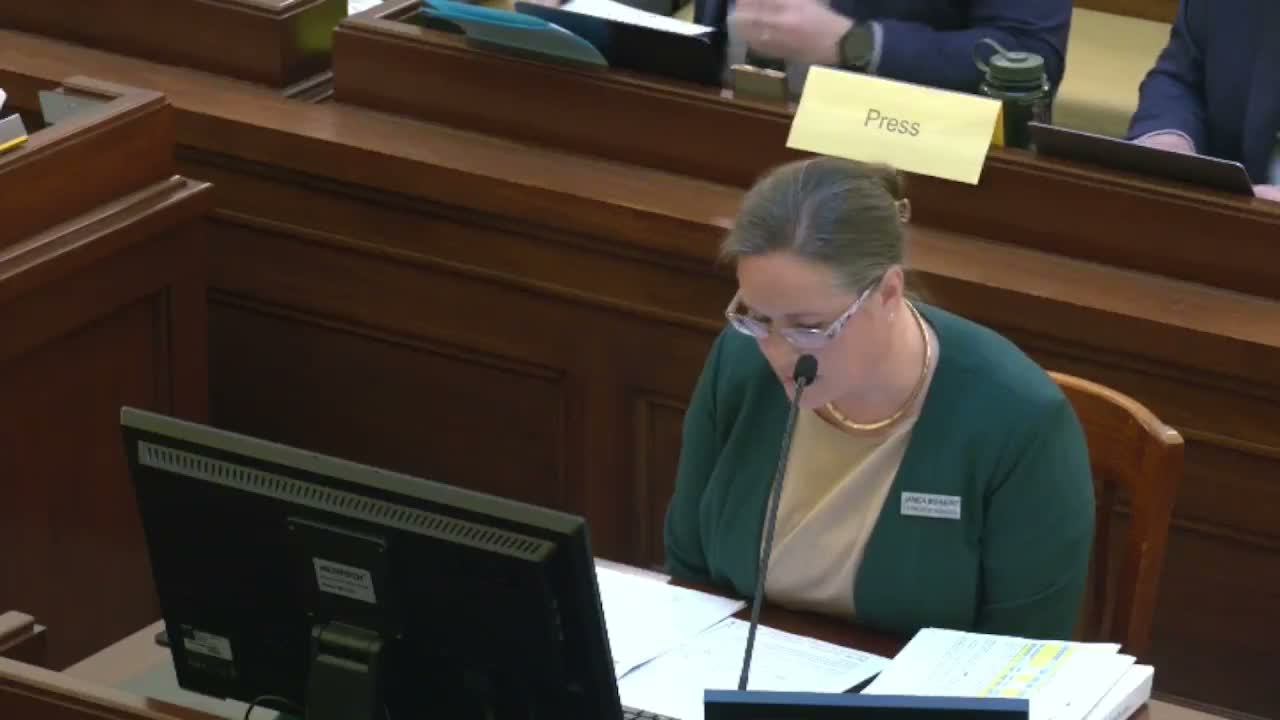
Legislative Services Office analysts presented options to restore a suite of behavioral health programs, with special emphasis on assertive community treatment (ACT) and peer support services. Janica Bisharat told the committee FY2026 state funding needs to restore the programs total about $4.1 million and FY2027 costs are just over $11.8 million; identified funding sources included the Millennium Income Fund, state‑directed opioid settlement funds and internal salary savings.
Analyst Alex Williamson explained two packet options: Option 1 would restore all listed programs (ACT, statewide peer support, skills training, transportation, half‑day partial hospitalization and early serious mental illness programs). Option 2 would focus on restoring ACT and peer support only. Williamson noted the Joint Millennium Fund Committee recommended $6 million from the Millennium Income Fund for ACT contingent on appropriation of opioid settlement funds.
Representative Mitchell moved a package to restore ACT and related services; Senator Cook offered an alternative, larger package that added skills training, transportation and associated programs. Cook emphasized rural transportation needs for ACT teams and said restoring these services would allow teams to reach distant communities. Representative Furness and other supporters said sheriffs and first responders see the programs as essential to divert people from jail and to reduce long‑term costs.
One funding motion failed to secure a House committee majority, according to the transcript. The committee then voted on an alternate option presented on the screen and approved language directing the Department of Health and Welfare to identify savings and prepare an ongoing request for JFAC in 2028. The committee also approved supplemental language allowing DHW to transfer internal salary savings in FY2026 to divisions to front the costs of restarting ACT and peer support immediately.
Separately, Janica Bisharat presented a one‑time $250,000 request from the opioid settlement fund to restore peer support services for Idaho’s mental health courts. Bisharat said DHW eliminated peer support services on Dec. 1, 2025, and the Idaho Supreme Court repurposed other treatment‑court funds to pay for peer support through June 30, 2026. Representative Manwaring moved the $250,000 appropriation; the committee approved the request (Senate 6 ayes, 2 nays, 2 absent/excused; House 10 ayes, 0 nays).
The committee’s actions restore core services in the short term while directing state agencies to develop plans for sustaining services beyond the one‑time funds.
Analyst Alex Williamson explained two packet options: Option 1 would restore all listed programs (ACT, statewide peer support, skills training, transportation, half‑day partial hospitalization and early serious mental illness programs). Option 2 would focus on restoring ACT and peer support only. Williamson noted the Joint Millennium Fund Committee recommended $6 million from the Millennium Income Fund for ACT contingent on appropriation of opioid settlement funds.
Representative Mitchell moved a package to restore ACT and related services; Senator Cook offered an alternative, larger package that added skills training, transportation and associated programs. Cook emphasized rural transportation needs for ACT teams and said restoring these services would allow teams to reach distant communities. Representative Furness and other supporters said sheriffs and first responders see the programs as essential to divert people from jail and to reduce long‑term costs.
One funding motion failed to secure a House committee majority, according to the transcript. The committee then voted on an alternate option presented on the screen and approved language directing the Department of Health and Welfare to identify savings and prepare an ongoing request for JFAC in 2028. The committee also approved supplemental language allowing DHW to transfer internal salary savings in FY2026 to divisions to front the costs of restarting ACT and peer support immediately.
Separately, Janica Bisharat presented a one‑time $250,000 request from the opioid settlement fund to restore peer support services for Idaho’s mental health courts. Bisharat said DHW eliminated peer support services on Dec. 1, 2025, and the Idaho Supreme Court repurposed other treatment‑court funds to pay for peer support through June 30, 2026. Representative Manwaring moved the $250,000 appropriation; the committee approved the request (Senate 6 ayes, 2 nays, 2 absent/excused; House 10 ayes, 0 nays).
The committee’s actions restore core services in the short term while directing state agencies to develop plans for sustaining services beyond the one‑time funds.
View the Full Meeting & All Its Details
This article offers just a summary. Unlock complete video, transcripts, and insights as a Founder Member.
✓
Watch full, unedited meeting videos
✓
Search every word spoken in unlimited transcripts
✓
AI summaries & real-time alerts (all government levels)
✓
Permanent access to expanding government content
30-day money-back guarantee
