Board questions EPI placements and administrative fee as finance staff warns of $693,000 FY27 budget gap
March 19, 2026 | PRINCE GEORGE CO PBLC SCHS, School Districts, Virginia
This article was created by AI summarizing key points discussed. AI makes mistakes, so for full details and context, please refer to the video of the full meeting. Please report any errors so we can fix them. Report an error »
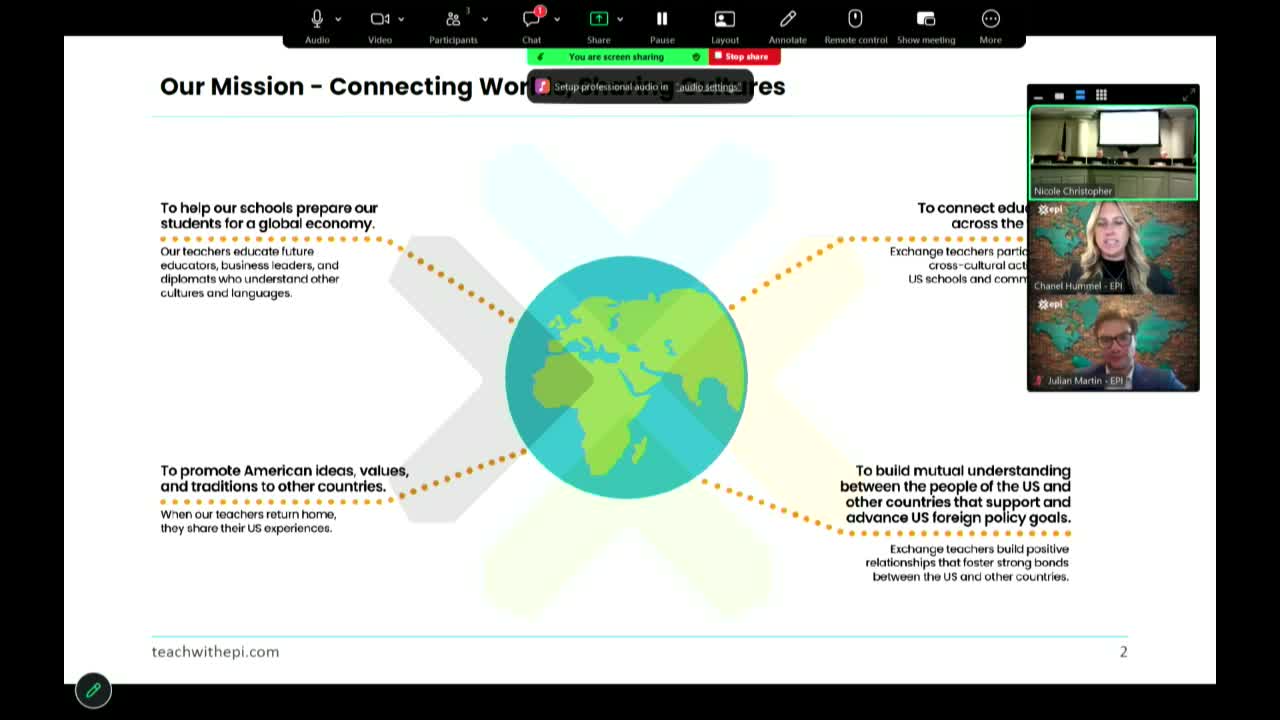
Educational Partners International representatives Chanel Hummel (director of placement) and Julian Martin (chief business development officer) told the board EPI has placed 62 teachers in Prince George County over six years and reported a 95% retention figure for its placements. "Our mission is connecting worlds and sharing cultures," Hummel said while describing EPIs visa‑sponsored teachers and the onboarding supports the organization provides (orientation, temporary lodging, health insurance with medical evacuation and repatriation coverage).
EPI said it provides an administrative package that the presenters argued can be cost‑competitive with domestic hires because the district does not pay some benefit costs and EPI handles recruitment, credentialing and travel. Martin said EPI notified districts of a $750 per‑teacher administrative‑fee increase for the 2025–26 year and provided to the board a signed cost summary on request.
Board members pressed EPI and district staff on several points: they asked for a comprehensive, multiyear dollar comparison of total costs (health insurance, retirement, FICA, administrative fees) for EPI placements versus domestic hires; they asked for evidence on student outcomes tied to EPI teachers and for breakdowns of the programs current and projected counts as some teachers age out. EPI said it will provide additional materials and that 11–12 teachers are expected to age out, leaving an estimated 39–43 EPI teachers depending on domestic hires and renewals.
Budget implications: finance staff presented the FY27 operating proposal and its assumptions (2% across‑the‑board raise for employees, reduced HSA contributions, increased healthcare deductibles consistent with the Pierce Group proposal). Using the Senate revenue projection, staff said the budget still requires about $693,000 to balance; under the House revenue scenario that gap would not exist. The presentation also included a $300,000 allowance for the EPI administrative fee in FY27 and noted that earlier budget drafts had missed some add‑on costs in vacancy calculations that now show projected overruns.
Board direction and follow up: members asked staff to compute the dollar value of seven specific vacancies the board could delay hiring as one short‑term way to cover the gap; staff agreed to deliver that number the next business day. Board members also requested a district‑level cost comparison over a five‑year window that fully accounts for FICA, VRS and health insurance exposures for EPI teachers vs. domestic hires.
Whats next: staff will supply (1) the total cost of the seven vacancies identified for potential hold, and (2) a consolidated, multiyear cost comparison of EPI placements versus domestic hires; EPI said it will provide the signed cost summary and further documentation on its savings analysis.
EPI said it provides an administrative package that the presenters argued can be cost‑competitive with domestic hires because the district does not pay some benefit costs and EPI handles recruitment, credentialing and travel. Martin said EPI notified districts of a $750 per‑teacher administrative‑fee increase for the 2025–26 year and provided to the board a signed cost summary on request.
Board members pressed EPI and district staff on several points: they asked for a comprehensive, multiyear dollar comparison of total costs (health insurance, retirement, FICA, administrative fees) for EPI placements versus domestic hires; they asked for evidence on student outcomes tied to EPI teachers and for breakdowns of the programs current and projected counts as some teachers age out. EPI said it will provide additional materials and that 11–12 teachers are expected to age out, leaving an estimated 39–43 EPI teachers depending on domestic hires and renewals.
Budget implications: finance staff presented the FY27 operating proposal and its assumptions (2% across‑the‑board raise for employees, reduced HSA contributions, increased healthcare deductibles consistent with the Pierce Group proposal). Using the Senate revenue projection, staff said the budget still requires about $693,000 to balance; under the House revenue scenario that gap would not exist. The presentation also included a $300,000 allowance for the EPI administrative fee in FY27 and noted that earlier budget drafts had missed some add‑on costs in vacancy calculations that now show projected overruns.
Board direction and follow up: members asked staff to compute the dollar value of seven specific vacancies the board could delay hiring as one short‑term way to cover the gap; staff agreed to deliver that number the next business day. Board members also requested a district‑level cost comparison over a five‑year window that fully accounts for FICA, VRS and health insurance exposures for EPI teachers vs. domestic hires.
Whats next: staff will supply (1) the total cost of the seven vacancies identified for potential hold, and (2) a consolidated, multiyear cost comparison of EPI placements versus domestic hires; EPI said it will provide the signed cost summary and further documentation on its savings analysis.
Don't Miss a Word: See the Full Meeting!
Go beyond summaries. Unlock every video, transcript, and key insight with a Founder Membership.
✓
Get instant access to full meeting videos
✓
Search and clip any phrase from complete transcripts
✓
Receive AI-powered summaries & custom alerts
✓
Enjoy lifetime, unrestricted access to government data
30-day money-back guarantee
