Commission reviews SHARD inventory, considers removing demolished properties and updating standards
March 13, 2026 | Town of Newburgh, Warrick County, Indiana
This article was created by AI summarizing key points discussed. AI makes mistakes, so for full details and context, please refer to the video of the full meeting. Please report any errors so we can fix them. Report an error »
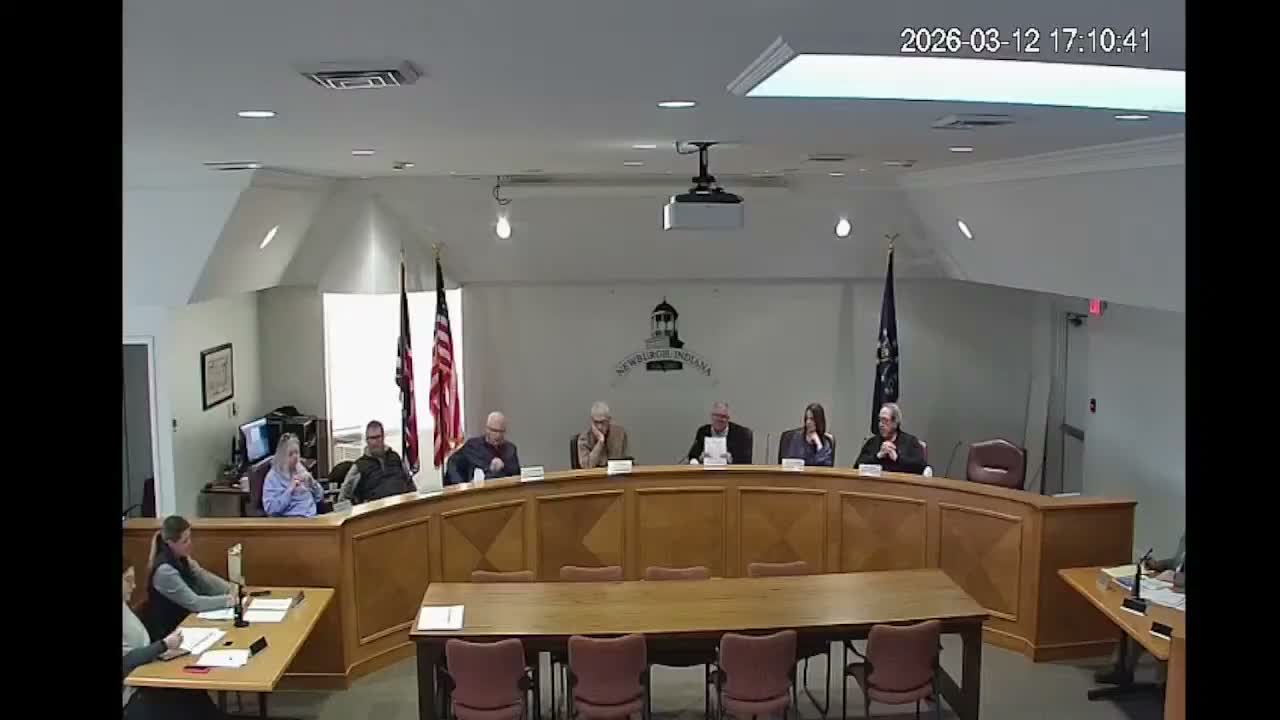
At the March 6 meeting the Town of Newburgh Historic Preservation Commission spent substantial time reviewing the town's historic-properties inventory and discussing next steps for data cleanup and standards modernization.
Planning staff provided a compiled spreadsheet that matched the town's locally designated properties against entries in the SHARD state database, noting several mismatches and highlighting items that staff believes should be removed from local designation because the historic structures no longer exist or the designation no longer matches local ordinance. "If a property was designated because the architecture is gone, then you can remove that," Heather Cottrell said while describing guidance received from state staff; county/state contact (DHPA) told the commission it should report local removals but that state records might remain for other purposes.
Commissioners asked for an Excel copy of the spreadsheet for easier review and suggested driving the list to verify whether buildings still stand. Staff suggested adding GIS layers for historic districts, scattered sites and individual properties to allow commissioners and the public to click a property and view its zoning and designation status.
The commission also discussed a grant opportunity to update the commission's standards (currently described as last revised about 2012), with an eye toward modern features such as solar panels and clarity on when administrative approvals are sufficient versus when the commission must review an application. Members repeatedly stressed the need to balance preservation with housing and development goals: "There's a housing crisis because we don't have enough houses," the chair said, urging care so preservation requirements do not unduly inhibit new housing.
Staff will continue to audit the spreadsheet, identify candidate properties for local-designation removal, and bring ordinance language or proposed changes back to the commission and council when appropriate. Commissioners asked staff to provide clearer maps and to flag properties that require follow-up inspections or documentation.
Planning staff provided a compiled spreadsheet that matched the town's locally designated properties against entries in the SHARD state database, noting several mismatches and highlighting items that staff believes should be removed from local designation because the historic structures no longer exist or the designation no longer matches local ordinance. "If a property was designated because the architecture is gone, then you can remove that," Heather Cottrell said while describing guidance received from state staff; county/state contact (DHPA) told the commission it should report local removals but that state records might remain for other purposes.
Commissioners asked for an Excel copy of the spreadsheet for easier review and suggested driving the list to verify whether buildings still stand. Staff suggested adding GIS layers for historic districts, scattered sites and individual properties to allow commissioners and the public to click a property and view its zoning and designation status.
The commission also discussed a grant opportunity to update the commission's standards (currently described as last revised about 2012), with an eye toward modern features such as solar panels and clarity on when administrative approvals are sufficient versus when the commission must review an application. Members repeatedly stressed the need to balance preservation with housing and development goals: "There's a housing crisis because we don't have enough houses," the chair said, urging care so preservation requirements do not unduly inhibit new housing.
Staff will continue to audit the spreadsheet, identify candidate properties for local-designation removal, and bring ordinance language or proposed changes back to the commission and council when appropriate. Commissioners asked staff to provide clearer maps and to flag properties that require follow-up inspections or documentation.
Don't Miss a Word: See the Full Meeting!
Go beyond summaries. Unlock every video, transcript, and key insight with a Founder Membership.
✓
Get instant access to full meeting videos
✓
Search and clip any phrase from complete transcripts
✓
Receive AI-powered summaries & custom alerts
✓
Enjoy lifetime, unrestricted access to government data
30-day money-back guarantee
