Committee debates bill to ban surveillance‑based individualized wages; referral motion fails under committee power‑sharing
March 24, 2026 | 2026 Legislature MN, Minnesota
This article was created by AI summarizing key points discussed. AI makes mistakes, so for full details and context, please refer to the video of the full meeting. Please report any errors so we can fix them. Report an error »
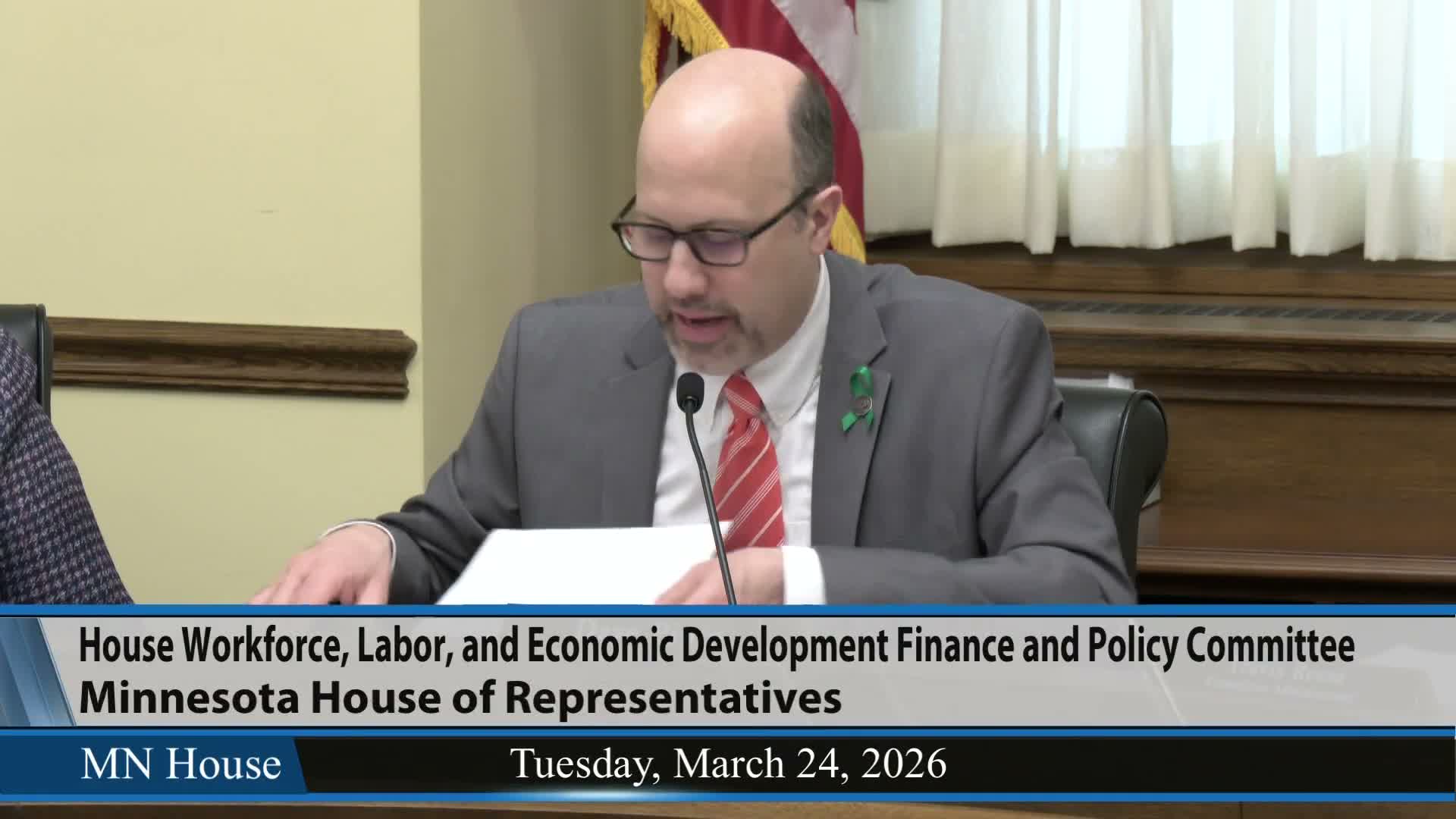
Vice Chair Greenman presented House File 4131 and an A3 amendment; the committee approved the amendment and Greenman framed the bill as a response to companies using extensive personal data and AI to personalize prices and wages. Greenman said the wage portion landed in labor committee purview and argued the bill would ban using surveillance data unrelated to the task to set individualized wages, while allowing legitimate pay differences tied to task cost.
Labor and policy witnesses testified in favor. Samantha Diaz (SEIU Local 26) described how surveillance data and opaque algorithms shape assignments and earnings in janitorial, security and warehouse work; Diaz argued the practice disproportionately affects low‑wage workers and communities of color. Erin Rosenthal (North Star Policy Action) emphasized the privacy harms and the difficulty workers face challenging algorithmic pay decisions and called for transparency on collected data and basic limits on usage.
Business and industry speakers urged narrowing or opposing the bill. Drew Ambrogi (Chamber of Progress) warned the bill's definitions could sweep in common discounting and pricing practices and place heavy disclosure and dispute burdens on small businesses; Jonathan Cotter (Minnesota Chamber) called the proposal expansive and disruptive to normal workforce management.
Members debated jurisdiction (the bill also addresses price discrimination and will be considered by Commerce), enforcement (private right of action and AG involvement), fiscal impacts, and whether the law should be preventative. Representative Pete Johnson and others urged action to prevent a 'race to the bottom' in wages. The clerk recorded a roll call with 7 ayes and 6 nays, but under the committee's power‑sharing agreement the motion to refer failed and the bill did not advance.
Labor and policy witnesses testified in favor. Samantha Diaz (SEIU Local 26) described how surveillance data and opaque algorithms shape assignments and earnings in janitorial, security and warehouse work; Diaz argued the practice disproportionately affects low‑wage workers and communities of color. Erin Rosenthal (North Star Policy Action) emphasized the privacy harms and the difficulty workers face challenging algorithmic pay decisions and called for transparency on collected data and basic limits on usage.
Business and industry speakers urged narrowing or opposing the bill. Drew Ambrogi (Chamber of Progress) warned the bill's definitions could sweep in common discounting and pricing practices and place heavy disclosure and dispute burdens on small businesses; Jonathan Cotter (Minnesota Chamber) called the proposal expansive and disruptive to normal workforce management.
Members debated jurisdiction (the bill also addresses price discrimination and will be considered by Commerce), enforcement (private right of action and AG involvement), fiscal impacts, and whether the law should be preventative. Representative Pete Johnson and others urged action to prevent a 'race to the bottom' in wages. The clerk recorded a roll call with 7 ayes and 6 nays, but under the committee's power‑sharing agreement the motion to refer failed and the bill did not advance.
Don't Miss a Word: See the Full Meeting!
Go beyond summaries. Unlock every video, transcript, and key insight with a Founder Membership.
✓
Get instant access to full meeting videos
✓
Search and clip any phrase from complete transcripts
✓
Receive AI-powered summaries & custom alerts
✓
Enjoy lifetime, unrestricted access to government data
30-day money-back guarantee
